Divya Deshmukh, Vaishali stronger than when they won Olympiad, says coach Misra
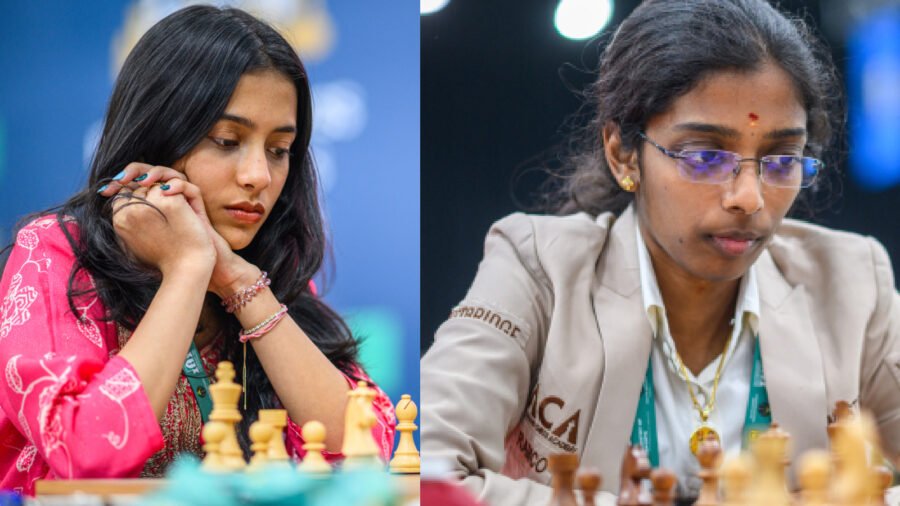
Over the last month or so, one of the hardest things Swayams Mishra has had to do is to find a window to bring the entire Indian women’s team together for a training camp. The upcoming Chess Olympiad will see the women’s team defend gold and it was a measure of how much these players have grown in stature and ambition that they play relentless chess around the year. But it made Mishra’s job of finding a slot where all five of his players were available at the same time tricky.
Divya Deshmukh, Vaishali Rameshbabu and Koneru Humpy were in the USA for the Cairns Cup. Then, Deshmukh and Humpy were at the Global Chess League in Bengaluru. Vaishali was in long training camps of her own to prepare for her maiden challenge for the Women’s World Championship crown. The final two players of the team, Vantika Agrawal and Savitha Shri, were competing in tournaments in Europe.
Eventually, Mishra found a five-day window to conduct an online camp where the players logged in from different parts of the world. The mood in the camp was light. Some decisions were made about the board order of the team, where India had three contenders to play on board 1 in the form of Humpy, Deshmukh and Vaishali. They also indulged in friendly games of Kahoot, an online game, by tweaking it and giving it a chess ka tadka.
Story continues below.
Subscribe to see fewer ads.
 Divya Deshmukh accepts Egyptian grandmaster Amin Bassem’s resignation in their round 4 game at the FIDE Grand Swiss tournament in Samarkand. (PHOTO: FIDE/Michal Walusza)
The one conversation, Mishra says, that never came up was the impending gold medal defence.
“We never discussed things like gold medal jeetna hai, defend karna hai. Of course our target is to win gold. It’s clear in everyone’s mind. I don’t think speaking about it would help the players personally,” says Mishra, who will have the support of grandmasters Arjun Kalyan and Diptayan Ghosh as a three-member coaching staff for the women’s team.
Mishra says that challenging India’s spot on the top step of the podium will be nations like Georgia, Kazakhstan, and the USA. Poland and Azerbaijan are also tricky opponents, he added.
Another perception that Mishra debunked is that one of two players of the team are given instructions to churn out draws while the others are given free reign to go for the kill.
Story continues below this ad
“All these players are so strong that they can win against anyone. So we don’t tell players about what results they should look for. But based on openings, and how comfortable we are against an opponent and the playing style of the player, we take some calls about what openings to play,” he added.
Mishra has been with the Olympiad team for three cycles now and he says it’s not just the players’ ratings and their tournament workload, but even their way of preparation that has changed now. He explains that in 2022, players like Deshmukh and Vaishali were still young and were not playing at top-tier invitational events, so they did not have full-time coaches and seconds working for them. So the team’s coaches had much more on their plate in terms of making opening files for them to play across the 11 rounds. But now, most of the players have their own coaches and seconds to help them with that.
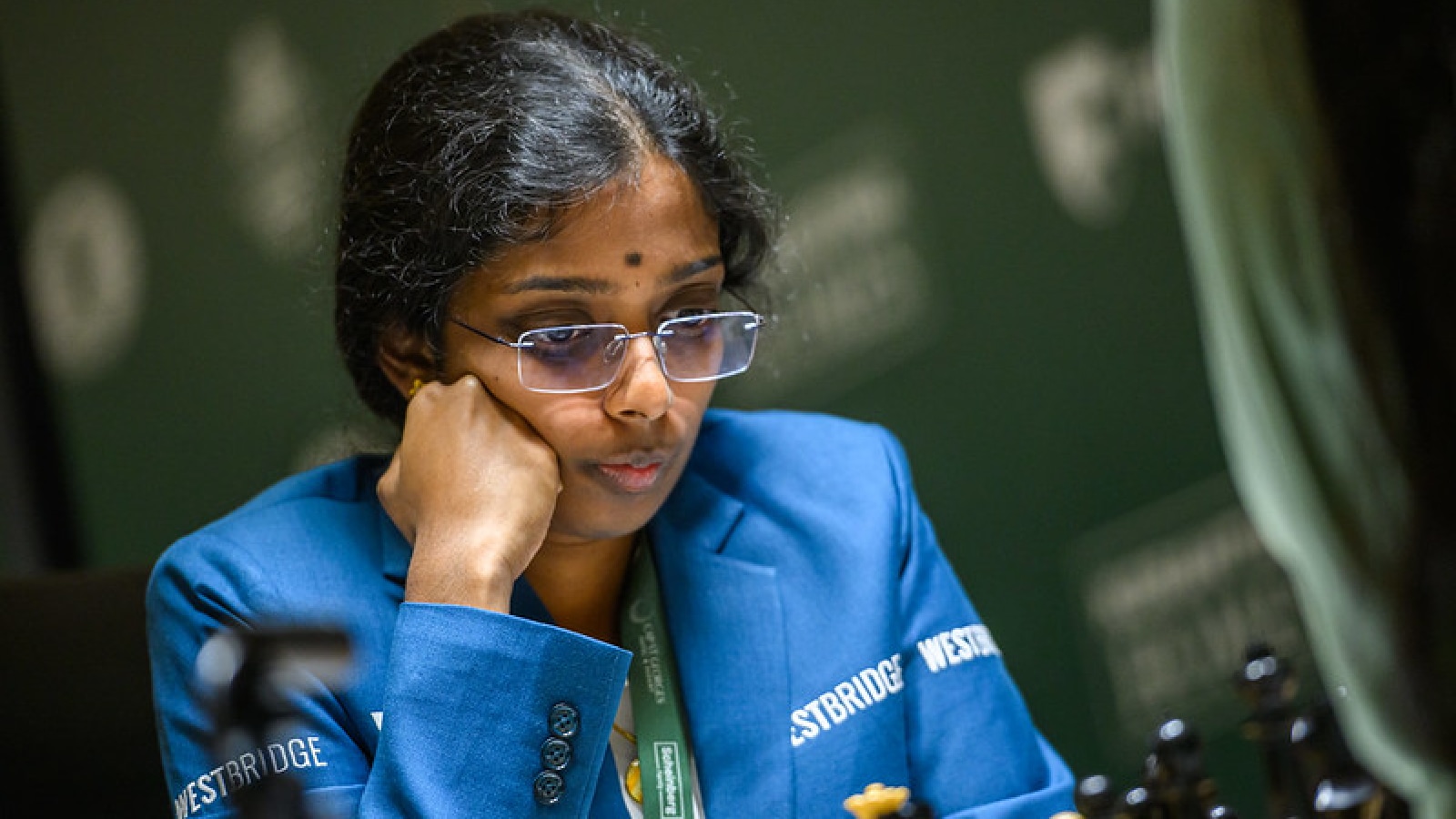 R vaishali in action against Zhu Jiner at Candidates. (FIDE/Michal Walusza)
“The way most of our team prepares is much different to how they used to prepare in 2022. Even players like Vantika and Savita. There is a significant improvement and they have developed in their preparation and overall playing strength as well,” he said.
Mishra says that for most of the coaches, the workload at the Olympiad is slightly more relaxed in the first half of the 11-round event, but rises significantly when the second half begins because the competition gets tougher and players want to try newer moves on the board.
Story continues below this ad
He recollected an occasion at the previous Olympiad when a player told him she wanted to try something completely out of the book against an opponent, because her preferred openings would be too predictable and had been played previously in the tournament.
“When it comes to the important games some players want to play something completely new, so the amount of work to be put in becomes more. So there was one night that I slept at 6 AM and then I had to wake up at 8 to explain that opening to the player who wanted to try something new. Then I waited for the game to start to see how the players played that opening. And once the game entered the middle game phase, I slept for sometime, before again waking up for the endgame to see how it was finishing,” says Mishra.

Samson slams 57 as India defeat Afghanistan, seal series with a match to spare
By Sohail Khan · 15 Sep
Ex-Pakistan player slams India for refusing Asia Cup trophy from Mohsin Naqvi
By Sohail Khan · 15 Sep
With India’s top GMs busy playing, online camp helped them prepare for Olympiad
By Sohail Khan · 15 Sep
Leave a Reply