Despite zoonotic diseases threat, Keralam’s proposed veterinary public health wing yet to take shape
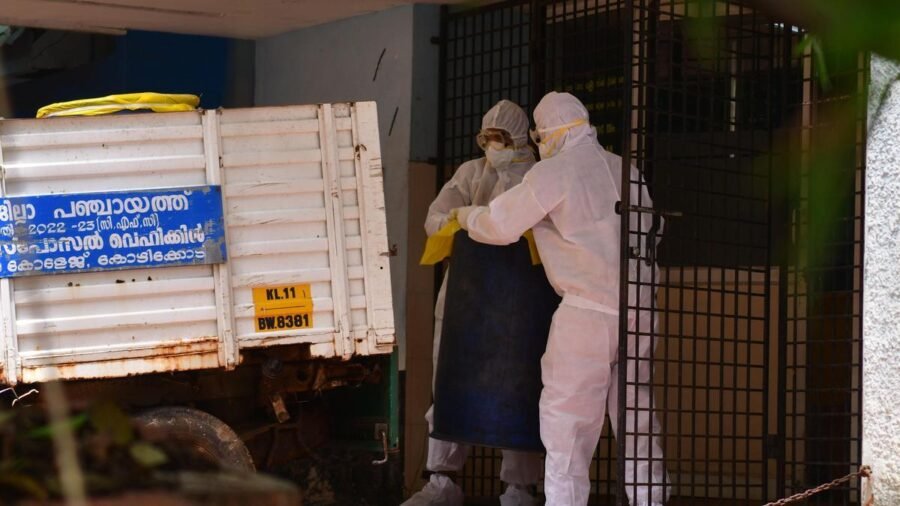
Over a decade ago, the Oommen Chandy Cabinet in Keralam approved the recommendations of the Gita N. Potty committee that mainly dealt with the wage disparities among veterinary officers in the Animal Husbandry department in Keralam. One of its other key proposals, setting up a dedicated veterinary public health wing to tackle zoonotic diseases, is yet to become a reality.
Sources in the department say that the veterinary public health section with a food safety unit and animal management and welfare units were proposed as part of an organisational restructuring. The animal management and welfare units were explicitly tasked with animal tranquilisation, animal birth control (ABC) squads, welfare work and the control of zoonotic diseases. The committee had given its report in 2014, which was approved two years later.
Senior officials point out that there has been a marked and repeated escalation in zoonotic disease outbreaks or spillover episodes in Keralam over the years that fall squarely within the professional domain of the veterinary officer. The existing staff are not equipped to handle this, they say.
For the record, the State has recorded outbreaks and spillover cases of Nipah infection since 2018, and case-fatality rates has been as high as 89-91% in the worst cases. Every outbreak has been zoonotic in origin with fruit bats turning out to be the carriers of the virus, and the containment depends on rapid animal-side surveillance, sampling, and coordination that is presently a veterinary officer’s responsibility. Kuttanad and the backwater belt containing Alappuzha, Kottayam, and Pathanamthitta districts have faced recurring Highly Pathogenic Avian Influenza outbreaks — including culling of over 8,00,000 birds in 2014-16, roughly 2,50,000 more in 2021-22, further outbreaks in 2024, and a fresh outbreak in December 2025 requiring the culling of tens of thousands of birds within days. After each outbreak, the department teams are engaged in culling, disposal, compensation assessment and containment. The other emerging diseases include African/classical swine fever, Anthrax, and Kyasanur Forest Disease.
Along with this, stray dog attacks and rabies cases and deaths are also being frequently reported too. As per government data, stray dog bite cases in the State rose from about 1.35 lakh in 2017 to 3.69 lakh in 2025. Confirmed rabies deaths cases are also on the rise, from eight to 33 during the same period. Child fatalities have continued to be reported despite post-exposure vaccination. Keralam’s stray dog population was estimated at 2.89 lakh in the 2019 livestock census.
T. Kuriakose Mathew, State general secretary, Kerala Government Veterinary Officers Association, says that setting up the veterinary public health wing will go a long way in addressing many of these current problems. “It will ensure timely and quality services in veterinary hospitals. Along with this, an extension wing for imparting education and creating awareness among farmers need to be established as well,” he says.
A senior veterinary official from Kozhikode says that ABC programme, vaccination drives and the State’s Rabies-Free Kerala project are all technically anchored in the department, without a dedicated, adequately staffed structure to run them.
Each of these disease categories, he points out, places statutory, technical responsibility on the Animal Husbandry department’s veterinary workforce — sampling, ring vaccination, culling, disease surveillance at check posts, and coordination with the Department of Health on zoonotic spillover — over and above routine clinical care. For the effective functioning of ABC centres and to handle the euthanasia of stray dogs, the services of project in-charge veterinary doctors is necessary, he adds.

Ansell to manufacture gloves at Perundurai plant for key global markets
By Sohail Khan · 19 Sep
Two withdrawals, one U-turn: TMC chaos ahead of Bengal bypolls
By Sohail Khan · 19 Sep

Leave a Reply