Delhi records slight dip in dragonfly, damselfly numbers; two new sightings: Survey
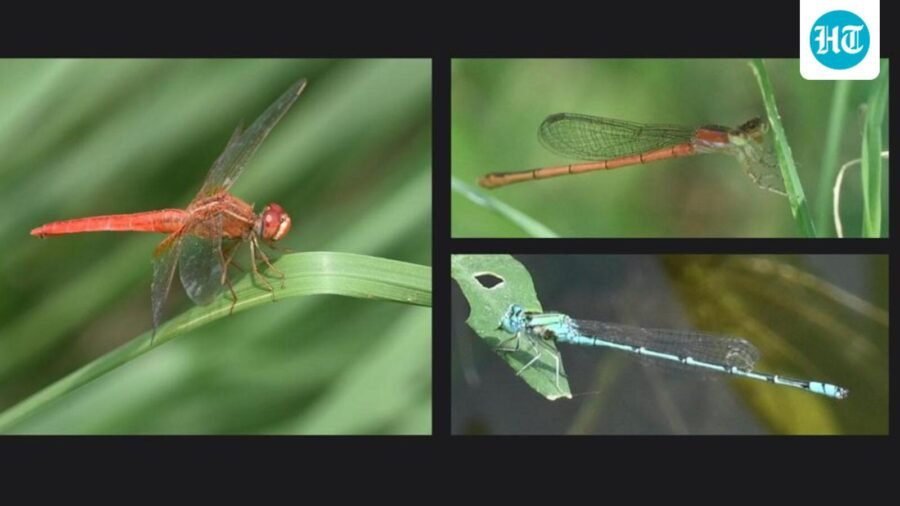
Delhi’s seven biodiversity parks recorded 11,154 dragonflies and damselflies, down from 13,253 last year. Erratic rains and dry conditions may explain the dip.
Published on: Sep 20, 2026, 17:15:24 IST
Prefer HTon Google
Share via
Copy link
Delhi’s seven biodiversity parks recorded 11,154 dragonflies and damselflies in a survey, down from 13,253 in 2025, with erratic rains and dry conditions contributing to a marginal dip in their diversity and numbers, officials said.
The three-day survey, conducted from September 17 to 19, recorded two new sightings: the Yellow-tailed Ashy Skimmer at Aravalli Biodiversity Park and the Blue Grass Dart at Yamuna Biodiversity Park.
Faiyaz Khudsar, scientist-in-charge of the Delhi Development Authority (DDA)’s biodiversity programme, said, “Dragonflies are amazing insects, but they’re not easy to raise or use for mosquito control. Dragonflies have complex life cycles and highly specific habitat needs that make them difficult to raise and release on any meaningful scale. Most of their lives are spent as aquatic nymphs, living in ponds or wetlands for months or even years. These nymphs are territorial, predatory, and require clean, stable aquatic environments.”
“Therefore, clean and functional wetland ecosystems alone can sustain their population, which in turn helps in mosquito control in surrounding areas, and restored DDA Biodiversity Parks provide such pristine ecosystems,” he added.
Experts and college students affiliated with the University of Delhi participated in the survey, which was carried out across the DDA’s seven biodiversity parks: Yamuna, Aravalli, Neela Hauz, Tilpath Valley, Kamla Nehru Ridge, Tughlaqabad and Kalindi.
Speaking about the survey outcomes, entomologist Mohd. Faisal said that there had been a minor dip in the diversity as well as density of dragonflies, adding, “Delhi has seen erratic rains and adverse weather conditions with an increase in dry areas and a lack of formation of water pools in biodiversity parks.”
“This year, a new species seen in DDA Aravalli Biodiversity Park was the Yellow-tailed Ashy Skimmer (Potamarcha congener). Last year, it was observed for the first time in Yamuna Biodiversity Park, so its range has increased. We also had an interesting sighting in the form of the Blue Grass Dart for the first time in Yamuna Biodiversity Park,” he added.
Yellow-tailed Ashy Skimmers perch on dry twigs near ephemeral ponds and marshes, while the Blue Grass Dart is seen perching on water plants in lakes and in marshes with well-developed vegetation along the banks. The presence of these dragonflies indicates a healthy ecosystem. These insects form a part of the “odonata” family. Odonatans are characterised by large round heads, compound eyes, two pairs of long, transparent wings and elongated abdomens.
Some of the most commonly seen species across the seven biodiversity parks include the Scarlet Skimmer, Ditch Jewel, Wandering Glider, Coromandel Marsh Dart and Ruddy Marsh Skimmer.
See Less
Police to deploy nearly 2,000 personnel for Ganesh immersion ceremony in Kurnool
By Sohail Khan · 20 Sep
Human skull recovered from waste heap in Kozhikode
By Sohail Khan · 20 Sep
Parts of Hyderabad receive brief showers on September 20
By Sohail Khan · 20 Sep
Leave a Reply