Chinese satellite intel helped Iran target US bases, track Hormuz ships: Report
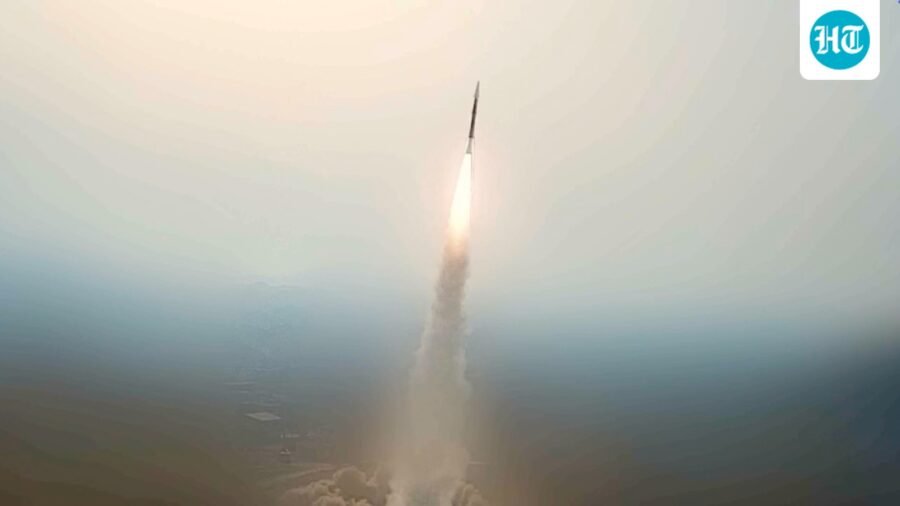
A report has highlighted a significant improvement in Iran's targeting capabilities over the past several months, citing the attack on a US base in Jordan.
Published on: Sep 25, 2026, 16:00:50 IST
Prefer HTon Google
Share via
Copy link
Data from Chinese satellites helped Iran target American bases in the Middle East with precision and track shipping through the Strait of Hormuz, CNN reported citing four sources, who made the deductions following a series of recent US intelligence assessments.
The report highlighted a significant improvement in Iran's targeting capabilities over the past several months, while referencing Iran's strike on a United States base in Jordan in July, which resulted in the deaths of three American servicemen.
However, US officials have said it is difficult at present to quantify the scope of China's assistance to Iran, partly because it is still not clear whether the Chinese government has ordered it or is tacitly allowing the support.
Some officials have also disagreed on there being any Beijing help to China. The report comes even as Chinese President Xi Jinping is in US for a state visit, his first to Washington in more than a decade.
How is Chinese data reportedly helping Iran?
Chinese geospatial data has improved Iran’s ability to track ships through Hormuz, which allegedly gives the latter's drones and missiles a higher chance of successfully hitting targets, CNN cited one of the US officials as saying.
According to two other sources, the data has allowed Iran to deploy heatseeking drones – which generally cannot be maneuvered midair – to threaten ships through timely launches.
Apart from the deployment of drones and missiles, the data has also helped shape Iran's strategy and tactics in the Strait of Hormuz. Tehran has continued attacks on US military escorts and commercial vessels in Hormuz by launching a large number of heatseeking drones towards ships when they reach a particular geographic landmark in the strait. The landmark was described by one US official as the “knuckle”, CNN reported.
The tactic behind firing a large number of heatseeking drones at once is because Iran hopes they latch onto the heat signature in ships’ hulls, two US officials said. The CNN report highlights a recent escort operation in this context, wherein US forces reportedly intercepted over a dozen Iranian missiles and shot down nearly 20 drones, while conducting offensive operations against roughly 60 targets around the strait, one of the officials said.
China's dual-use components help to Iran
Following the signing of a truce, which lasted for a brief period, between US and Iran this June, China had touted its role in easing tensions in West Asia. However, according to a recent report by the Wall Street Journal, a plane from China landed in Tehran the same day.
The aircraft was allegedly carrying a shipment including electronics components for Iran's defense ministry. These could be used to make parts for drones and missile guidance systems, according to Iranian customs data analysed by WSJ. The report claimed that this was just one of the 1,300 shipments which had carried “dual-use” components from China to Iran this year.
Following WSJ's initial report on use of Chinese satellite data by Iran before its attack on the US base in Jordan, China’s foreign ministry spokesperson Guo Jiakun expressed “opposition” to what he said was “exploiting the conflict to throw mud at China.” “China always strictly fulfills its due international obligations,” Jiakun added.
The Trump administration has also largely declined to publicly condemn or acknowledge any direct or indirect Chinese support to Iran. “Nothing that China has done has in any way changed the trajectory of … the conflicts we’re having with Iran,” US Secretary of State Marco Rubio had said in July.
See Less

Afghan taxi drivers defy Taliban music ban, turn up tunes in Kabul
By Sohail Khan · 25 Sep
‘Attack one, attack all’: Why Saudi, Turkey, Pakistan have set urgent meet under key pact
By Sohail Khan · 25 Sep
Leave a Reply