China’s Communist Party faces a generational shift
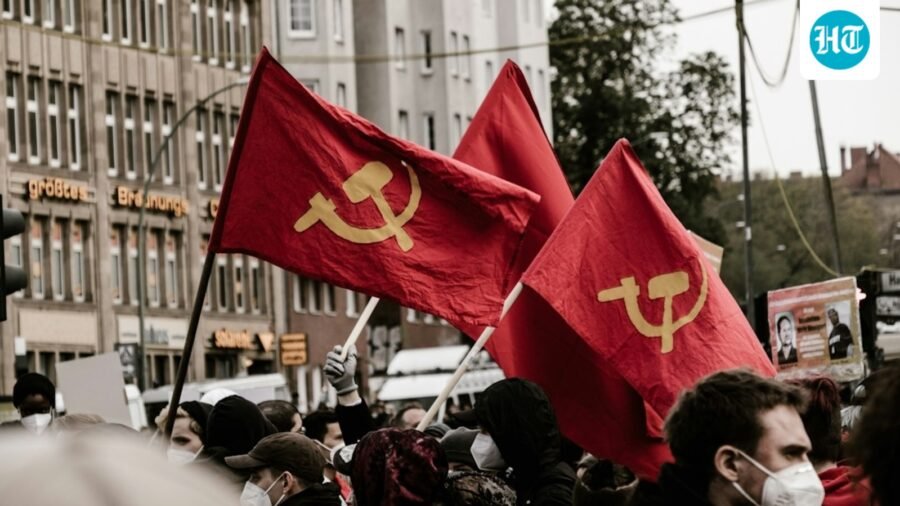
Will rising officials be freer thinkers than older ones?
Published on: Sep 23, 2026, 15:31:00 IST
Prefer HTon Google
Share via
Copy link
Next year, at the biggest recurring event on China’s political calendar, a five-yearly Communist Party congress will confirm who will run the country until 2032. The supreme position of Xi Jinping is in little doubt. But hundreds of senior roles below him are up for grabs. A series of secretive meetings over the coming months will decide who gets them. The dates of one such event have just been announced: a gathering from October 26th to 29th of the 370 or so leaders who form the party’s Central Committee. Officially they will discuss “full and rigorous party self-governance”, meaning, in essence, obedience to Mr Xi. Privately they will ponder a generational shift in Chinese politics.
Rising stars are champing at the bit in China’s provinces. Some are moving to senior roles in Beijing. Known as the seventh generation of party leaders, they are a very different breed to Mr Xi. Born in the late 1960s and the 1970s, they are the first generation with few if any memories of the Mao era. Their formative years were in the 1980s, when the country was opening up to the world, exploring liberal ideas and experimenting with capitalism. Mr Xi shows no nostalgia for those heady times. But he is 73 and his lieutenants not much younger. They may have to turn more to the seventh generation to fill important jobs. One of them may end up being Mr Xi’s successor.
In Chinese politics, the generation-numbering system is complicated. As the founder of Communist China, Mao Zedong led the first generation. The pragmatic reformer, Deng Xiaoping, is described as the leader of the second generation, even though he did not immediately succeed Mao and belonged to the same cohort of veteran revolutionaries. By the time Mr Xi took power in 2012, generations had begun to refer more to the age group from which senior officials are drawn. Mr Xi belongs to the so-called fifth generation, mainly born in the 1950s. By post-Deng norms, he should have stepped down ten years later in favour of a senior politician from sixth generation, born in the 1960s.
Instead he stayed on, having abolished term limits for the presidency (Mr Xi also holds the more important posts of party general secretary and leader of the armed forces, which are not term-limited, but since he wanted all three jobs at once, changing the rules for the presidency was essential). Meanwhile his anti-corruption campaign has cut swathes through the sixth generation and dismantled its patronage networks. Those once tipped for leadership have been arrested or sidelined. Perhaps one-fifth of the Central Committee’s voting members have been purged in the past five years.
Amid the wreckage of the sixth generation, the seventh is rising. Even if Mr Xi remains at the helm at the party’s 22nd congress in 2032, surrounded by an inner circle of gerontocrats, notably younger politicians will play big roles. In August attention turned to one possible seventh-generation star, 54-year-old Zhu Zhongming, when he was appointed as Shanghai’s acting mayor. Should he become the city’s party chief, he would be a shoo-in for a seat in the ruling Politburo. Others worth keeping an eye on are Liu Jie, 56, who is the governor of Zhejiang, a wealthy eastern province (Mr Xi once had that job) and A Dong, 55, the first secretary of the Communist Youth League, the party’s youth wing (two predecessors in that post later became the party’s general secretary).
Typically, senior party officials retire if they have reached 65 by the time of a congress, while Politburo members retire at 68 (in 2022 Mr Xi became a rare exception, as did China’s highest-ranking uniformed military official, Zhang Youxia, 76, who was expelled from the party and the armed forces on September 21st for “severe violation of political discipline”). That would suggest two-thirds of the current Central Committee will step down next year, and the proportion of seventh-generation officials will rise from 8% to over 40%.
Blank faces
There is scant public information on senior party members. Still, members of the seventh generation stand out in several ways. Unlike those of the fifth and sixth generations, they did not suffer massive disruption to their education during the Cultural Revolution of 1966-76. Many of them are graduates from elite institutions. A study by Li Cheng, now of the University of Hong Kong, found that over half of the most senior 100-or-so seventh generation officials had PhDs. One third had studied engineering; finance and economics were also favourite subjects.
Some of the seventh generation have spent long periods outside mainland China. Yin Yong, the 57-year-old mayor of Beijing, has a master’s from Harvard University; Guo Ningning, 56, is a rising star (and, very unusually for a senior politician, a woman) in the eastern province of Fujian who spent several years working for a state-owned bank in Hong Kong and Singapore. (Mr Xi’s first and longest recorded trip outside China was two weeks he spent in America as part of an agricultural delegation in 1985.) Unlike their elders who typically have spent most of their careers in party, government and military jobs, these cadres are more likely to have served as business leaders, albeit in state-owned enterprises.
Up-and-coming officials have much weaker connections with China’s revolutionary past. Mr Xi has a deep relationship with Mao’s era: his father fought alongside Mao as a guerrilla leader and was later purged. He himself, under Mao, was “sent down” to a poor village for seven years as a youth. But he has cited the experience approvingly for nurturing ties with ordinary folk; his centralisation of power and stress on ideology has Maoist overtones.
In the 1980s, when the seventh generation was coming of age, China was filled with relief that the Mao years were over. Thanks to easing censorship, the decade became the most intellectually liberal since the 1950s, with even state-run television airing subtly subversive programmes. This window of openness came to a bloody end with the army’s crushing of the Tiananmen Square protests of 1989. Many of the seventh generation would have been roughly the same age as the pro-democracy demonstrators who had filled the square and streets across China.
Might that suggest that closet liberals are climbing the party’s ranks? Party members who were directly involved in the unrest were purged soon after (though some lied and kept their membership). Ideological vetting under Mr Xi would have rooted out others. Cadres are “deeply socialised and trained” by the time they wield much power, notes Wu Guoguang of Stanford University. Still, the seventh generation’s early exposure to open-minded thinking should not be dismissed—after all, subsequent generations have had even less. A survey last year by researchers in China and Britain suggested Chinese people born in the 1990s (one day to join the ninth generation, perhaps) are less likely to support democratic values than their elders.
A seventh-generation official has a decent chance of eventually ruling China. At the apex of power in Beijing is the Politburo Standing Committee, which has six members in addition to Mr Xi. All but one are old enough to retire at the 21st party congress, which is likely to be held late next year. A seventh-generation official could then in theory skip some ranks and join it. But Mr Xi is unlikely to empower such a young official just yet: that man would be seen as an heir-apparent, and Mr Xi appears in no hurry to choose one (much less a woman: none has ever served in the Standing Committee).
But that might change by the 22nd congress, when Mr Xi will be 79. A member of the seventh-generation, who by then would be in their 50s and 60s, would still be young enough to be a credible successor, says Jonathan Czin, a former CIA analyst. “If Xi is going to be in his 80s, does it make sense to pass the baton on to somebody who’s 70?” But Mr Xi would have a problem: he may have to pick someone with whom he has had relatively little chance to build up trust. This could cause turbulence. “Whoever is the first person that Xi picks is not going to be the last,” reckons Mr Czin (Mao and Deng both cycled through several heirs-apparent). “I’m buckling up for a pretty tumultuous period in Chinese politics.”
See Less

Bitcoin’s rare 3-month winning streak: Why October could be crucial for BTC
By Sohail Khan · 23 Sep

How middle powers are rethinking espionage
By Sohail Khan · 23 Sep
Leave a Reply