China wants to create a BRICS open-source AI ecosystem. Where does India fit?
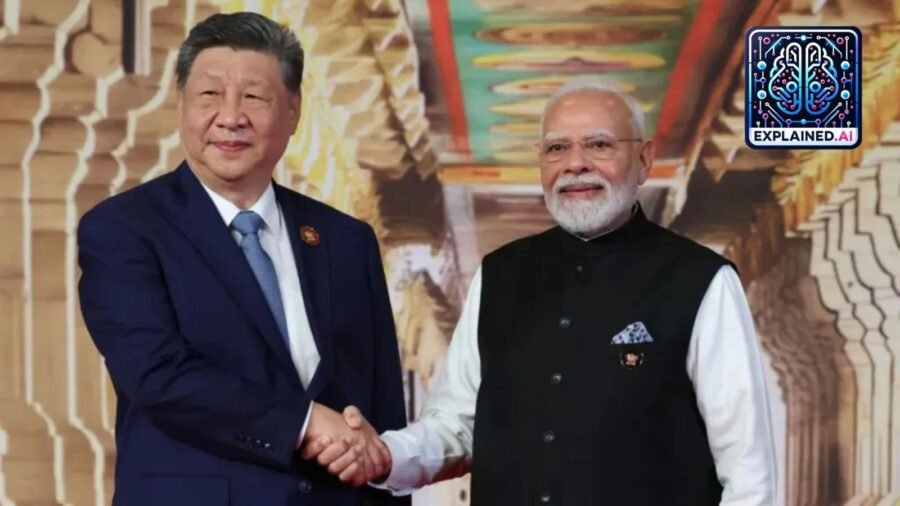
Chinese President Xi Jinping has proposed setting up a BRICS open-source artificial intelligence (AI) community, offering to support cooperation among member countries on developing and deploying large language models, AI training and a common digital cloud platform. The initiative could widen Beijing’s effort to position its AI technology as an alternative to proprietary systems controlled largely by American companies.
Speaking at the BRICS Summit in New Delhi on Sunday, Xi said China would take the lead in establishing a “BRICS AI open source community”, support cooperation on large language models, organise specialised AI seminars and training courses, and build what he described as an open ecosystem for AI. He separately proposed setting up a BRICS digital ecosystem cloud platform, and expanding cooperation on digital skills, technology exchanges and intelligent manufacturing.
He separately proposed setting up a BRICS digital ecosystem cloud platform, and expanding cooperation on digital skills, technology exchanges and intelligent manufacturing.
Story continues below.
Subscribe to see fewer ads.
The proposal has particular relevance for India, which has also pushed for wider access to compute, datasets and AI models for developing countries, while simultaneously spending public money to build domestic AI infrastructure and Indian foundation models through the IndiaAI Mission. Any BRICS initiative on shared models or cloud infrastructure would therefore sit alongside New Delhi’s own effort to expand access to AI without relying entirely on foreign technology providers.
Xi’s proposal comes as China has stepped up its outreach to developing countries on AI. At the World Artificial Intelligence Conference in Shanghai in July, Xi announced 5,000 AI training and seminar opportunities for developing countries over five years, and proposed AI application cooperation centres with groupings including BRICS, ASEAN and the African Union.
What BRICS has agreed to
Xi’s open-source proposal has not been adopted as a BRICS-wide programme. The New Delhi Declaration issued after the summit does not mention the proposed open-source community or cloud platform. It instead commits BRICS countries more broadly to cooperation on improving access to AI resources, while focusing on safety, security, reliability and inclusiveness.
The declaration also refers to an earlier BRICS statement on global AI governance and says members will continue cooperation in this area.
Story continues below this ad
However, with China due to take over the BRICS chairship in 2027, it could place these proposals before the grouping again.
Why China is focusing on open AI models
The proposal comes at a time when Chinese companies have released a growing number of open-weight AI models.
DeepSeek and Alibaba’s Qwen family of models, among others, can be downloaded and run by developers on their own infrastructure, subject to their respective licences. This is different from closed models that are generally accessed through APIs controlled by companies such as OpenAI, Anthropic and Google.
China has also increasingly linked open AI with access for developing countries. Chinese officials have pointed to models such as DeepSeek and Qwen while arguing that AI should be made more affordable and accessible globally.
Story continues below this ad
The BRICS proposal would extend that approach into a multilateral grouping that includes large developing economies across Asia, Africa, Latin America and West Asia.
The US-China divergence in AI
China’s push to widen access to its AI ecosystem comes alongside a separate debate in the United States over how Beijing’s progress should shape efforts to regulate or slow the development of advanced AI systems. The American ecosystem also sees China as perhaps its biggest competition.
Anthropic chief executive Dario Amodei addressed this directly in a recent blog post on what he called “global pacing” of frontier AI.
Amodei argued that attempts to slow the development of increasingly powerful AI systems in the US would have to take into account the pace of progress in China. If US companies slowed down while Chinese labs continued advancing, he said, China could eventually close or reverse the technological gap.
Story continues below this ad
He therefore argued that any long-term attempt to slow frontier AI development globally would require some form of agreement with China.
Amodei compared such an arrangement to Cold War-era arms-control agreements, while stressing that verification would be critical because either side could gain an advantage by secretly continuing development.
What Xi’s proposal could mean for India
India and China both aspire to be the leading voice of the Global South, even though, at the moment, Beijing holds a clear edge over New Delhi’s AI capabilities. However, India, too, has also repeatedly called for wider access to AI resources.
At the AI Impact Summit earlier this year, the government pushed for broader access to compute, datasets, models and other AI infrastructure, particularly for developing countries. At the same time, India is investing in domestic AI capacity through the IndiaAI Mission. The programme includes subsidised compute infrastructure and support for Indian foundation models and datasets.
Story continues below this ad
That means any eventual BRICS programme would sit alongside India’s existing effort to build domestic AI capabilities.
For now, however, there is no formal BRICS open-source AI platform. Xi’s announcement remains a Chinese proposal, and neither the New Delhi Declaration nor the other summit documents set out details on which models would be used, where any common cloud infrastructure would be hosted, how data would be handled, or which countries would participate.
Those details are likely to determine how substantial the initiative becomes when China assumes the BRICS chairship next year.

The AI race has a bigger risk than extinction
By Sohail Khan · 14 Sep
Nimisha Sajayan ate 9,000 calories a day for a role. Here’s how she lost the weight
By Sohail Khan · 14 Sep
NALSAR tiff only latest in long history of conflict between BCI and law students
By Sohail Khan · 14 Sep
Leave a Reply