Can jurists be appointed as Supreme Court Judges? | Explained
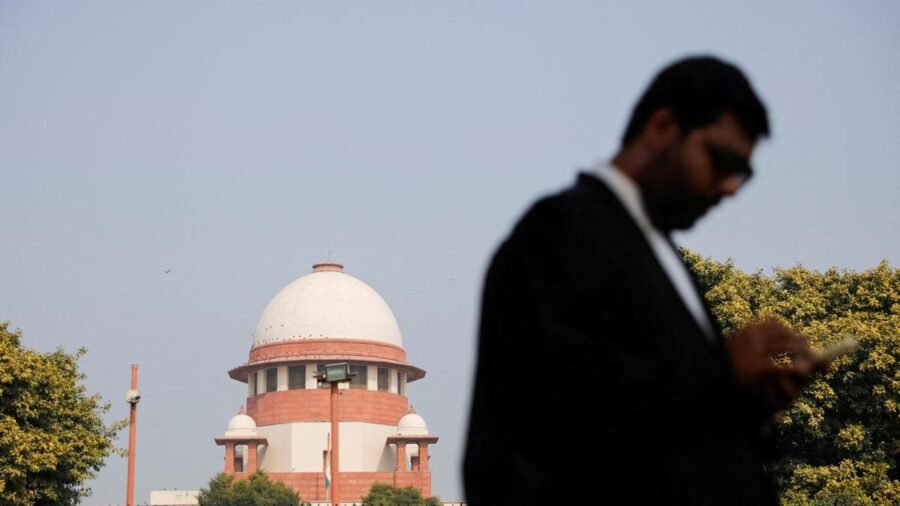
The story so far: Supreme Court Judge Justice Ujjal Bhuyan on Sunday (August 30, 2026) questioned why a constitutional provision allowing a “distinguished jurist” to be appointed as a Judge of the Supreme Court has remained unused for more than 76 years. Addressing the 13th convocation of National Law University, Delhi’s LL.M. programme, Justice Bhuyan pointed out that Article 124(3) of the Constitution permits the appointment of a person who, in the President’s opinion, is a “distinguished jurist” as a Supreme Court Judge. However, no legal academic has so far been elevated to the Supreme Court under this provision.
What does the constitutional provision stipulate?
Article 124(3) of the Constitution lays down three routes through which a person may qualify for appointment as a Supreme Court Judge — a person must have served as a High Court Judge for at least five years, practised as an advocate of a High Court for at least 10 years, or be, in the opinion of the President, a “distinguished jurist”.
The provision, however, does not define who qualifies as a “distinguished jurist” or prescribe any minimum period of professional experience for such a person. Its inclusion as a separate category nevertheless indicates that the framers contemplated a route to the Supreme Court beyond the conventional pathways of judicial service and legal practice, potentially opening the door to eminent legal scholars and academics.
What do Constituent Assembly debates reflect?
The “distinguished jurist” category was added to the list of persons eligible for appointment to the Supreme Court in the draft Constitution. The Constituent Assembly debates reflect that this was intended to bring diversity in professional backgrounds among those appointed to the Bench of the Supreme Court.
Moving the amendment on May 24, 1949, Constituent Assembly member H.V. Kamath said its purpose was “to open a wider field of choice for the President in the matter of appointment of Judges of the Supreme Court”. He argued that persons with “outstanding legal and juristic learning” were “not necessarily confined to judges or advocates”.
The Constituent Assembly debates also referred to the appointment of Felix Frankfurter to the U.S. Supreme Court. In 1939, President Franklin D. Roosevelt appointed Frankfurter, who had been a professor at Harvard Law School for 25 years, as an Associate Justice of the U.S. Supreme Court. Justice Frankfurter went on to become one of the court’s most celebrated Judges and a noted advocate of the doctrine of judicial restraint — the principle that courts should ordinarily respect the domain of the elected legislature and the executive, and exercise restraint in interfering with their decisions.
Assembly member M. Ananthasayanam Ayyangar cited Justice Frankfurter’s appointment to highlight that legal expertise was not confined to practising lawyers or Judges. He noted that there were also “many writers” and “jurists of great eminence” who could be considered. Describing the appointment as a “novel experiment” that had proved “enormously successful”, Mr. Ayyangar supported the inclusion of a “distinguished jurist” among those eligible for appointment to the Supreme Court.
Can a ‘distinguished jurist’ be appointed as a High Court Judge?
The Constituent Assembly had also considered allowing “distinguished jurists” to be appointed as High Court Judges. On June 7, 1949, Professor Shibban Lal Saksena moved an amendment proposing their inclusion among those eligible for appointment to a High Court. The proposal, however, was not accepted.
Nearly three decades later, the Constitution (Forty-second Amendment) Act, 1976, amended Article 217(2) to allow a person who was, in the opinion of the President, a “distinguished jurist” to be appointed as a High Court Judge. The provision came into force in January 1977 but was short-lived. It was omitted by the Constitution (Forty-fourth Amendment) Act, 1978, with effect from June 20, 1979.
Thus, while Article 124(3) continues to provide for the appointment of a “distinguished jurist” to the Supreme Court, no similar provision exists for appointments to the High Courts.
What has limited the use of the provision?
Despite being part of the Constitution since its inception, the provision has never been invoked. Supreme Court appointments have overwhelmingly been made from among High Court Judges, while only 11 advocates have been directly elevated from the Bar.
One concern surrounding the appointment of legal academics is their lack of courtroom and procedural experience, which could pose challenges in adjusting to the practical demands of judicial work. At the same time, full-time law teachers face restrictions on practising as advocates, limiting their opportunities for regular engagement with the courts.
Under Rule 49 of the Bar Council of India Rules, an advocate who takes up full-time salaried employment must cease to practise for as long as such employment continues. In 2019, the Consortium of National Law Universities sought a relaxation of the restriction to allow full-time law faculty to practise in courts, contending that greater engagement with litigation could help bridge the divide between “law in books” and “law in action”.
The late Shamnad Basheer, a prominent intellectual property law scholar, had also petitioned the Bar Council of India to reconsider the restriction. He contended that courtroom exposure could strengthen legal education and clinical training.
His petition relied on the Supreme Court’s 2018 ruling in Ashwini Kumar Upadhyay v. Union of India, which had held that legislators could continue to practise as advocates since they were not “full-time salaried employees” covered by Rule 49. Drawing a parallel with legal academics, Professor Basheer contended that pursuing another profession should not, by itself, prevent a person from practising law unless the two roles created a conflict that compromised the advocate’s independence.
How have legal academics contributed to the development of law?
Legal academics have, on several occasions, contributed directly to the development and interpretation of law. A notable example is Professor Basheer’s intervention before the Supreme Court in Novartis AG v. Union of India (2013). The case concerned Novartis’ attempt to patent a modified form of its cancer drug Glivec and involved the interpretation of Section 3(d) of the Patents Act, 1970, which restricts patents for new forms of known substances unless they demonstrate enhanced efficacy. Professor Basheer assisted the court as an “academic intervenor” and amicus curiae, offering an independent academic perspective on the issues before it. The writings of scholars such as Professor Upendra Baxi have similarly shaped the discourse around public interest litigation in India.
Legal scholarship has also influenced jurisprudence in other jurisdictions. Samuel D. Warren and Louis Brandeis’ seminal 1890 article on the “right to privacy” helped shape privacy law in the United States, while Guido Calabresi’s The Costs of Accidents became an influential work in modern tort law.


With CM Vijay opening the Mettur dam, focus turns to longevity of water release
By Sohail Khan · 1 Sep

Leave a Reply