Campaign to reduce the intake of salt
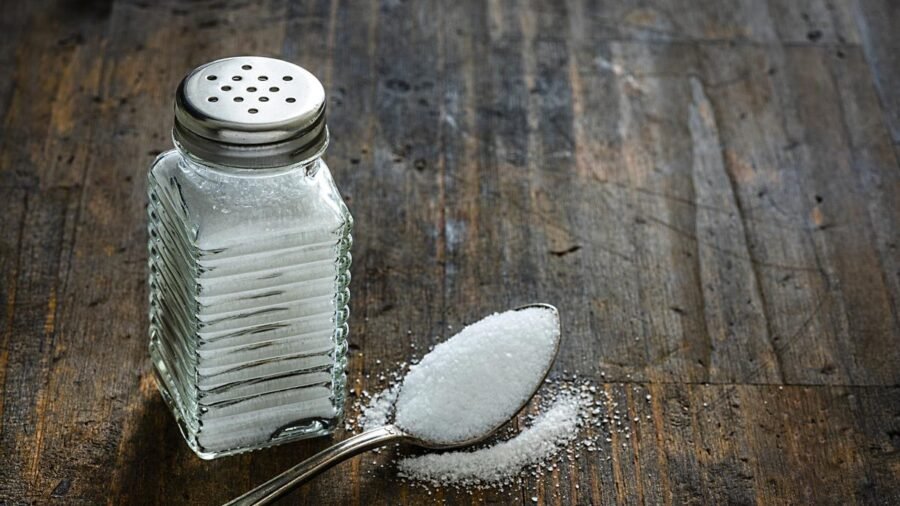
Salt, as an essential electrolyte, sits at the centre of human well-being, but being most prone to overuse and misuse, the condiment remains at the heart of illness as well. When Tamil Nadu Health Minister K.G. Arunraj took salt to the floor of the Assembly, he dragged it willy-nilly into public discourse. He announced plans to launch a multi-pronged mission to reduce salt intake, turning attention to the right quantities and forms that must be consumed. The Minister’s speech made it clear that the government’s plans were not merely about a dietary tweak, but instead, a recalibration of how wellbeing is perceived.
Salt, in the right proportions, facilitates hydration, nerve signalling, muscle function, and digestion and also has a role to play in stress physiology. However, in excess, or in ultra-processed foods, it can have a deleterious impact on health, increasing the risk of stroke, heart disease and kidney strain over time. On the other hand, very low salt intake can contribute to hypotension, fatigue, dizziness and brain fog, as well.
The health difference comes from the quantity of salt consumed and the overall diet patterns, undergoing rapid changes in favour of ultra-processed, packaged foods, and fast foods, that tend to be high in salt. The Indian diet itself, with its pickles and spicy curries, lends itself to tilting the salt cellar over a little too often. Surveys by the Indian Council of Medical Research show that in India, men consume an average of 8.9 gms daily, while women consume about 7.1 gms. Urban areas tend to consume higher amounts of salt, averaging around 9.2 gms a day. The WHO, which recommends keeping the intake under 5 gms of salt per day, released a set of guidelines in January 2025, recommending the use of lower-sodium salt substitutes, essentially including potassium chloride, and reducing the percentage of sodium chloride in table salt.
In Tamil Nadu, hypertension is a major public health concern. A 2024 study by Selvavinayagam T.S. et al., published in PLOS 1, showed adult prevalence of hypertension hovering around 33.9%, much above the national average of 28.5%. There is a direct link between consuming excess salt and hypertension — eating too much salt causes the body to retain extra water, which increases blood volume and puts higher pressure on the artery walls, leading to clinical hypertension.
Action plan
The Tamil Nadu government’s plan is appropriately comprehensive. For the first time, a statewide survey using urine samples will scientifically measure salt consumption. Salt will be gradually reduced in government-run kitchens, including the Nutritious Meal Programme, ICDS centres, government hospitals and hostels. The feasibility of introducing a low-sodium salt substitute will be examined.
This will be backed by a state-wide awareness campaign on how to read labels on packages, tasting before adding salt and using natural flavour enhancers. Researchers of a randomised, double-blind, controlled trial reported in the American Journal of Clinical Nutrition, in 2021, wrote that the replacement of salt with a reduced-sodium, added-potassium salt substitute is an acceptable and effective dietary intervention for lowering systolic blood pressure in persons with hypertension in rural India.
The State also intends to step up its hypertension control activities through its community health outreach programme ‘Makkalai Thedi Maruthuvam’ and other public health care institutions. People diagnosed with hypertension will receive systematic counselling and anti-hypertension drugs. There is evidence that such closely-monitored health interventions succeed. A study published recently in Nature, Archana Ramalingam et al., studying the cascade of care between 2019-20 and 2023-24 in Tamil Nadu, showed that overall, hypertension care in Tamil Nadu improved, with increased use of public health facilities for treatment.
The Sapiens Health Foundation has welcomed the new salt reduction campaign of the Tamil Nadu government. Founder Rajan Ravichandran says: “This is a wonderful surprise; we have been knocking at many doors to bring in awareness of salt reduction in the public health sector. It can be very powerful in changing the way people consume salt. We just have to go back to 2005, when the campaign initiated by Graham MacGregor of the World Action on Salt, Sugar and Health resulted in a reported 30% reduction of salt in bread in the United Kingdom,” Dr. Rajan adds.
G. Sengottuvelu, senior interventional cardiologist, Apollo Hospitals, explains further: “Excess salt is one of the most important and preventable contributors to high blood pressure, heart attack and stroke.” His argument is that Indians’ preference for salty food is largely an acquired habit, often beginning in childhood, and the palate can adapt when salt is gradually reduced. Cutting down salt is a simple change that can make a major difference to cardiovascular health — less salt today can mean lower blood pressure, fewer heart attacks and fewer strokes tomorrow.
Incidentally, the regulator Food Safety and Standards Association of India’s submission of guidelines for ingredient labelling on packaged food has grabbed eyeballs. While experts point to lacunae within the labelling guidelines, it does seem that momentum is growing towards building a society that is aware of the importance of salt and regulating it, and reclaiming the kitchen staple as a transformative touchstone for improved public health. As Tamil Nadu rolls out its programme, hopefully with scientific vigour and cultural sensitivity, other States will do well to watch and emulate. If it is possible to cut down hypertension, cardiovascular disease, and kidney disease with adjusting the size of a single pinch, then, the question is why not?

Missing measure in India’s magnet mission
By Sohail Khan · 21 Sep
India’s real rate moment, the cost of delay
By Sohail Khan · 21 Sep
India’s NGOs at a new funding crossroads
By Sohail Khan · 20 Sep
Leave a Reply