Busan Agreement: 1 truce, 2 giants & global trade
Benchmarks
Nifty23,073.50-373.3
FEATURED FUNDS★★★★★
Motilal Oswal Midcap Fund Direct-Growth
5Y Return
21.07 %
Invest Now
Enter search text:
Business News›News›International›Global Trends›'Busan Agreement' explained: What the US-China trade truce means for world trade
Read Today's Paper
'Busan Agreement' explained: What the US-China trade truce means for world trade
Synopsis
US Treasury Secretary Scott Bessent announced the extension of the Busan Agreement until January 10, 2027. This extension allows both sides more time to negotiate without facing immediate tariff threats. The Busan Agreement was initially established to ease trade tensions between the US and China last year. Key areas of focus include agriculture and non-tariff barriers that require further discussion.
 AP
APThe US-China trade truce is getting an extension.
US Treasury Secretary Scott Bessent said on Fox News on Wednesday that Washington and Beijing had agreed to extend the so-called Busan Agreement until January 10, giving the two sides more time to work on their economic relationship.
The agreement was originally due to expire on November 10.
“We have agreed today that we will extend what we call the Busan agreement, the economic detente between the two countries,” Bessent told Fox News, adding that the extension would give them more time to work on the economic front.
Also Read: After Trump-Xi handshake, Bessent says US-China 'Busan Agreement' extended till January 10
The announcement comes after Bessent held talks with Chinese Vice Premier He Lifeng this week. It also keeps in place a truce that has helped prevent the world's two biggest economies from slipping back into the kind of tariff escalation seen last year.
That matters well beyond Washington and Beijing. The US and China sit at the heart of global manufacturing and supply chains, so a fresh trade fight between them can quickly show up in shipping costs, factory input prices, technology supplies and the cost of goods around the world.
So, what is the Busan Agreement?
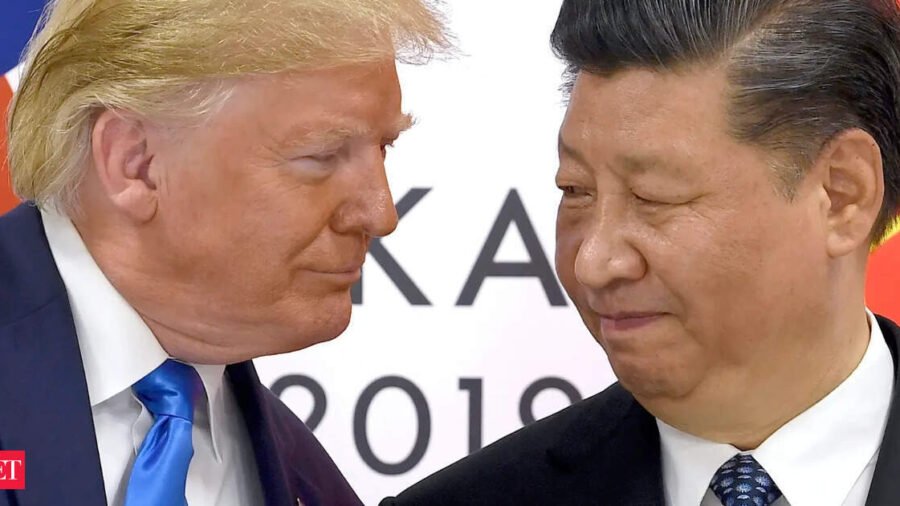
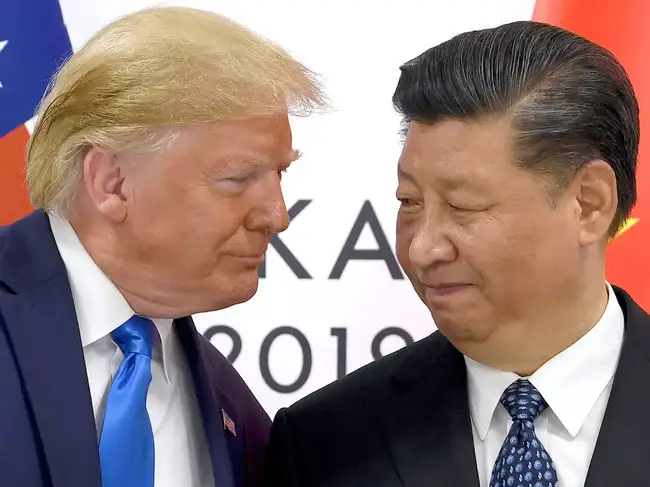
The Busan Agreement is the name given to the trade truce reached by US President Donald Trump and Chinese President Xi Jinping in Busan, South Korea, in October 2025.
It came after months of escalating tariffs and retaliatory measures between the two countries.
By the time Trump and Xi met, the dispute had moved well beyond tariffs. Washington and Beijing were also using export controls and restrictions involving rare earths, technology, shipping and other strategic areas to put pressure on each other.
The Busan meeting was meant to stop that escalation.
Under the arrangement, the US agreed to reduce some tariffs on Chinese goods, while China agreed to resume purchases of US soybeans, pause new rare-earth export restrictions and take steps against the trade in fentanyl precursor chemicals.
Both sides also agreed to suspend or delay several other measures that had threatened to further disrupt trade.
How did the two countries get there?
The agreement was the product of a trade war that had steadily widened.
Trump's return to the White House in 2025 brought a new round of tariffs on Chinese goods. Beijing responded with tariffs of its own and restrictions on critical minerals.
The confrontation intensified after Trump's so-called “Liberation Day” tariff offensive, when the US announced sweeping new tariffs. China retaliated, and the two sides threatened further measures.
At one point, the tariffs being threatened by Washington and Beijing had crossed 100%, raising fears of a much wider disruption to global trade.
The stakes were particularly high because some of the measures went after areas where one side had significant leverage. China, for example, is a major supplier of rare earths and magnets used in cars, electronics, aerospace and defence.
That put manufacturers around the world on alert.
By the time Trump and Xi met in Busan, the immediate concern was no longer simply how much it would cost to import a Chinese product into the US. Businesses were also trying to work out whether they could continue getting the materials and components they needed at all.
The agreement offered a way to step back.
Also Read: View: The US is badly losing its trade war with China
What did the Busan deal actually do?
The simplest way to understand the Busan agreement is as a series of pauses and commitments aimed at preventing further escalation.
The US cut tariffs on Chinese imports, including the tariff linked to fentanyl-related concerns. China agreed to resume US soybean purchases and pause new rare-earth export controls.
Washington also suspended some technology-related restrictions and measures aimed at China's maritime, logistics and shipbuilding sectors. The two sides agreed to pause retaliatory port fees as well.
Reuters reported at the time that the arrangement broadly rolled back some of the escalation that had taken place during the year. But it did not settle the bigger disagreements between the two countries, including disputes over China's industrial policy, manufacturing capacity and the US restrictions on technology exports.
That is an important distinction.
Busan was a truce, not a full trade settlement.
Why is the latest extension significant?
The latest announcement means the truce will remain in place beyond its original November deadline.
For Washington and Beijing, that creates more room to negotiate without immediately facing another deadline that could trigger a fresh round of tariffs or retaliatory action.
Bessent has indicated that the US wants to use that time to work towards a broader economic understanding rather than simply keep extending individual arrangements.
US Trade Representative Jamieson Greer has also said the two countries are expected to make announcements on agriculture and non-tariff barriers. Traders are watching for progress on an agreed mutual tariff reduction covering about $30 billion in goods, with China potentially able to move first by cutting duties on US agricultural imports.
So there is still plenty to negotiate.
Why should the rest of the world care?
Because the US-China trade relationship is not just a bilateral story.
Together, the two economies account for a huge share of global trade and manufacturing. Products may be designed in one country, assembled in another and rely on components or raw materials sourced from several others.
That makes a major US-China trade confrontation difficult to contain.
The tariff escalation last year offered a clear example. As Washington and Beijing raised duties on each other's goods, businesses had to rethink sourcing, pricing and investment decisions.
The rare-earth dispute added another layer of uncertainty. China has an important position in the supply of rare earths and magnets used across several industries. Restrictions can therefore affect manufacturers that are not based in either the US or China.
Shipping was another pressure point.
The Busan agreement included a pause in duelling port fees imposed by Washington and Beijing on shipping linked to each other's maritime sectors. That helped remove another potential cost and disruption from global trade routes.
For businesses, therefore, the value of the truce is not only in the tariffs that were reduced. It is also in the uncertainty that was avoided.
A manufacturer that knows tariffs, export controls and shipping restrictions will not suddenly change has more room to plan production, source materials and set prices.
Has the US-China trade war ended?
The Busan agreement has reduced tensions, but the issues that produced the trade war in the first place have not disappeared.
Washington continues to raise concerns about China's industrial policies, manufacturing capacity, technology access and trade practices. Beijing continues to oppose US tariffs and restrictions on Chinese access to advanced technologies.
That is why the agreement has been described as a fragile truce rather than a permanent settlement.
Even now, there is unfinished business. Bessent has said some Chinese commitments still need to be implemented more fully, while Washington is looking for further progress in areas such as agriculture and non-tariff barriers.
The extension to January therefore buys time, but it does not remove the underlying tensions.
What happens next?
The new deadline is January 10, 2027.
Between now and then, Washington and Beijing will have to show whether the temporary arrangements can turn into something more durable.
Agriculture and market access will be closely watched in the near term, particularly the proposed tariff reduction covering about $30 billion in goods.
But the bigger test will be whether the two countries can make progress on the harder issues that were left unresolved in Busan.
For global trade, that is the real significance of the latest extension.
The Busan Agreement has given businesses another period of relative calm. What happens during that period will determine whether it becomes the foundation for a more stable US-China trade relationship, or simply another pause before tensions rise again.
(With inputs from Reuters)
Add 

(You can now subscribe to our WhatsApp channel)
(You can now subscribe to our WhatsApp channel)
Read More News on
Busan agreement explainedbusan agreement explainerwhat is the busan agreementScott BessentBusan Agreementglobal trade impact


Enter search text:
Continue reading with one of these options:
Limited Access
Free
Login to get access to some exclusive stories
& personalised newsletters
Login Now
Unlimited Access
Starting @ Rs120/month
Get access to exclusive stories, expert opinions &
in-depth stock reports
Subscribe Now
ET
Unlock Access to All Exclusives with ETPrime FREE TRIAL
15 Days Free: Unlock All ETPrime Exclusives, Market Tools & ePapers
Trial offer expiring in00 : 05 : 00
I'd rather pay ₹2599 now


Uh-oh! This is an exclusive story available for selected readers only.
Worry not. You’re just a step away.

Prime Account Detected!
It seems like you're already an ETPrime member with
Login using your ET Prime credentials to enjoy all member benefits
Log out of your current logged-in account and log in again using your ET Prime credentials to enjoy all member benefits.
Unlock ETPrime's Exclusive Stories Today!
Subscribe to gain powerful insights on business, stock market and industry trends.
Big Price Drop! Flat 40% Off
Student Only Offer
Already a Member? Sign In now
Already a Member? Sign In now
Already a Member? Sign In now
Offer Exclusively For You
Save up to Rs. 700/-
ON ET PRIME MEMBERSHIP
Avail Offer
Offer Exclusively For You
Get 1 Year Free
With 1 and 2-Year ET prime membership
Avail Offer
Offer Exclusively For You
Get 1 Year Free
With 1 and 2-Year ET prime membership
Avail Offer
Offer Exclusively For You
Get Flat 40% Off
Then ₹ 1749 for 1 year
Avail Offer
Offer Exclusively For You
ET Prime at ₹ 49 for 1 month
Then ₹ 1749 for 1 year
Avail Offer
Special Offer
Get flat 40% off on ETPrime
Avail Offer
Avail Offer
Claim NowAlready a Member? Sign In now
Need Assistance?
Connect with an ETPrime expert for personalized support and guidance
+91 9484700004
' + h3 + '
' + h4 + '
- ' + listing + '
What’s Included with

1Exclusive Insights That Matter
Uncover the truth with our investigative stories
Make strategic moves using the real-world case studies
Read industry-specific stories to identify emerging trends
Spot opportunities with in-depth insights that matter

Trump temper on H-1B visas is forcing Indians to do these things to stay put in US

What Adani’s US indictment means for India Inc’s overseas fundraising

Why veterans like Reliance, L&T are on acquisition spree? Aswath Damodaran has an answer.

Will China’s dollar bond sale in Saudi Arabia trump the US in financial world?

Huawei launches its own OS to compete with Google and Apple. But can it win beyond China?

The problem with lab grown diamonds
Why a falling rupee is a better option for the economy

A list of top 20 momentum stocks that have delivered massive returns in one year
2Invest Wisely With Smart Market Tools & Investment Ideas
Alpha Trade

Get daily trade ideas from SEBI-registered research analysts.
Investment Ideas

Grow your wealth with stock ideas & sectoral trends.
Stock Reports Plus

All-in-one stock research with Stock Score, peer comparison & key signals.
BigBull Portfolio

Get to know where the market bulls are investing to identify the right stocks.
Stock Analyzer
Check the score based on the company's fundamentals, solvency, growth, risk & ownership to decide the right stocks.
Market Mood

Analyze the market sentiments & identify the trend reversal for strategic decisions.
Stock Talk Live at 9 AM Daily

Ask your stock queries & get assured replies by ET appointed, SEBI registered experts.
3Stay informed anytime, anywhere with ET ePaper
ePaper – Print View
Read the PDF version of ET newspaper. Download & access it offline anytime.
ePaper – Digital View
Read your daily newspaper in Digital View & get it delivered to your inbox everyday.
Wealth Edition

Manage your money efficiently with this weekly money management guide.
4Times Of India Subscription (1 Year)
ePaper

Read the PDF version of newspaper. Download & access it offline anytime.
Deep Explainers

Explore the In-depth explanation of complex topics for everyday life decisions.
Health+ Stories

Get fitter with daily health insights committed to your well-being.
Personal Finance+ Stories
Manage your wealth better with in-depth insights & updates on finance.
New York Times Exclusives
Stay globally informed with exclusive story from New York Times.
5Enjoy Complimentary Subscriptions From Top Brands
Docubay Subscription

Stream new documentaries from all across the world every day.
Stories you might be interested in

UPI may fetch Rs 15,000 crore with 0.4% MDR
By Sohail Khan · 24 Sep
Asian Games: Tough draws for Lakshya, Sindhu
By Sohail Khan · 24 Sep
Gold rate today: 24k vs 22k vs 20k vs 18k prices
By Sohail Khan · 24 Sep
Leave a Reply