BRICS education agenda: Childhood care, courses on par with market demand
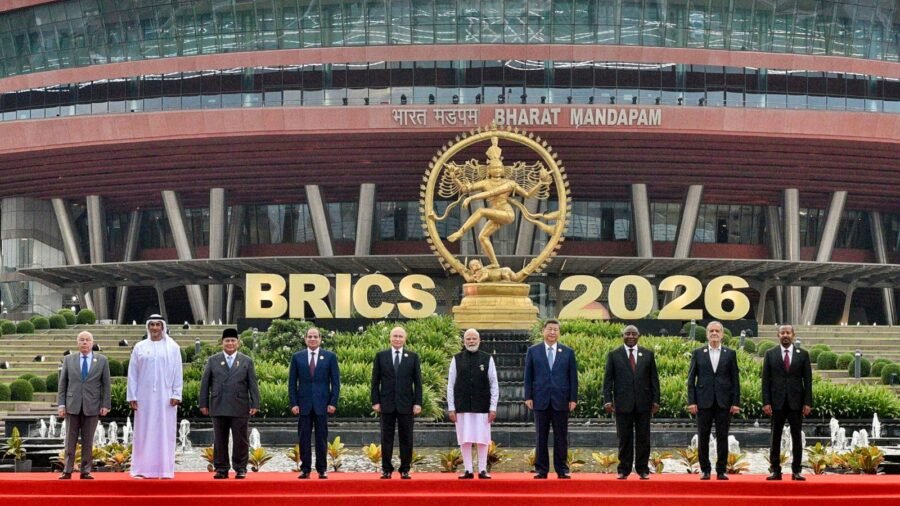
The BRICS nations have called for cooperation in Early Childhood Care and Education (ECCE) and Foundational Literacy and Numeracy (FLN), according to the New Delhi Declaration adopted at the 18th BRICS Summit on Saturday.
They also welcomed the outcomes of the 13th BRICS Education Minister’s meeting in Bhubaneshwar last month.
The New Delhi Declaration states, “We encourage the sharing of best practices, cooperation in Early Childhood Care and Education and Foundational Literacy and Numeracy, mutual recognition of qualifications, academic and professional mobility, digital literacy, safe, ethical, human-centred use of emerging technologies, including artificial intelligence, in education, and stronger institutional partnerships.”
Story continues below.
Subscribe to see fewer ads.
The Declaration also highlighted another priority sector — the BRICS Technical and Vocational Education and Training (TVET) Cooperation Alliance (BRICS-TCA).
“We highly recognize the important role played by the BRICS TVET Cooperation Alliance (BRICS-TCA) in building a multilateral platform for project cooperation, promoting information exchange, resource sharing, and advancing the joint development of TVET among member states. We look forward to the BRICS-TCA Biennial Progress Report and the BRICS-TCA Compendium of Sustainable Skill Initiatives,” the Declaration stated.
It also reaffirmed the commitment to strengthening skill development systems, digital literacy, and enhancing workforce preparedness across BRICS countries, while promoting the alignment of training programmes with evolving market demands and sustainable development priorities by promoting linking of TVET institutions with industries.
The Declaration also reaffirmed the BRICS countries’ support for continued cooperation through existing education mechanisms, including the BRICS Network University. It has welcomed India’s initiative to circulate the BRICS Guiding Principles on strengthening academic collaboration on traditional and indigenous knowledge systems.
Story continues below this ad
The Declaration encouraged the BRICS Network University to consider traditional, indigenous and local knowledge systems as an additional International Thematic Group.
“We also encourage collaborative efforts to improve institutional governance, enhance quality and accessibility in education, and promote exchange and scholarship programmes at undergraduate and postgraduate levels, including in Science, Technology, Engineering and Mathematics, TVET-industry linkage to foster innovation and expand job opportunities…”
Mental wellness: NIMHANS to be nodal body for BRICS Centres of Excellence
By Sohail Khan · 13 Sep
‘Surprise and relief’: Scribes from UAE, Iran react to their leaders’ meeting
By Sohail Khan · 13 Sep
BRICS should play ‘due role’ in bringing peace to West Asia: Xi Jinping
By Sohail Khan · 13 Sep
Leave a Reply