Bought insurance elsewhere? Cashless repair stays
Synopsis
IRDAI's proposed reforms could revolutionize motor insurance purchases, making them more transparent and customer-friendly. With direct digital buying options, increased awareness of alternatives, and safeguards against dealer biases, these changes aim to empower policyholders and enhance competition. Discover how these adjustments could impact your next car or two-wheeler insurance policy.
Buying motor insurance along with a new car or two-wheeler could become more transparent if IRDAI's proposed distribution reforms are implemented.
The regulator has proposed changes that could give customers a more direct option to buy motor insurance, improve transparency around insurance offered by vehicle dealers and strengthen safeguards against practices that may influence a customer's choice.
“The changes would directly affect automobile dealers, OEM-linked brokers, insurers and other motor insurance distributors quite drastically,” says Shailaja Lall, Partner at Shardul Amarchand Mangaldas & Co.
So, what could change for car and two-wheeler buyers? Here are the key proposals policyholders should know.
1. You may get a direct digital option to buy motor insurance
One of the biggest proposed changes is to give customers a direct digital route to buy motor insurance, instead of relying only on the insurance option offered by the vehicle dealer.
IRDAI has proposed making motor insurance products for both new and old vehicles available on Market Infrastructure Institution (MII) platforms such as Bima Sugam.
The consultation paper proposes that these not-for-profit platforms should not charge more than 5% of the premium to recover their platform costs.
For a customer, this could mean another route to buy motor insurance and compare available options when purchasing or renewing a policy.
The proposal also says motor dealers should prominently display the option of purchasing motor insurance through the MII platform, including a QR code to access it.
2. Car dealers may have to make customers aware of other insurance-buying options
At present, a customer buying a new vehicle often receives an insurance option through the dealer. IRDAI's proposal seeks to ensure that customers are made aware that they have an alternative digital route.
Motor dealers would be required to make customers of new vehicles aware of the MII option.
The customer's mobile number would also be shared with the Public Insurance Registry (PIR), which would validate it with the vehicle registration system and send a post-event direct message to the customer.
This could make customers more aware that buying insurance through the dealer is not necessarily the only route available.
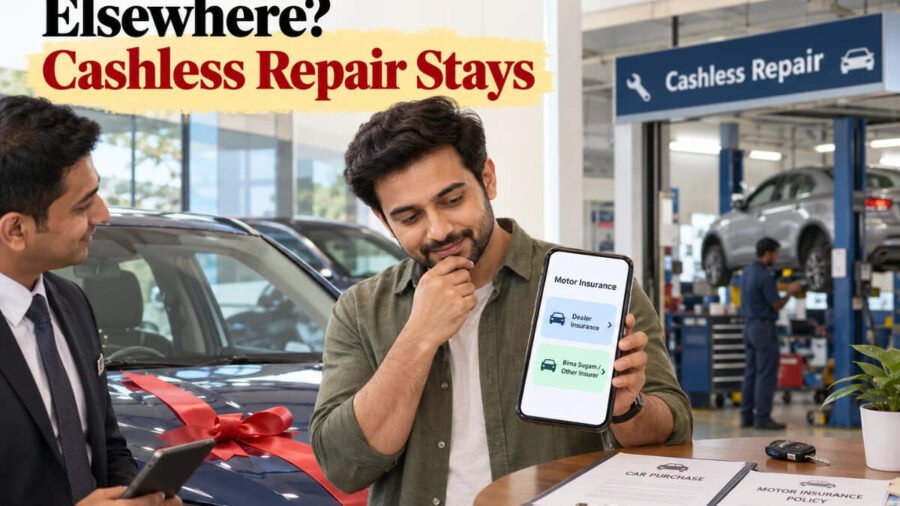
3. Can a dealer deny cashless repair if you bought insurance elsewhere?
This is one of the most important proposed safeguards for policyholders. IRDAI proposes that motor dealer Insurance distribution entities (IDEs) and PoSPs should not deny cashless repair service merely because the customer did not purchase the insurance policy from that dealer.
For a customer, this could matter when the vehicle needs repairs at the dealer's workshop after an accident.
4. Insurance sales should not be linked to incentives that work against policyholders
The consultation paper also proposes safeguards against arrangements between OEMs or insurance distribution entities and motor dealers that may work against policyholders' interests.
These include service-level agreements and performance-linked incentive plans that reward motor dealers for selling insurance policies.
The aim is to prevent incentives linked to insurance sales from influencing the way motor insurance is offered to customers. For policyholders, this could mean greater emphasis on choosing insurance based on the policy and price rather than the dealer's sales incentives.
5. Lower commissions could change the cost structure of motor insurance
IRDAI has identified motor insurance as an area where high distribution commissions need to be addressed.
The consultation paper says average motor insurance commissions are around 24%, with rates ranging from 13% to 50%. It also says OEM brokers and MISPs received almost Rs 7,050 crore in commissions on around Rs 29,000 crore of premium in FY25.
The regulator has proposed that mandatory third-party insurance and easy-to-sell motor insurance for new vehicles should have much lower commissions.
For consumers, the key question is whether lower distribution costs eventually translate into better pricing or value. IRDAI's stated objective is to reduce structural costs and improve affordability, although the final impact on premiums will depend on how insurers price their products after the reforms.
The final impact, however, will depend on the provisions ultimately adopted by IRDAI and the transition framework accompanying them, says Lall.
(Join our ETWealth WhatsApp channel for all the latest updates)
Add 

(Catch all the Personal Finance News, Breaking News, Budget 2025 Events and Latest News Updates on The .)
…more

India’s startup cash keeps finding its fav address
By Sohail Khan · 25 Sep
Netanyahu defiant at UN, eyes reelection at home
By Sohail Khan · 25 Sep
Russian strikes shut ArcelorMittal plant
By Sohail Khan · 25 Sep
Leave a Reply