Bone health in later years must be built early in life
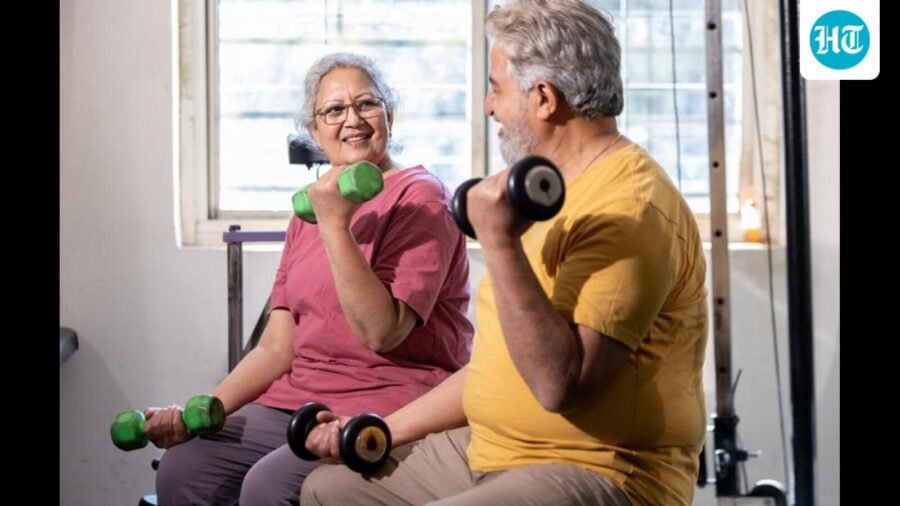
Bone health is built over a lifetime, and the consequences of poor bone health may become apparent suddenly, often with fragility fractures
Published on: Sep 25, 2026, 06:15:19 IST
Prefer HTon Google
Share via
Copy link
It often begins with a fall — not a dramatic fall, just a stumble in the bathroom, a missed step on the stairs, or a fall while getting out of bed. For an older person, a broken hip or spine can change life in an instant. Hospitalisation follows, then surgery, physiotherapy and weeks or months of recovery. Such fractures are called fragility fractures — occurring after a minor fall or injury because the bones have become weak, usually due to osteoporosis.
Osteoporosis means “porous bones”. Bones gradually lose strength, sometimes over years, before announcing this with a fracture. We tend to think of osteoporosis as a disease of old age. In reality, bone health is built over a lifetime, and the consequences of poor bone health may become apparent suddenly, often with fragility fractures. Osteoporosis is, thus, a “silent disease”. The International Osteoporosis Foundation’s Asian Audit (2025) emphasises the growing burden of fragility fractures in India. About 21.2% of Indians are above the age of 50 at present; this share is projected to reach 31% by 2050. Many Indians are living into an advanced age, and thus, there is a growing population at risk for fragility fractures. A hip fracture can result in prolonged immobility, loss of independence, complications of hospitalisation and, in some cases, even death. Families often become the principal caregivers.
Our skeleton is not a static structure. Bone is a living tissue, constantly being broken down and rebuilt. Adolescence is the period when we build the bone bank from which we gradually withdraw over the years. We reach peak bone mass in early adulthood. Failure to build adequate bone during these formative years may increase the risk of osteoporosis and fractures later in life. In this sense, osteoporosis can be viewed as a “paediatric disease with geriatric manifestations”.
After peak bone mass is reached, some bone loss occurs with ageing. The process accelerates in women around menopause as estrogen levels decline, and substantial bone loss can occur during the early postmenopausal years. Men also lose bone as they age and can develop osteoporosis, although usually later than women.
Several other factors increase risk: family history of fragility fractures, low body weight, prolonged steroid use, early menopause, thyroid and parathyroid disorders, certain gastrointestinal and kidney diseases, rheumatoid arthritis, and some medications. Recent evidence suggests that diabetes and obesity, particularly when associated with poor muscle mass, may increase fracture risk. The single most powerful predictor of a future fracture is a previous fragility fracture. Fractures beget fractures.
The most established test for assessing osteoporosis is a DXA scan, which measures bone mineral density at the hip and spine. Screening should be based on age and risk. The Indian Society for Bone and Mineral Research suggests DXA screening in women aged 60 years and older, with earlier testing in younger postmenopausal women who have significant risk factors. Men over 65 with risk factors — particularly a previous fragility fracture or prolonged steroid exposure — should be evaluated.
A person can sustain a fragility fracture even when the DXA scan does not meet the formal definition of osteoporosis. Doctors therefore consider age, previous fractures, family history, and other clinical risk factors along with bone density.
What can we do to keep our bones strong?
First, exercise. Bones respond to mechanical loading. Brisk walking, climbing stairs and dancing are useful. Resistance or strength training is particularly important because stronger muscles improve balance and help protect against falls. Balance exercises are also valuable.
Second, eat for your bones. Calcium and adequate protein are essential. Milk, curd, paneer, and ragi can contribute to calcium intake. The aim should be a balanced diet rather than indiscriminate supplementation.
Third, vitamin D is important for calcium absorption and bone health, and deficiency is common in India. Appropriate sunlight exposure can help the skin produce vitamin D, although the amount produced depends on factors such as season, skin pigmentation, clothing, age, and air pollution. Supplements may be appropriate when dietary intake and sunlight exposure are inadequate.
Fourth, avoid tobacco and excessive alcohol.
Fifth, prevent falls. Many fractures occur because two problems come together: a vulnerable skeleton and a fall. Loose rugs, slippery bathroom floors, poor lighting, and cluttered walkways should be eliminated. A home that is perfectly safe for a 40-year-old may not be safe for an 80-year-old.
And when appropriate, we have highly effective medicines that can substantially reduce the risk of fractures. In India, osteoporosis is often discovered late, after a fracture. We need to move from a fracture-treatment model to a fracture-prevention model. Bone health preservation should become a part of healthy ageing. We cannot stop ageing. But we can influence how we age. Strong bones are an important part of that story.
Ambrish Mithal is chairman and head of Endocrinology and Diabetes at Max Healthcare. The views expressed are personal
Get Current Updates on India News, Elections 2024, Lok sabha election 2024 voting live , Karnataka election 2024 live in Bengaluru , Election 2024 Date along with Latest News and Top Headlines from India and around the world.
See Less

Dissent is not dysfunction, institutions need it
By Sohail Khan · 25 Sep
What does the IIT-Bombay suicide tell us? On campus, not all stress is equal
By Sohail Khan · 25 Sep
The importance of teaching our students about failure
By Sohail Khan · 25 Sep
Leave a Reply