Bhutan to the Caribbean, Indian chess gurus are the flavour
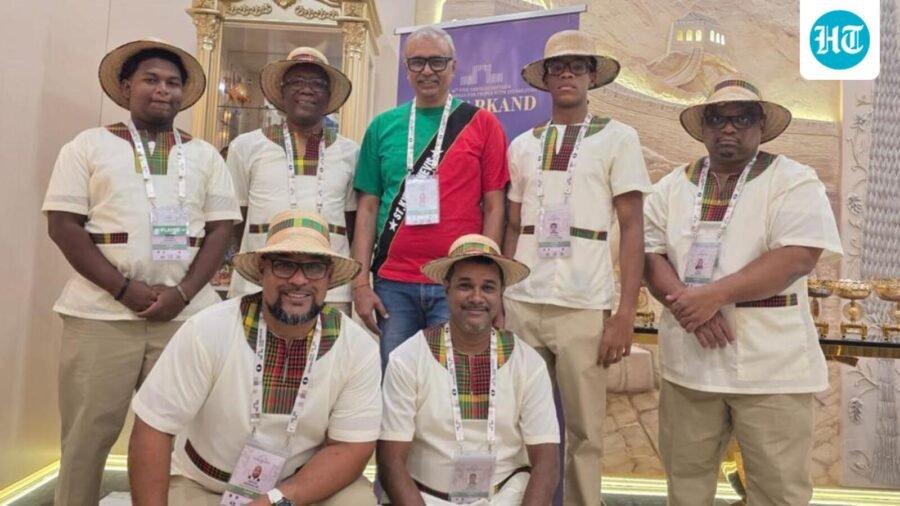
In Bhutan, Atanu Lahiri helps develop chess, leading teams at the Olympiad despite challenges like player migration and funding uncertainties.
Published on: Sep 20, 2026, 03:00:10 IST
Prefer HTon Google
Share via
Copy link
Bengaluru: Atanu Lahiri travelled to Bhutan on a lark in 2005.
He thought it might be interesting to go somewhere where chess barely existed and see if he could do something about it.
He arrived alone in Thimphu and thought that if there were chess players anywhere in the country, sports journalists might know where to find them. He walked into the office of Kuensel, Bhutan’s principal newspaper, introduced himself as a former Commonwealth champion from India and asked if there was any interest in setting up a chess federation. The journalists looked at him with some surprise.
Had he, they asked, received their email?
Lahiri hadn’t.
Only a week earlier, they had been writing to chess players in other countries looking for someone who might help bring organised chess to Bhutan. Now, an Indian chess player had appeared at their office offering precisely that.
Chess was played in a few schools, often as part of winter games, when Lahiri first arrived there. There was no national federation, no real programme and little standard equipment. He carried chessboards and chess clocks into the country.
In 2014, he was head of the delegation when Bhutan made its debut at the Fide Chess Olympiad in Tromso, Norway. Sixteen years later, he’s with the Bhutan team again at the Olympiad in Samarkand as their Open team captain.
Lahiri has been dealing with a recurring challenge. Players who show promise often end up migrating out of the country in search of livelihood. New players emerge and Lahiri has to start all over again. Bhutan currently has one titled player, a Candidate Master. “Also, the uncertainty. Not knowing if they’ll manage funds to travel for the Olympiad,” the 54-year-old international master, who has also had coaching stints with players from Nepal, Guyana and Eswatini, told .
Lahiri is one of at least six Indian coaches in Samarkand who have been working with smaller chess nations, helping them prepare for and navigate the Olympiad.
St. Kitts and Nevis, in the Caribbean, was introduced to Indian Fide arbiter, trainer and author Praful Zaveri, through one of his chess books during the 2022 Chennai Olympiad. It was what their then coach recommended. Ahead of this Olympiad, when Fide called for expressions of interest in coaching the side, Zaveri applied. The book connection helped.
Though his assignment was essentially for the Olympiad, Zaveri decided that was too late to begin coaching. He started sessions with them in August. Zaveri would wake up at 4.30 am for two-hour online sessions with the Open and women’s team players on the other side of the world. They did 10 sessions together.
Only one player in their Open team has a Fide classical rating. “They don’t have rated tournaments and have to travel to Barbados to play one,” Zaveri, who is captaining their Open team at the Olympiad, told . “Their middlegame skills are strong but openings need work. I usually have to begin with general opening theory before getting into any complex topics.”
St. Kitts and Nevis are ranked 203 out of the 206 nations at this Olympiad and they often face players for who they’re no match in strength. “When you’re at the board, nothing apart from moves matter,” Zaveri reminds them.
After losing 0-4 in the first two rounds, on Friday, Carl Victor Adams, an unrated player in the team, defeated a 1929-rated Bermuda player. “I’m hoping a few of them can get Fide ratings by the end of the Olympiad,” Zaveri said.
While drubbings can be the norm for smaller teams, Lahiri makes it a point to turn them into lessons. He lets them sleep on defeats. The next morning, after breakfast, his players bring him their games. “I ask them what they learnt from their losses,” Lahiri said. “I’m brutally honest with my feedback when necessary.”
Of course, the enormity of the occasion, can be unnerving for most of these players who’ve had very little tournament exposure. “You walk into the playing hall and see guys like Gukesh and Fabiano Caruana right next to you and your name on the board. It can be overwhelming. I watched one of our players freeze right there on the first day. He was barely making any movements,” Lahiri laughed.
For international master Prathamesh Mokal, the unlikely link to the Cayman Islands was Indian grandmaster Vidit Gujrathi, who recommended him as coach to the parent of an Indian-origin Cayman Islands player, Anvita Patil. In 2023, Mokal began working with Anvita and her friend, Zara Majid. With the women’s team’s 2022 Olympiad coach playing in the Open section this time, Mokal, already coaching two team members, was a natural choice.
His next job was to get to know the rest of the team. “A couple of them had never had a coach before so they had very little idea about many aspects of the game. What they have is fantastic fighting spirit,” Mokal told .
For these smaller chess nations, India is the benchmark and an Indian coach perhaps offers them a window into what goes into the making. The players of these countries are just as keen on selfies with the Indian stars – world champion Gukesh, Divya Deshmukh and Koneru Humpy topping the list.
Their coaches have promised to oblige.
See Less



Leave a Reply