Balancing deep-sea discovery with environmental stewardship
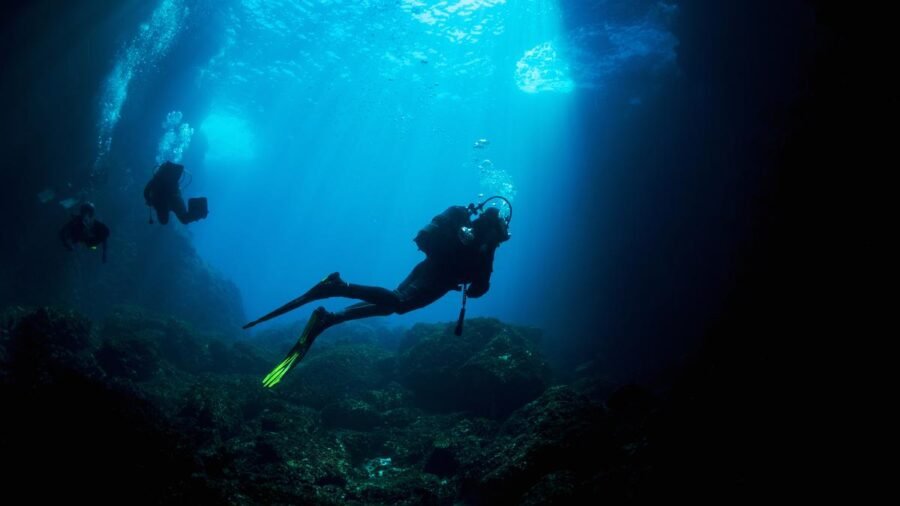
India is standing at the threshold of a new frontier. But the most important question is not how deep we can go, how much we can mine, or how much wealth lies beneath the ocean floor. It is more fundamental: Should everything that can be technologically exploited necessarily be exploited? The question is particularly important as India strengthens its position in deep-sea exploration and develops the scientific and technological capabilities to access one of the least understood parts of the planet.
A growing deep-sea footprint
India is not new to seabed mineral exploration and holds three International Seabed Authority (ISA) exploration contracts covering approximately 95,000 square kilometres across the Central Indian Ocean Basin, Central Indian Ridge and Carlsberg Ridge in the international seabed area. Its exploration has identified an estimated 366 million tonnes of polymetallic nodules containing nickel, copper, cobalt and manganese, alongside extensive environmental and biodiversity studies.
Under the Deep Ocean Mission, India is developing deep-sea mining technology, underwater robotics and the MATSYA-6000 human submersible, while the National Institute of Ocean Technology has tested a mining machine at depths of about 5,270 metres. At the same time, biodiversity surveys across 19 seamounts have studied around 1,300 deep-sea organisms, including nearly 23 species reported as new to science. These achievements also impose a profound responsibility to decide whether technological ability should ultimately lead to exploitation.
Technological progress can create a dangerous assumption: if we can exploit something, we should. But the deep ocean challenges this logic. It is a complex and poorly understood ecosystem, and India’s own biodiversity research continues to reveal previously unknown organisms. We cannot confidently predict the consequences of large-scale seabed disturbance while our understanding of these ecosystems remains incomplete. This is not an argument against science, but for more science before potentially irreversible intervention. Deep-sea minerals may have legitimate strategic importance for India’s renewable-energy, electric-mobility and advanced-manufacturing ambitions. However, strategic importance cannot automatically become ecological permission. Before considering extraction, India should ask whether the minerals are genuinely necessary at the proposed scale, whether alternatives exist, and whether demand can be reduced through recycling, efficiency, substitution and a circular economy. Necessity must be demonstrated, not presumed.
India’s investment in deep-ocean science need not imply a commitment to commercial mining. Exploration can advance knowledge, biodiversity assessment, environmental baselines and technology without leading to exploitation. Mining, however, would physically disturb the seabed. Therefore, adaptive management alone cannot guarantee ecological protection. India has an opportunity to adopt a stronger principle before exploitation begins: the question should not be “How can we mine with minimum damage?” but “Do we need to mine at all?” Since India’s ISA activities remain at the exploration stage, this is the right time to establish a high ecological threshold for any future decision to exploit.
Science must also teach us to say ‘no’
The deep ocean is now emerging as the next frontier for economic growth. Yet, we expect the ocean to regulate climate and support biodiversity while extending industrial activity into its least understood ecosystems. The ocean should not become a place where the environmental costs of human consumption are simply relocated. Scientific progress should not mean making more of nature exploitable and then calling it sustainable. True sustainable development must reduce dependence on extraction through lower demand, resource efficiency, recycling, substitution and circular consumption — principles reflected in India’s Mission LiFE. Science must therefore help us use resources responsibly and, equally importantly, determine when we do not need to use them at all. This calls for a broader understanding of scientific progress. Science should not merely open new frontiers for exploitation; it should also reveal which frontiers are best left untouched. The ability to say “we do not need to go there” may itself represent a higher level of scientific and civilisational maturity than simply proving that we can
India can lead a different model
India has an opportunity to become a global leader in deep-sea ecological governance. India could take the bold step of recognising the deep ocean not merely as a mineral reserve, but as a precious ecological asset whose value may exceed that of its mineral wealth. It could use the knowledge gained through the Deep Ocean Mission to conclude that some poorly understood and potentially irreversible ecosystems are better left undisturbed. Progress is not how much nature we can convert into resources, but how much we can preserve while meeting human needs. This would reaffirm India’s long-standing civilisational tradition of living in harmony with nature.
The defining environmental approaches of this century — Nature-based Solutions, the SDGs, the Circular Economy and Mission LiFE — share a common principle: nature is the capital on which development depends. They call for conserving ecosystems, reducing resource consumption and ensuring responsible development. Science and technology must therefore tell us not only how far we can go but also where we must stop. Our future depends on preserving the natural capital that sustains development.
P. Ragavan is a marine biologist with over a decade of professional experience in the conservation and management of coastal and marine environments

No hard ceilings: On the revision to EPFO wage ceiling
By Sohail Khan · 19 Sep
Continental glory: On the Asian Games 2026
By Sohail Khan · 19 Sep
Letters to The Editor — September 19, 2026
By Sohail Khan · 18 Sep
Leave a Reply