At 70%, India’s water reserves at 10-year low
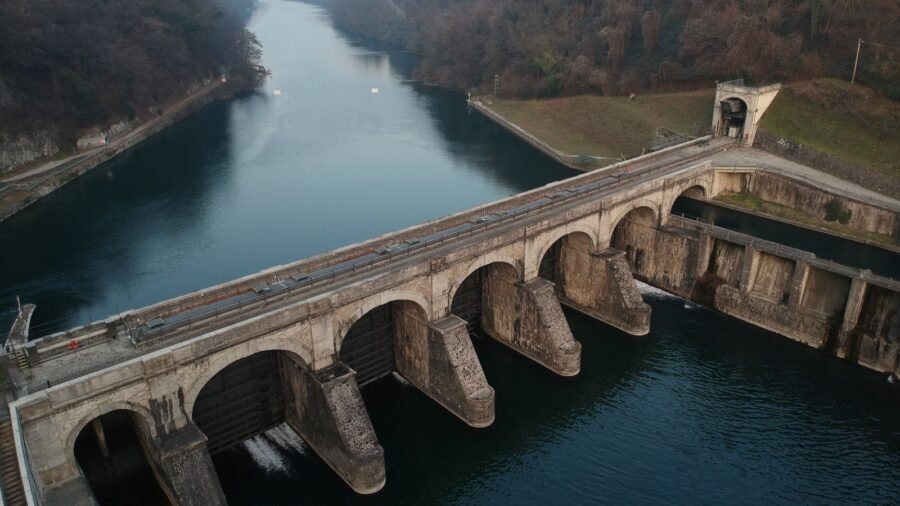
Even as the southwest monsoon season for this year is set to come to an end on September 30, water storage in 178 reservoirs across the country stands at 70% of the total capacity, according to a live reservoir storage report compiled by the Central Water Commission (CWC).
This is below the decadal average (10-year average stock during this period every year) of 76.62%. The 2026 stocks are also below that of 2025 stocks for the same period (79%).
The findings of the report, dated September 24, coincide with drought declarations in Maharashtra and Karnataka.
Story continues below.
Subscribe to see fewer ads.
The CWC report has particularly painted a grim picture of water storage in 92 reservoirs located in the south, east and northern India regions. South India (Andhra Pradesh, Telangana, Karnataka, Kerala and Tamil Nadu) has the lowest water reserves this year, with 50% water (27.926 billion cubic metre) against 87.25% last year. The region has received 23% below normal rainfall, as on September 28, per India Meteorological Department (IMD) data.
Southwest monsoon brings over 70 per cent of India’s annual rainfall. Lasting from June through September, this helps replenish the water reservoirs and other surface water bodies that make the primary sources of drinking water, for hydel power generation, irrigation, and other purposes.
As many as 31 dams across Assam, Bihar, Jharkhand, Meghalaya, Mizoram, Nagaland, Odisha, Tripura and West Bengal in the east have 16.157 BCM or 73% of the total storage capacity. Except for Odisha and some parts of West Bengal, east and northeast regions have seen a seasonal deficit of 25%.
In northern India, water reserves in 11 dams spanning Himachal Pradesh, Punjab and Rajasthan have plummeted from 92.3% last year to 62% (12.431 BCM) of the total storage capacity this year.
Story continues below this ad
One of the factors shrouding the monsoon season is the El Nino – a naturally occurring global ocean-atmospheric phenomenon in the Pacific Ocean which results in erratic rainfall and above normal temperatures. Since late August, rainfall deficit and prolonged dry spells have been linked to the strengthening of the El Nino.
According to the CWC, the 58 dams located across Gujarat, Maharashtra and Goa collectively hold 32.664 BCM, or 84.61% of their total capacity, against 95.79% last year. The 28 dams across Chhattisgarh, Madhya Pradesh, Uttar Pradesh and Uttarakhand currently hold 41.568 BCM or 85.55% of the total stock. In 2025, this was at 91.89%.
As of September 28, India received rainfall 12% short of the normal. Deficit in rainfall was recorded during June (-35.4%) and August (-16.3%) with July recording just about 1% above normal and September 01-28 (-5%). With the monsoon about to exit, there is little to no hope for any significant improvement in the reservoir stocks this season.


In a land where gold is inheritance, Vijay rolls out flagship gold ring scheme
By Sohail Khan · 28 Sep
‘Gen Z won’t forgive’: As he takes to streets, Naveen Patnaik’s message to BJP govt
By Sohail Khan · 28 Sep
Leave a Reply