Asian Games: Satwik, Treesa at the net, Chirag and Gayatri smashing from the back
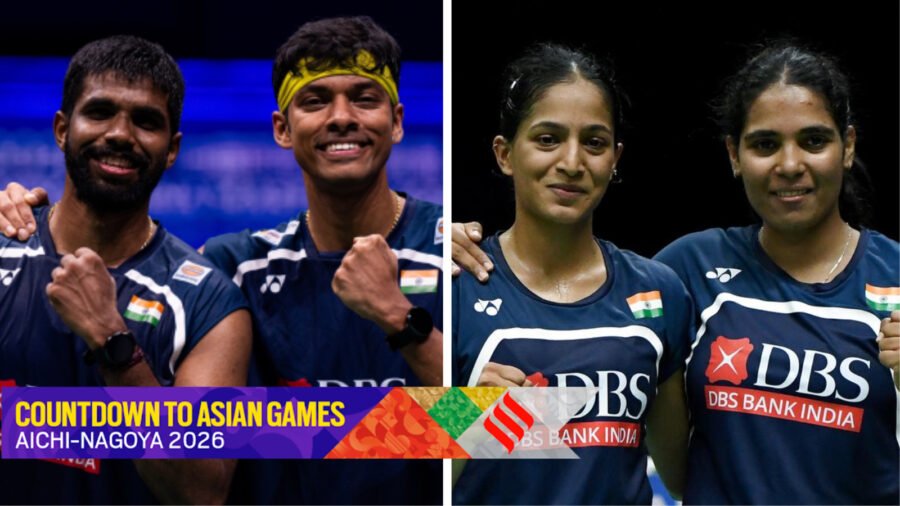
Where badminton forks away from volleyball and develops a personality of its own is when Treesa Jolly starts dribbling at the net, and Satwiksairaj Rankireddy uses strategic high lifts, imparting visible deceleration on the shuttle with the slightest of backswings, unlike the expansive one behind his 500kph smash.
Treesa can poke and prod at the net with the tiniest tilts of the thumb metacarpal and first phalanx, a skill she learned beyond her core capability as a smash hitter herself.
With just two people on the court, badminton’s ace doubles practitioners don’t have the luxury of role-assigned blockers, setters, spikers or a super-specific libero. Chirag Shetty is expected to dive full-stretch in defence for a block, run the offence like a setter for Satwik, and soar high for a tracked-back smash two returns later, all in the same rally. Gayatri Gopichand was always underestimated for her smashing, until the Delhi World Championships, when her forehand cross-court smash left China’s Jia Yifan unable to guard her back court.
Story continues below.
Subscribe to see fewer ads.
The Indian doubles style has evolved in 2026 with deceptive personalities at its core, and a healthy disregard for being hemmed in by restrictive definitions. The last two World Championship medals have come from doubles, Satwik-Chirag first, Treesa-Gayatri most recently, and both pairs are redrawing what an Indian doubles player plays like: everything, everywhere, all at once, coherent to each other even when the world watches, puzzled.
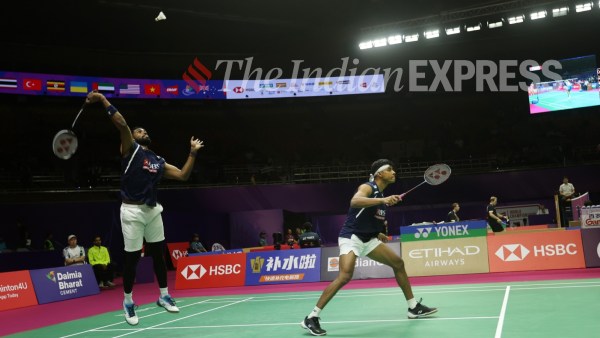 Satwik and Chirag don’t feel extra pressure to defend the Asian Games crown.
The unmaking of the label, “Satwik, Treesa smash” or “Chirag, Gayatri set it up”, was at the core of this evolution. Satwik’s shoulder gave way. Treesa was forced to sit out, nursing a foot injury, and used the time to train meditatively on the hundred ways to dribble. PV Sindhu had done something similar in late 2015 with a hurt foot of her own. Treesa, a sponge for new skills, decided to shape-shift her game entirely to master the net, before the pair won bronze in Delhi.
Chirag and Gayatri, meanwhile, remain quietly in awe of their respective partners’ big smashes, and tend to hide their own sharp-sniping abilities, which aren’t shabby at all. It helps that they’re underestimated. It’s worth a chuckle that Chirag’s fastest recorded lab smash still reads 552kph, even if it falls short of Satwik’s 565kph.
Story continues below this ad
Like Sindhu in singles, both Treesa and Satwik were smash machines once. But that isn’t sustainable on the back and shoulder. So both learned the meditative art of slowing their breathing, using the racquet as a scalpel rather than a scythe, and discovering the “feel” on the shuttle in badminton’s unspoken battle zone: the net.
Gayatri’s smashes work on placement more than power, an important distinction, since Japanese and Chinese women’s doubles pairs are trained specifically to pick apart the hardest hits. Her vision in finding gaps is an innate skill, and she plays close-range confrontations with a ticking brain and locked wrists. This isn’t just a rotation in her game. It’s closer to a full flip in her repertoire.
Leaping high and unleashing a gigantic smash had been second nature to Treesa. But when your game is that aligned to one shot, you’re one video-analysis session away from being countered. That’s why Treesa summoned something closer to sorcery at the net: canny strokes, serve variations, and the audacity to dribble rather than shy away from close combat, which is what most net scenarios demand.
Story continues below this ad
These weren’t make-do parries at the net. Proper keeps, precise taps, choosy pushes, subtly varying serves, none of the escape-lifts. Gayatri’s interceptions look effortless; Treesa’s take real daring to catch fast drives at the net. While the world stayed stuck on Gayatri’s surname and Treesa’s smash, the duo were quietly outrunning the predictability of how they were seen. If they can hold this chameleon act through back-to-back matches going deep into a tournament, they’re too cerebral not to wed savage attack to subtle sniping.
There’s a Nicolas Cage-John Travolta film from before any of these four were born. But Satwik-Chirag and Treesa-Gayatri are, right now, in the Face/Off stage of their rotational play. That vice-versa trick, the devilish duality, is what Indian doubles play can be defined as.

Compound Interest: Can India upstage Korea and Taiwan for mixed team gold?
By Sohail Khan · 17 Sep


Leave a Reply