Agreed to put the past behind, look to future: Masoud Pezeshkian on Iran-UAE meet
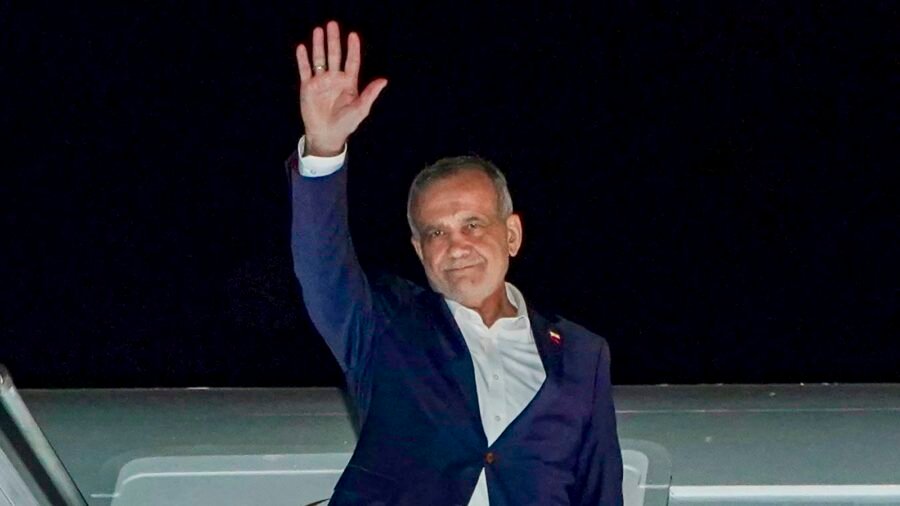
A day after meeting Abu Dhabi Crown Prince Sheikh Khaled bin Mohamed bin Zayed Al Nahyan, on the sidelines of the BRICS Summit here, Iranian President Masoud Pezeshkian on Sunday said they had “agreed to put the past behind… and look to the future”.
This is a rare moment from Delhi, where Iranian and the United Arab Emirates (UAE) leaders met for the first time since the West Asia war began. Following hectic negotiations, the two sides had agreed to the BRICS joint declaration adopted on Saturday, which acknowledged the sensibilities of both sides.
“We had a good conversation with the Crown Prince of Abu Dhabi, and agreed to put the past behind us and look to the future,” Pezeshkian said at the conclusion of his visit to India, according to a statement by the Iranian Embassy in India.
Story continues below.
Subscribe to see fewer ads.
“We also had discussions with the Presidents of Russia and China, which were mostly brief exchanges. A promising outlook for the expansion of economic cooperation is taking shape,” he said.
Pezeshkian’s remarks offer the first possible window of opportunity for the two warring sides to sit down and talk, and move towards de-escalating the tension in the region.
The Crown Prince is the eldest son of UAE President Sheikh Mohamed bin Zayed Al Nahyan.
The meeting came days before scheduled talks between Iran and members of the Gulf Cooperation Council (GCC) in Oman on September 14 to discuss an agreement on transit through the Strait of Hormuz.
Story continues below this ad
In the joint declaration on Saturday, the BRICS leaders expressed “deep concern over the continued escalation of tensions” in West Asia and, “recalling our respective national positions”, called for “exercising maximum restraint, as well as avoiding actions that could further aggravate the situation.”
The declaration acknowledged the sensibilities of both sides by flagging territorial sovereignty and the need to secure civilians and infrastructure. UAE has been at the receiving end of a series of Iranian strikes on its cities with Tehran calling it a proxy of the US.
In addition, the declaration underscored dialogue and diplomacy and smooth flow of energy — all important issues and challenges faced by the developing countries.
The phrasing of the war in West Asia had divided Iran and the UAE over the last six months. In May this year, when BRICS foreign ministers met in New Delhi, Russia’s Sergey Lavrov had told the UAE and Iranian ministers to hold direct talks.
Story continues below this ad
Now, with direct talks happening between the two sides, there is a possibility that it may lead to more peace moves.

Navodaya to law college: How a programme is powering rural dreams
By Sohail Khan · 14 Sep


Leave a Reply