A question of identity for India’s transgenders
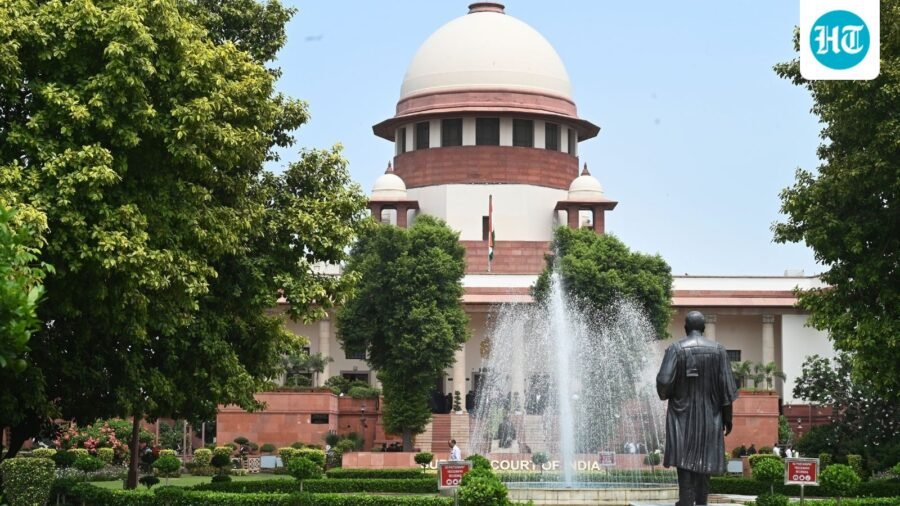
The earlier 2019 Act had defined a transgender person broadly, and expressly recognised a person’s right for self identification.
Published on: Sep 10, 2026, 11:38:45 IST
Prefer HTon Google
Share via
Copy link
The question of a third gender identity has recently acquired a new legal dimension in India. As per the Transgender Persons (Protection of Rights) Amendment Act, passed in March 2026, transgender persons will have to prove their identity through a medical test. This was not always so. The earlier 2019 Act had defined a transgender person broadly, and expressly recognised a person’s right for self identification. Medical examinations were not required, coming into play only when a person sought a revised certificate following surgery.
The 2026 Act turns that assurance on its head. It narrows the statutory definition to categories such as hijra, kinner, aravani and jogta, eunuch and intersex persons. Self identification is no longer accepted. To be legally recognised, a person must show that they have undergone surgery or hormone treatment and obtain clearance from a medical board. These conditions will leave many transpersons in a state of limbo, unrecognised and invisible to the State.
But the underlying questions are not new. They have come before the Court in several ways.
In 2014, in National Legal Services Authority v Union of India, the Supreme Court held that gender identity is part of personal autonomy and self-expression and cannot be reduced to anatomy or surgical status. It directed the government to recognise a person’s self-identified gender as male, female or third gender. Then there is privacy. Three years after NALSA, a nine-judge bench in KS Puttaswamy v Union of India held that privacy is a fundamental right. This includes personal choice including decisions concerning one’s body.
The 2026 amendment must be tested against these promises. The key question is whether denying a person recognition of self-perceived gender identity violates Articles 14, 15, 19 and 21, and whether compulsory medical-board certification injures dignity, autonomy and personal liberty.
There is also a practical cost. Since the new law was passed, doctors and transgender people have become uncertain about what health care is permissible and the documentation required. Several clinics have paused or delayed hormone therapy and transition surgeries, with doctors worried about the consequences of providing treatment until the legal position is clear. This is an unintended but serious effect of a law meant to protect a vulnerable population.
The State’s position is that once it attaches legal consequences and benefits to a particular category, it must be able to define that category conclusively. On this view, verification is not to question identity, but for the purpose of administering welfare.
But that still leaves the question of means. The government would still have to show why medical assessment should be the measure by which identity is established, and less intrusive methods would not work. There is another difficulty. The Act includes socio-cultural identities such as hijra, kinner, jogta, etc., which are rooted in community, more than medical procedures. The NALSA judgment itself recognises that jogtas may often be heterosexual and may or may not cross dress. A medical board would be unable to determine whether a person belongs to a certain community irrespective of anatomy.
The apprehension of misuse rests on the possibility of persons falsely identifying as transgender to access benefits available to the community. However, such speculation should pass the test of proportionality — it must not deprive an entire class of persons of their rights. Where such claims do arise, they can be dealt with on their own facts.
The Supreme Court has not yet decided whether the amendment is constitutional. On August 17, as it heard challenges to the Amendment, the Centre assured the court that existing transgender identity cards (which provide legal recognition and access to certain government benefits) would continue to remain valid while the litigation is pending. This is a relief for those currently holding transgender cards but does little for those whose applications are still being processed or whose cards have already been cancelled.
There is a temptation to reduce this debate to the usual contest between Parliament and the courts, or transgender activists. Instead, it should be understood as a question of how the State should regulate fairly without crossing constitutional limits. With the Court’s precedents already in place, Parliament must be careful that it does not inadvertently take away rights that the Court has already recognised.
Insiyah Vahanvaty is a socio-political commentator and author of ‘The Fearless Judge’. Ashish Bharadwaj is pro vice-chancellor of the upcoming WPU Goa Campus. The views expressed are personal
Get Current Updates on India News, Elections 2024, Lok sabha election 2024 voting live , Karnataka election 2024 live in Bengaluru , Election 2024 Date along with Latest News and Top Headlines from India and around the world.
See Less

‘My HbA1c is 5.9% and FBS is 104 mg/dL. What do I do to bring them back to normal?’
By Sohail Khan · 2 Oct
For constituting poll body, a lesson from the UN
By Sohail Khan · 2 Oct