A meaningful shift in India’s approach to road safety
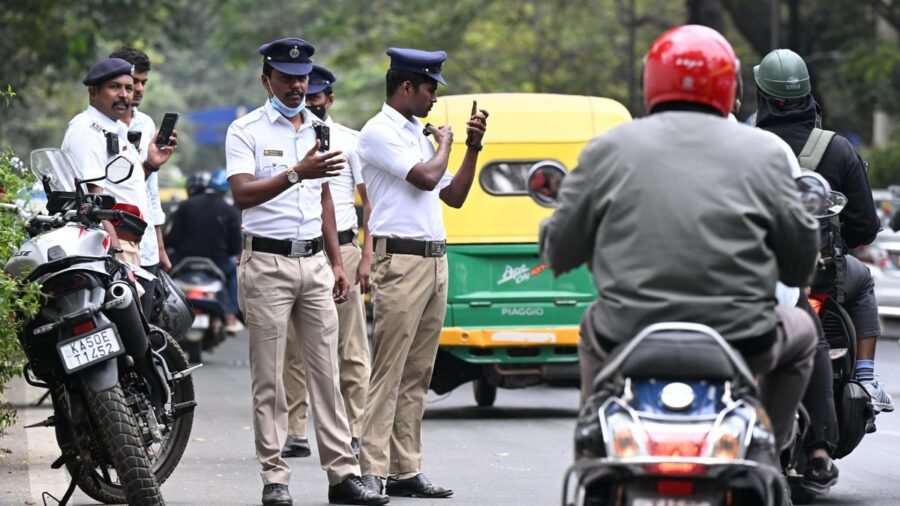
On September 1, 2019, the Motor Vehicles (Amendment) Act came into force, marking a defining moment in India’s pursuit of safer roads. Enacted to address long-standing gaps in the country’s road safety framework, the legislation sought to offer stronger protection to every road user — from pedestrians and cyclists to motorists and commercial drivers.
Each anniversary of the Act offers more than an occasion to look back at a piece of legislation. It presents a checkpoint — a moment to candidly assess the distance covered, acknowledge where implementation continues to lag, and chart the course ahead.
The latest Road Accidents in India 2024 report, released by the Ministry of Road Transport and Highways (MoRTH), places the death toll from road crashes at nearly 1.77 lakh lives lost in a single year. The figures are a sobering reminder that despite legislative progress, the road ahead remains long. As India advances towards its vision of a Viksit Bharat, safeguarding lives on its roads must remain central to that national journey.
Stronger legal foundation
The 2019 Act represented a meaningful shift in India’s approach to road safety. Enhanced penalties, greater accountability, protections for Good Samaritans, provisions addressing the “golden hour” after a crash, vehicle safety standards, and reinforced enforcement mechanisms together signalled a growing recognition — that road fatalities and serious injuries need not be accepted as an unavoidable cost of mobility.
Yet legislation, however robust, is only a starting point. The true measure of any road safety law lies in its ability to shape behaviour, strengthen institutions, and make daily journeys demonstrably safer.
Great challenge
Implementation across the country remains inconsistent. Compliance with helmet use, seatbelts, and child restraint systems (CRS) varies widely from State to State. Many children continue to travel under conditions that expose them to avoidable danger. School transportation standards, road-user discipline, enforcement capacity, road engineering, and post-crash emergency response all demand sustained, coordinated attention.
No single intervention, however well-intentioned, can guarantee a safe journey. A law can establish an obligation, but ensuring a child’s safety on the road requires parents, schools, transport operators, enforcement agencies, and governments to jointly understand and act upon that obligation.
This principle holds true across the entire road safety landscape. Legislation, enforcement, safer vehicles, better-engineered roads, and responsive emergency care cannot function in isolation — they must operate as interconnected parts of a single system.
This anniversary, then, invites a deeper question — not merely whether the law is strong enough, but whether the systems required to implement it effectively have truly been built.
Are road safety provisions being interpreted and enforced uniformly across States? Are accident-prone black spots being identified and rectified? Are schools and transport operators equipped to make the daily school commute safer? Are enforcement agencies harnessing technology and data to their full potential? And crucially, when a crash occurs, can the system deliver timely, life-saving emergency care?
These are not questions for the government alone to answer. Road safety sits at the intersection of public policy, enforcement, engineering, technology, and individual behaviour — and meaningful progress demands that all these elements move forward in unison.
The way forward
Strengthening India’s commitment to road safety calls for a shift — from isolated, piecemeal interventions to a more integrated, data-driven approach.
Enforcement remains indispensable, but it cannot deliver safer roads on its own. What is needed is better data — data that reveals where and why lives are being lost or seriously compromised, and that translates into decisive action. Equally essential are safer school transportation systems and heightened awareness among parents, teachers, and transport operators alike.
Technology has a growing role to play in this effort. Intelligent traffic systems, AI-enabled monitoring, driver assistance and alertness systems, real-time crash reporting, and more effective use of road safety data can help identify risks before they culminate in tragedy. But technology must remain a support to sound policy and human judgment — never a substitute for either.
Above all, we must accept a simple truth: people will make mistakes. A well-designed road system is one where such mistakes do not cost a life.
A systemic responsibility
Perhaps the most important shift we can make is to stop viewing road safety as the responsibility of any single Ministry, department, or enforcement agency.
Governments must build safer systems. Enforcement agencies must ensure compliance. Vehicle manufacturers and transport operators must uphold their duty of care. Schools must instil safe road behaviour in children from an early age. Employers managing large vehicle fleets must recognise their responsibility towards drivers and fellow road users. And communities and individuals alike must understand that everyday choices — wearing a helmet correctly, buckling a seatbelt, using age-appropriate child restraint systems for children under 12, slowing down, protecting children, and avoiding distractions — carry real consequences.
Road safety becomes truly sustainable only when it moves beyond mere compliance and becomes an inseparable part of our everyday culture.
The Motor Vehicles (Amendment) Act gave India a stronger legal foundation for road safety. The task before us now is to ensure that the spirit of this law is translated into tangibly safer journeys on the ground.
This anniversary, therefore, should not be treated as a mere commemoration of legislation. It should serve as an occasion to examine implementation honestly, reinforce what is working, address what is not, and renew our collective resolve to reduce road deaths and serious injuries.
India need not choose between stronger enforcement, safer infrastructure, advanced vehicle technology, or greater public participation. It requires all of them, working in concert.
That, ultimately, is how the promise of a stronger road safety law can be fulfilled — through safer roads and safer lives.
Saurabh Verma is the co-founder & director, Synergie

Don’t buy a lab-grown diamond before checking these 7 things
By Sohail Khan · 29 Sep
Towards a gender just Uniform Civil Code
By Sohail Khan · 29 Sep
Essar eyes $18-billion US steel plant: Why Indian firms are investing in US amid tariffs
By Sohail Khan · 29 Sep