A gender agenda for BRICS
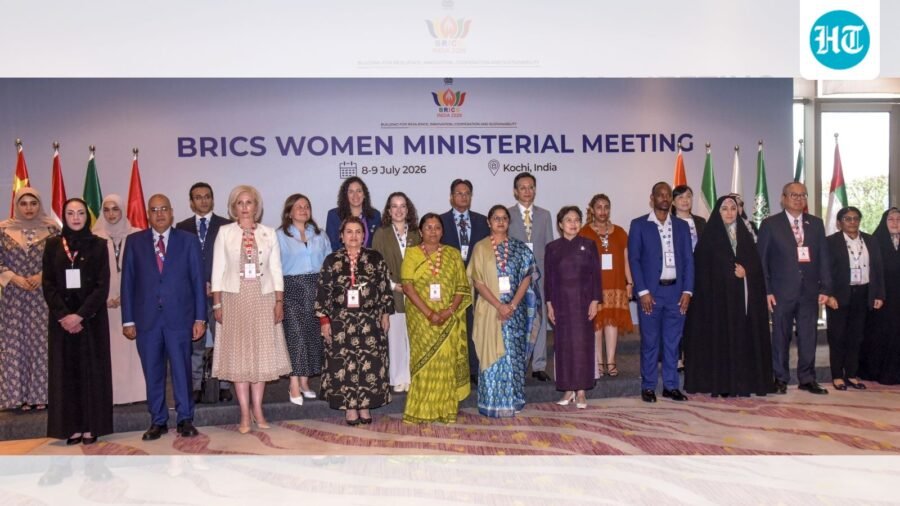
Going forward, BRICS agenda must move beyond affirming women’s participation in development to addressing structural conditions that shape their economic lives.
Published on: Sep 13, 2026, 07:33:34 IST
Prefer HTon Google
Share via
Copy link
The ongoing BRICS summit in New Delhi has reaffirmed the significance of the grouping for Global South cooperation, and its impact on development, finance, infrastructure, energy and global governance. One of the aspects to which it should pay more attention than it has done so far is to evolve into a platform that will alter unequal economic relations, extractive development models and asymmetries of power that western institutions have historically reproduced. The greater representation of women and gender diverse persons and increased development investments have always been on the BRICS agenda, but fundamental issues need addressing: Who shapes economic priorities and controls resources? Who bears the social and ecological costs, and whose knowledge determines the development path?
A feminist political-economy perspective brings these questions to the front and centre of BRICS cooperation, treating gender inequality as a structural outcome shaped by the organisation of production, social reproduction, ownership and power. Priti Darooka, global coordinator, BRICS Feminist Watch says, “For feminists across the Global South, the measure of an alternative international order cannot simply be whether it shifts power between States or creates new financial institutions. It must also be judged by whether it transforms unequal structures of power within our economies and societies.”
One encouraging development ahead of the summit was the adoption of the first-ever BRICS Joint Women Ministerial Statement at the BRICS Women Ministerial Meeting held in Kochi in July 2026. The Statement marked an important step towards advancing “women-led development,” identifying women’s economic autonomy and their full participation in development as collective BRICS priorities.
Going forward, the BRICS agenda must move beyond affirming women’s participation in development to addressing the structural conditions that shape women’s economic lives. One emerging and increasingly critical issue is the gender–energy nexus.
In a world where energy security is disrupted by conflict and climate-related pressures, energy insecurity has profound and differentiated consequences for women. Women often bear a disproportionate share of the burden when energy becomes unaffordable or inaccessible. Limited access to water and energy also deepen women’s time poverty and constrain their opportunities for paid work, education, and rest.
Gender-disaggregated and ground-level evidence remains scarce, limiting policymakers’ ability to see where women are excluded and how infrastructure affects time, work, safety, and agency. Ruby Sinha, president, BRICS CCI (Women Empowerment) says, “Across BRICS, women are increasingly visible, yet the leadership in the institutions that shape innovation and funding bodies, remains disproportionately male.” Gender-just energy transition should be made a BRICS priority, grounded in substantive equality, redistribution, rights and democratic participation. The Roadmap for BRICS Energy Cooperation 2025-2030 should be revised to include a substantive gender dimension.
BRICS should also ensure that gender transformative considerations are integrated into the financing and design of energy infrastructure projects, creating a practical link between the BRICS Energy and Women’s Tracks. It must develop comparable sex-disaggregated, ground-level energy data by monitoring energy projects. It must treat clean energy as both economic and care infrastructure by incorporating care, livelihoods and gender into the Roadmap for BRICS Energy Cooperation 2025-2030. BRICS must consolidate existing gender commitments into a single, time-bound implementation framework. A BRICS monitoring mechanism for commitments made in the Summit Declarations should be set up and hosted by an independent academic institution in a BRICS nation.
A grouping that redistributes resources in a gender responsive manner would be in keeping with BRICS’s claims of solidarity and sovereign equality.
The views expressed are personal
Get Current Updates on India News, Elections 2024, Lok sabha election 2024 voting live , Karnataka election 2024 live in Bengaluru , Election 2024 Date along with Latest News and Top Headlines from India and around the world.
See Less

Nargis Fakhri is busy building her ‘best self’: Take a peek into her fitness routine
By Sohail Khan · 13 Sep
BRICS and the question of ensuring energy security
By Sohail Khan · 13 Sep
Working with China on common interests
By Sohail Khan · 13 Sep
Leave a Reply