With Tukaram Mundhe’s crackdown, a question: Why celebrate civil servants for doing their jobs?
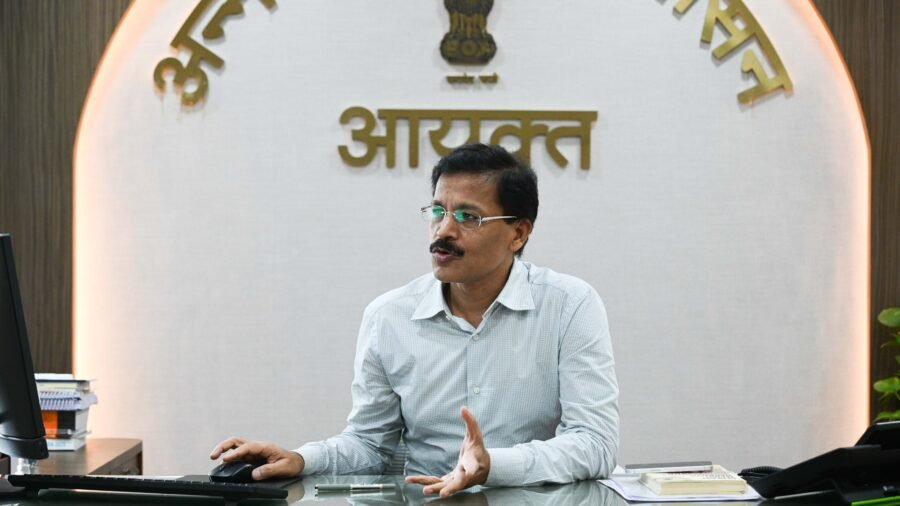
Why are we celebrating civil servants for doing their jobs? The question is uncomfortable, but the public excitement around Maharashtra Food and Drug Administration Commissioner Tukaram Mundhe’s crackdown on unhygienic food establishments deserves scrutiny for a reason larger than one officer. Since taking charge in May, Mundhe’s teams have conducted thousands of inspections, suspended licences and exposed expired food, pest infestations, unsafe storage and adulteration across large chains, prominent clubs and neighbourhood eateries.
When consumers see a regulator walk into kitchens, warehouses and food businesses and impose consequences, it produces something increasingly rare in public life: The sensation that the state is present.
Advertisement
That should concern us as much as it pleases us. Inspecting food businesses and protecting consumers is precisely what a food regulator is established to do. Yet a road being relaid can turn an officer into a hero, an encroachment being cleared into a crusade and an unsafe establishment being shut into a social-media spectacle. We have lowered the minimum standard of what the state is expected to deliver.
The problem extends well beyond food. We have become desensitised to fake drugs, fake doctors and dubious hospitals, even when the consequences can be fatal. We tolerate unsafe buildings, illegal construction, encroachments, polluted air, broken roads and public spaces hostile to ordinary life. Street-level encroachments can survive because citizens know that challenging them may mean confronting networks of local political, bureaucratic and police interests. Corruption keeps many such arrangements alive. Until someone gets stuck. Until someone falls ill. Until someone dies. Then the state arrives, usually after the damage.
A serious economy cannot treat this as episodic theatre. If India compares itself with leading economies on growth, investment, technology and infrastructure, it must also compare itself on consumer protection and enforcement. Laws work when detection is credible, and consequences are swift, certain and severe enough to change behaviour. India’s problem is increasingly the unpredictability of enforcement and the negotiability of consequences.
Advertisement
A law that is rarely enforced becomes a suggestion. A penalty that can be absorbed becomes a cost of doing business. A prosecution delayed for years becomes a calculated risk. Once the headlines fade, the risk remains manageable.
Call it a “management” fee. For businesses protected by patronage, political relationships or administrative discretion, enforcement may simply raise the cost of obtaining protection without dismantling the arrangement. A tough officer can increase the cost of corruption for a sector without eliminating the corruption itself. Citizens may see a crackdown, but not necessarily a durable change in outcomes.
That is where the political system deserves sharper scrutiny. Tough officers are often outliers tolerated while public attention is intense. They may be supported when their actions generate favourable headlines. The real test comes when enforcement collides with political interests, influential businesses or established local arrangements. Then we discover whether the system wants independent administration or merely tolerates the appearance of it.
Perhaps popular culture has shaped our response to this as well. We have spent years watching the Singham archetype on screen: The fearless officer who ignores pressure, cuts through obstacles and delivers instant justice. When a real officer displays even a fraction of that institutional courage, we instinctively cast him in the same role. The irony is revealing. A republic, however, cannot depend on finding a Singham every time the system needs to function.
The vulnerability of the civil servant is central to this failure. Bureaucrats must remain politically neutral, implement the elected government’s policies and serve the public interest. But postings and transfers can become instruments of reward and punishment. When putting one’s neck out can shorten a tenure while keeping one’s head down carries little professional cost, survival becomes rational.
Politicians cannot escape responsibility. Where administrative independence is vulnerable to political patronage, the elected executive owns the institutional consequences. Nor can bureaucrats claim innocence. Officials who bend rules for convenience, cultivate political patrons or remain silent under unlawful pressure help preserve the machinery they may later criticise.
Some discover the language of institutional integrity only after retirement. Many civil servants have faced genuine constraints, but a system in which public-interest courage becomes safest after retirement has a serious design flaw.
The answer is not another search for an “honest officer”. India needs institutions that make professional integrity easier, political interference harder, administrative failure visible and retaliation against officials costly.
That also requires accepting a basic principle: Regulatory toughness must remain lawful. A strong regulator must be proportionate and accountable. Due process cannot be sacrificed, but neither can it become a refuge for businesses that knowingly put consumers at risk.
The political question is more fundamental. Where are the pillars of democracy when citizens cannot challenge even a small encroachment without earning the wrath of local power networks? Where is political morality when liveable cities remain an electoral promise while those exercising power enjoy the privileges of functioning public systems? And where is bureaucratic integrity when doing nothing is safer than doing the right thing?
Citizens have been beaten into accepting unsafe food, encroachments, corruption, broken roads and administrative indifference as the price of everyday life. Our democratic fatigue is now so deep that actual effort by the administration feels like benevolence to citizens.
The real test of the Maharashtra crackdown will come when the cameras leave. Will enforcement survive the officer? Will repeat offenders face consequences that change their economics? Will citizens be able to complain without retaliation? Will the next commissioner inherit an institution that functions with the same rigour?
A mature democracy should make the individual hero unnecessary. When doing one’s job becomes worthy of celebration, the indictment is not of the officer. It is of “We, the People”.
Sridharan is a corporate advisor and author of Family and Dhanda

What could be a just, dignified and lasting peace in Ukraine?
By Sohail Khan · 29 Sep
Power from renewables should not be curtailed
By Sohail Khan · 29 Sep