Why Trump is using India’s example for stricter voting rules in the US
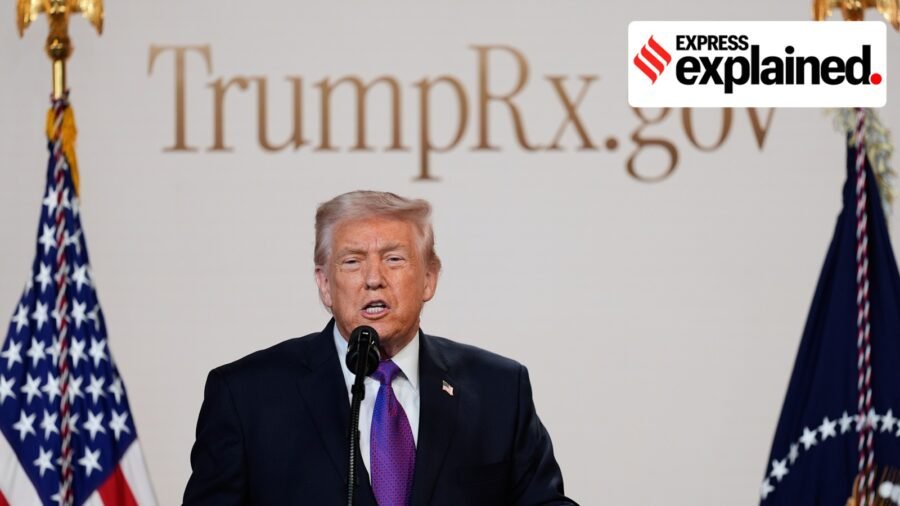
US President Donald Trump said on Monday (August 18) that Chief Election Commissioner Gyanesh Kumar asked the Trump administration about how US voters do not require photo ID cards, and compared it to India’s method of voting.
The Trump administration has earlier cited the Indian system, noting its linkages to Aadhaar, as well as that of countries like Brazil and Germany to argue for changing its own processes. For years, voter IDs have been a controversial issue in US politics, divided on partisan lines. While Republicans have generally advocated for mandatory identification for voting, Democrats have opposed them. So how do Americans vote and why is Trump raising the matter now?
Do voters need IDs in the US?
Generally, yes. Each US state sets its own voter ID rules and most require voters to bring identification to vote in person, according to the US government’s website for voters. Identification can include a driver’s license, a state-issued ID or a passport.
But even the lack of such IDs may not always prevent voters. “Some states may ask you to sign a form affirming your identity… Other states will let you cast a provisional ballot,” the website says.
Many requirements today, especially for photo IDs, have only come about in the last few decades. They can be traced back to the 2000 presidential election in which George W Bush won over Al Gore. His path to victory included several controversies, such as a recount of votes in the state of Florida and a case that went to the Supreme Court.
Later in 2002, the Help America Vote Act (HAVA) was passed to reform the voting process and establish minimum standards across states. According to the US-based Brennan Center for Justice, it asked new registrants to provide information such as their driver’s license number or the last four digits of their social security number, which most Americans possess. In their absence, a unique identification number can be assigned to them for voter registration purposes.
Story continues below this ad
For certain voters (including new ones), permission to vote hinges on presenting one of these documents: current and valid photo identification, utility bill, bank statement, government check and paycheck, to name a few.
Today, 36 US states require voters to show some form of identification at the polls, according to the National Conference of State Legislatures (NCSL), a body that counts every state legislator and staffer as a member, and has access to bipartisan policy research. “The remaining 14 states and Washington, D.C., use other methods to verify the identity of voters. Most frequently, other identifying information provided at the polling place, such as a signature, is checked against information on file,” it adds.
Why is Trump focusing on voter IDs?
Where the issue assumes significance in US politics is in the divergent stands taken by the two main political parties on ID requirements.
“Proponents argue increasing identification requirements can prevent in-person voter impersonation and increase public confidence in the election process. Opponents say there is little fraud of this kind, that the burden on voters unduly restricts the right to vote and that the laws impose unnecessary costs and administrative burdens on elections officials,” the NCSL notes.
Story continues below this ad
This divide is also reflected in how states having strict ID requirements are mostly red states (those that historically vote for Republicans), like Alabama and Texas. Those with relaxed requirements are mostly blue states (historically Democrat-leaning), like California and New York.
In a 2017 article titled “Understanding the Adoption of Voter Identification Laws in the American States,” academics Daniel R Biggers and Michael J Hanmer said that “since 2000, the number of states passing voter identification laws for the first time more than doubled (from 14 to 36).” Mandatory photo IDs were introduced in the mid-2000s.
“The heart of this division derives, at least in part, from the calculus of partisan advantage and electoral success,” they wrote. Citing existing research, they said that “Democratic-leaning groups such as African Americans and Latinos are less likely to possess identification… [this] presents an opportunity for Republicans to potentially boost their electoral chances. It thus appears reasonable to suspect that Republicans favor (and Democrats oppose) ID laws at least in part because they are expected to reduce the Democrats’ percentage of the vote.”
The Save America Bill, mentioned by Trump in his post, aims to require a valid photo ID before registering to vote in a federal election, proof of citizenship and no mail-in ballots (except for Illness, Disability, Military or Travel).
Story continues below this ad
Its timing also matters, coming a few months before the midterm elections for the US Congress. However, it faces a hurdle in the Senate, where Republicans control 53 of the 100 seats, and 60 votes are needed for it to pass. In the past, Trump has alleged large-scale voter fraud and claimed the 2020 presidential elections were stolen from him, even as these claims have been refuted.

Sussanne Khan says she felt ‘more love’ for Hrithik Roshan’s mother after losing her own
By Sohail Khan · 28 Sep
COP31 hosts Australia and Türkiye face the fossil-fuel question
By Sohail Khan · 28 Sep