Why the monsoon is one of the best times to explore India’s forests
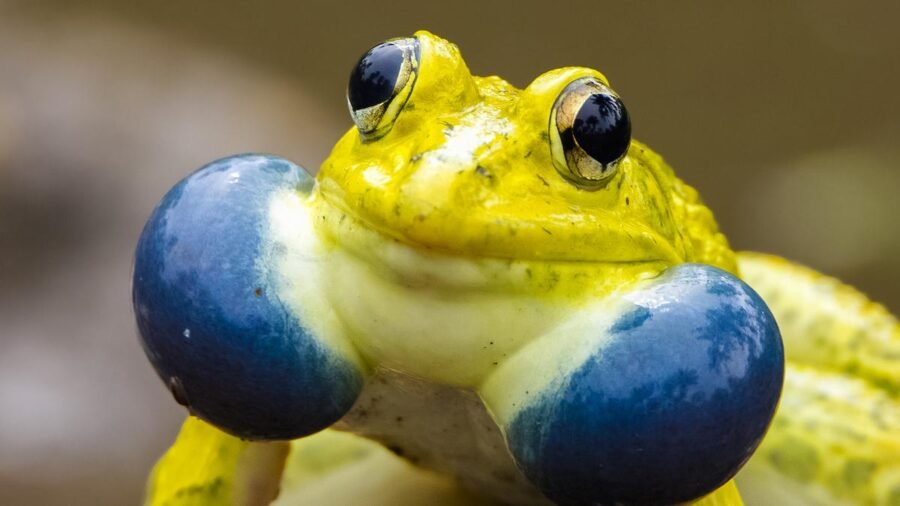
The first signs of the monsoon are not always found in the sky. They may hang from the tapered end of a half-built baya-weaver’s nest, pulse from the blue vocal sacs of a breeding Indian bullfrog or appear overnight on a rain-darkened log.
The monsoon is not a biological starting gun, nor does every creature suddenly emerge with the first shower. Species respond differently to rainfall, temperature, humidity, food availability and changes in water levels. Some begin breeding, others change plumage, call more frequently or gather around seasonal food sources. Fungi that have persisted out of sight within soil or wood may produce visible mushrooms. Animals present throughout the year can become easier to observe because the season changes their behaviour.
Across much of India, the monsoon brings a seasonal pause to wildlife tourism, with many national parks and reserves restricting access to their core areas during the rains. In simple terms, a buffer zone is the area around the protected core of a reserve — a transition space where conservation continues but regulated tourism and some human activity are allowed. While core areas may close during the monsoon, some buffer zones remain open, depending on the reserve and local regulations. For travellers staying at eco-lodges and resorts, this makes the season particularly rewarding for guided nature walks, where the focus shifts from chasing big-animal sightings to observing a landscape transformed by the rains.
Man crossing a water stream
Mayur Kakade
For Manav Khanduja, co-founder, Pugdundee Safaris, the appeal of the monsoon lies in this altered field of attention. The company operates wildlife lodges across Central India, including properties around Kanha, Pench, Satpura and Tadoba — landscapes more commonly sold through the promise of tigers and large mammals.
“Frankly, all the lodges have the same qualities in the monsoon, and similar downsides,” he says, resisting the temptation to declare one forest the definitive rainy-season destination. Waghoba Eco Lodge, near Tadoba in Maharashtra, is one possible base because safaris continue in permitted buffer areas during the rains and wildlife sightings remain possible. Access, however, depends on local forest regulations, weather and road conditions.
A male Baya Weaver
Getty Images
Around grasslands, wetlands and agricultural edges, baya weavers become absorbed in one of the season’s most elaborate construction projects. The birds are present through much of the year, but their breeding activity is closely associated with the monsoon. Male baya weavers cut and carry strips of grass and plant fibre, knotting and weaving them into pendulous nests that hang from palms, acacias and other trees, often near water.
Manav estimates that the birds can spend five to seven hours a day building and tending to their nests. Watch for long enough and the activity expands beyond avian architecture. Elsewhere, male red avadavats — small finches sometimes called strawberry finches — acquire their vivid breeding plumage, their red bodies flecked with white spots. Tricoloured munias gather nesting material. Grey-bellied cuckoos become particularly vocal during July and August, Manav says, while the loud calls of the shy painted francolin may reveal a bird concealed by dense grass long before it is seen.
Male of Red avadavat or Munia
Getty Images/iStockphoto
The rains do not turn all these species into “monsoon visitors”. Some are residents whose breeding plumage, nesting behaviour or calls become more conspicuous during the season. Others move locally or seasonally, and their timing varies with geography.
Around wetlands, painted storks can gather where water levels and feeding conditions are favourable. In wooded areas, Indian pittas, Asian paradise flycatchers and adult black-naped monarchs build nests or carry food to hatchlings.
Black-naped monarch
Preeyaporn Kaewsaard
After substantial rain, Manav says, frog calls begin to overlap around ponds, streams and wet depressions. “The Indian bullfrog provides one of the season’s most dramatic changes. Outside the breeding period, it is generally olive, brown or mottled. During the rains, breeding males can turn a vivid yellow, while paired blue vocal sacs inflate at the sides of the throat as they call,” he says, adding, “The males get the breeding colours and become very contrasting. It is super fun to photograph them.”
Around Pugdundee’s central Indian lodges, you may also encounter fungoid frogs, skittering frogs, termite-hill frogs and, less commonly, balloon frogs. The fungoid frog takes its English name from the reddish-brown and yellow patterning on its back, which can resemble the surface of a mushroom. Balloon frogs are burrowing animals whose defensive response gives them their name: when threatened, they can inflate their bodies, making themselves appear larger and more difficult for a predator to swallow.
On a productive walk, Manav says, the property’s naturalists may record seven or eight frog species. Nature walks are chargeable and start at ₹1,500 per person.
Into the wild
Farther South, in Karnataka, The Serai’s Bandipur and Kabini properties offer guided nature walks through their monsoon landscapes. June to September is particularly rewarding at Kabini, while June and July bring a lush, rain-washed forest to Bandipur — a more flexible way to experience the wilderness on foot than a regulated safari.
At Bandipur, the dry, tawny forest of summer turns green, mist settles over the Nilgiri hills and rain-softened paths preserve evidence of animals that may remain concealed by dense vegetation.
According to Sreekantha, senior naturalist, The Serai Bandipur, the broad impressions of Asian elephant feet, the hoofprints of Indian gaur and, occasionally, leopard pugmarks allow naturalists to interpret wildlife movement even when the animals themselves remain out of sight.
Guided walks encourage guests to examine insect burrows, the textures of rain-darkened tree bark and the calls moving through the canopy — an approach the property describes as observing “micro-nature”.
Among the birds Sreekantha identifies during the season are the Malabar pied hornbill, crested serpent eagle, Indian peafowl, red spurfowl and pied cuckoo. The pied cuckoo has a particularly evocative relationship with the rains. Known as the chatak in Indian literary and folk traditions, it has long been regarded as a herald of the monsoon. The ecological picture is more nuanced: some populations are resident, while others migrate to parts of India around the southwest monsoon. Its arrival does not reliably predict rain at a local level, but its seasonal movement has helped sustain its place in India’s monsoon imagination.
The Giant Malabar squirrel
Special arrangement
At Kabini, on the banks of the river that gives the region its name, water becomes the organising force of the landscape. “Egrets and herons work the shallows; painted storks gather around suitable wetlands; kingfishers wait above the water; and cormorants and river terns move along the river,” says Chamaraj, senior naturalist, The Serai Kabini. “Some of this activity can be observed directly from the property’s verandas,” he adds.
“The rains also bring fungi and mushrooms into view, alongside butterflies, dragonflies and the evening calls of frogs and toads,” says Chamaraj. Smooth-coated otters may occasionally be encountered along the riverbanks, although proximity to their habitat should not be confused with a predictable sighting.
Guided nature walks at Serai Resorts are included with every stay.
One with Nature
Farther West in Madhya Pradesh, the monsoon settles differently over the Satpura landscape. Around Bori Safari Lodge, run by Jehan Numa Wilderness, the forest is a mosaic of teak, bamboo, open meadows, seasonal streams and wooded hills. The lodge sits near Bori Wildlife Sanctuary, which forms part of the larger Satpura–Pachmarhi protected landscape and contains one of Central India’s oldest formally protected forest tracts.
The principal tourism zones within Satpura Tiger Reserve generally close during the monsoon, when unpaved forest roads become vulnerable to erosion and difficult for safari vehicles to navigate. Permitted buffer experience may continue where weather, road conditions and Forest Department regulations allow. But at Bori, Aly Rashid, director and field naturalist at Jehan Numa Wilderness, argues that the season is better understood not as a diminished version of the dry-season safari but as an invitation to experience the forest at another pace.
Grey-headed Fish Eagle
Mojahid Mottakin
“The monsoon is, without doubt, one of the most underrated seasons to experience the Satpura landscape. The forest reveals a completely different side of itself, one that is incredibly rich in smaller natural wonders that often go unnoticed during the dry months,” he says.
Guided walks take place within and around the lodge grounds, along designated trails and, where permissions allow, in adjoining buffer landscapes. Lasting roughly an hour and a half to two and a half hours, they move through forest paths, meadows and the edges of seasonal streams. For most monsoon nature walks, the basic directives remain the same: wear lightweight, quick-drying clothes in muted colours, sturdy closed shoes with good grip, and carry a rain jacket or poncho, water and insect repellent. In wetter forests, leech-proof socks can be useful. Most importantly, stay with the guide, stick to designated trails, keep noise down and maintain a safe distance from wildlife.
The birdlife offers one way of reading the changing season. Tickell’s blue flycatchers occupy shaded woodland and streamside vegetation. Indian golden orioles, crested serpent eagles and grey-headed fish eagles add flashes of yellow or movement above the canopy. Drongos, barbets and woodpeckers remain active through the wooded landscape.
These birds do not all belong to a single ecological category, and describing them collectively as “monsoon arrivals” would be misleading. The monsoon may alter where they forage, how frequently they call or the likelihood that a walker will notice them.
Lime butterfly
Special arrangement
Butterflies supply another register of seasonal change. Lime butterflies, common Mormons and common Jezebels move through flowering vegetation, while several species commonly grouped as tiger butterflies are seen around forest edges and clearings. Their abundance cannot be attributed to rainfall alone: butterfly activity depends on host plants, nectar availability, temperature, sunlight and the timing of individual life cycles.
Shield bugs appear in colours that can seem almost enamelled; jewel beetles catch the light in metallic greens; millipedes move through decomposing vegetation; and spiders rebuild webs damaged by rain. Insects and other invertebrates pollinate plants, consume vegetation, decompose organic matter and provide food for birds, amphibians, reptiles and mammals. The monsoon walk makes these relationships visible without pretending that every encounter can be reduced to a neat lesson in ecological utility.
“The aim is not simply to spot wildlife,” Aly says, “but to help guests understand the intricate relationships that make a forest function.”
Jewel beetles
AHM Alomgir Kabir
For the kids
That shift —from identification to interpretation — is particularly evident on walks designed for children. Instead of covering long distances or pursuing a checklist, naturalists may ask younger guests to distinguish bird calls, examine fallen leaves and seeds, identify animal tracks or observe the structure of an insect without touching it.
For older guests, first-time walkers or those who prefer a gentler pace, the same trail can become an exercise in storytelling. The naturalist spends more time interpreting how water moves through the landscape, why one tree supports a particular community of insects or what a hoofprint reveals about an animal’s direction of travel.
Guests are advised to wear sturdy footwear, full-length trousers and muted clothing. Walks begin with a briefing on trail conditions and expected weather, while routes may be shortened or altered after heavy rain. Walking sticks and rain gear are provided when required.
Aly reminds me that wildlife remains present beyond the smaller lives occupying the trail. Spotted deer, sambar deer, Indian gaur, wild boar and northern plains grey langurs occur across the landscape, although encounters on foot are less predictable than observations from a vehicle.
At Bori, however, the monsoon programme does not depend entirely on access to the forest. Guided Nature walks and the other activities included in the monsoon programme are part of the room tariff. Weather permitting, jeep safaris operate only in designated buffer areas and are charged separately at ₹12,000 per jeep, per session.
When night falls
In Wayanad, the most revealing monsoon walk may begin after the light has gone.
At Wayanad Wild, CGH Earth’s nature lodge in the forested hills of northern Kerala, rain reorganises the landscape vertically.
“The monsoon brings forth a distinctive mix of Western Ghats species across forest trails, stream edges and canopy layers,” says David Raju, Lodge Manager at Wayanad Wild.
After dark, attention shifts towards animals small enough to disappear behind a leaf.
Bicoloured frog, a captivating amphibian known for its striking dual-tone colouration
Wayanad Wild, CGH Earth/Instagram
The Ochlandra reed frog is among the more unusual inhabitants of the wider landscape. A tiny Western Ghats endemic, it is closely associated with native Ochlandra reed bamboo and has evolved an extraordinary reproductive strategy. The frogs use naturally occurring or insect-made openings to enter hollow sections of bamboo, where eggs are deposited on the inner wall. The young develop directly into froglets, bypassing the familiar free-swimming tadpole stage.
Brown morph of Malabar pit viper
ePhotocorp
The night trail also introduces a different set of reptiles, David says. Venomous Malabar pit vipers may be encountered resting on low vegetation, sometimes remaining remarkably still as rain gathers on the leaves around them. Their colour varies considerably—from shades of green to brown and patterned forms that merge into wet foliage.
The Malabar vine snake, by contrast, is slender and highly adapted to life among branches, its elongated body easily mistaken for a stem. Bibron’s coral snake is a secretive, ground-dwelling species associated with the Western Ghats and is far less likely to present itself predictably on a walk.
Among the mammals, Nilgiri langurs move through the canopy in dark silhouettes, their black bodies framed by lighter, golden-brown fur around the head. The species is restricted to the Western Ghats and is more often heard crashing through foliage than seen posing unobstructed on a branch. Malabar giant squirrels are easier to locate when they move between trees, their large bodies and long tails briefly interrupting the green canopy.
Nilgiri langur (Semnopithecus johnii)
libin jose
Yet Wayanad Wild’s most unusual monsoon encounter may not move at all.
During prolonged wet spells, faint points and patches of green light can sometimes appear on decaying wood. Bioluminescent fungi produce light through a chemical reaction within their tissues; depending on the species, the glow may come from the mushroom, the thread-like fungal network growing through wood, or both. “In a dark forest, after the eyes have adjusted, a fallen branch can appear faintly illuminated from within,” says David.
Bioluminescent fungi
Getty Images
“The effect is often described as otherworldly, but it is also easy to exaggerate,” he adds. Fungal bioluminescence is generally subtle rather than cinematic. It depends on the species, moisture, temperature, stage of growth and darkness of the surroundings.
David offers advice for guests during the experience. “It’s important to turn off torches, wait for your eyes to adjust and look closely at what appears to be an ordinary piece of rotting wood,” he says.
The hour-long night trails concentrate on nocturnal life, while a shorter daytime creek expedition introduces children to streamside habitats through small water crossings, leaf litter and close observation. Lasting about 50 minutes, the experience is designed around curiosity rather than distance. All guided nature walks are included in the room tariff and offered as part of the standard guest experience.
For David, storytelling is more useful than presenting a succession of names.
“Stories stay with guests far longer, especially with children, and often spark a deeper curiosity about nature,” he says.

Nagendra challenges BJP to face him in ‘people’s court’
By Sohail Khan · 29 Aug


Leave a Reply