Why that parking spot outside the house isn’t really yours
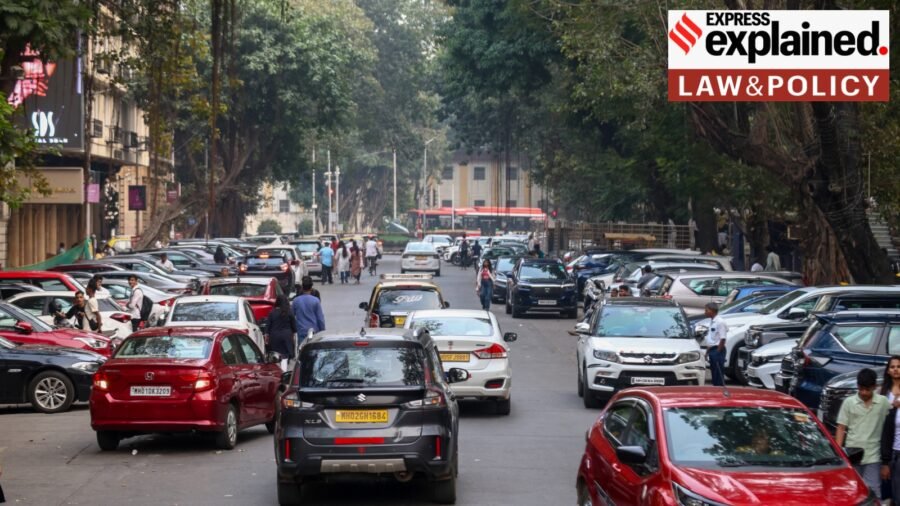
As the Delhi Police prepares a fresh congestion-management plan, commissioner Anurag Kumar has directed every traffic circle to identify at least one “problem area” marked by encroachment, roadside parking or chronic congestion.
The exercise comes amid a broader push to improve traffic flow, strengthen enforcement and crack down on unauthorised parking that contributes to bottlenecks across the city. Does living next to a public street give a resident any special right over the parking space?
Ownership of public street
A public street does not belong to the owner whose gates open onto it. The Delhi Municipal Corporation Act, 1957 (DMC Act) defines a “public street” as “any street which vests in the Corporation”.
Section 298 vests all public streets in the Corporation and goes further, stating that public streets “shall be under the control of the Commissioner and shall be maintained, controlled and regulated by him in accordance with the bye-laws”.
In other words, the road outside a house belongs to the public authority, not the adjoining resident. No provision of the DMC Act gives a homeowner an exclusive right over the stretch of road outside their property. Long use of a parking spot does not create any special entitlement either.
Parking is lawful, but regulated
Parking a vehicle on a public road is not, as such, illegal. Under Section 117 of the Motor Vehicles Act, 1988, the state government may determine “places at which motor vehicles may stand either indefinitely or for a specified period of time” and may also specify where public service vehicles may stop for longer periods.
Section 122 of the Act bars leaving a vehicle in a public place in a manner that causes or is likely to cause “danger, obstruction or undue inconvenience to other users of the public place or to the passengers”. Section 127 allows a vehicle abandoned or left unattended in violation of parking rules to be towed or immobilised.
Story continues below this ad
Delhi has additional rules of its own. The Delhi Maintenance and Management of Parking Places Rules, 2019, framed under the Motor Vehicles Act, prohibit on-street parking within 25 metres of an intersection on any arm of a road and bar parking in green areas, parks, footpaths, bus stops and certain other locations.
Rule 11 states: “The Area Parking Plan made by civic agencies shall include, in their scope, parking arrangements within residential areas. The plan within such areas shall be made in consultation with the residents/Resident Welfare Associations.” The Rules also require residential colony roads to keep one lane free for emergency vehicles.
Similarly, the Delhi Motor Vehicles Rules, 1993 empower the District Magistrate, after consultation with the State Transport Authority, the Deputy Commissioner of Police (Traffic) and the local authority concerned, to determine and notify parking places within their jurisdiction.
In effect, curbside parking outside a home is governed by the public authority that owns and regulates that stretch of road, not by the resident living next to it.
Story continues below this ad
What the court has said
The Supreme Court has weighed in directly on Delhi’s parking crisis. In M.C. Mehta v Union of India (2019), a Bench of Justices Arun Mishra and Deepak Gupta described the issue as one arising from the “conflict between increasing number of cars and dwindling availability of land” and observed that parking management has significant implications for urban planning.
The court directed the Delhi government to notify the Delhi Maintenance and Management of Parking Places Rules, 2019, and observed that an effective parking policy contributes to reducing congestion, pollution and crime.
The court also acknowledged the practical realities of residential neighbourhoods. It noted that it was “not oblivious to the hard reality that in certain colonies and areas parking of some vehicles will have to be permitted on the roads because the number of vehicles is much more than those which can be parked inside the houses.”