Why Maharashtra’s campuses have gone 30 years without a student vote
Through July, thousands of youngsters, many of them students, filled streets across Mumbai to back the Cockroach Janta Party (CJP)’s demand for accountability over the NEET paper leak. Hundreds were detained. Notices went out, and police officers turned up at homes to warn students off the next demonstration, which drew a bigger crowd. Across Maharashtra, protests and crackdowns repeated. Many on the streets saw the resignation of Union Education Minister Dharmendra Pradhan as only the beginning of long-pending reform, and said they would keep coming out.
Almost none of those students has ever voted for a representative on their own campus.
The protests have now put that back on the table. The organisations racing to sign up the generation that filled the streets have reopened a demand they let go of six years ago: the return of student union elections. The CJP’s membership drive is in full swing. The Maharashtra Navnirman Vidyarthi Sena is visiting colleges alongside offline and online enrolment, a drive its student wing says was planned around the party’s August foundation day, before the protests began. The Progressive Students Union starts shortly, and is looking at changing its social media strategy for Gen Z.
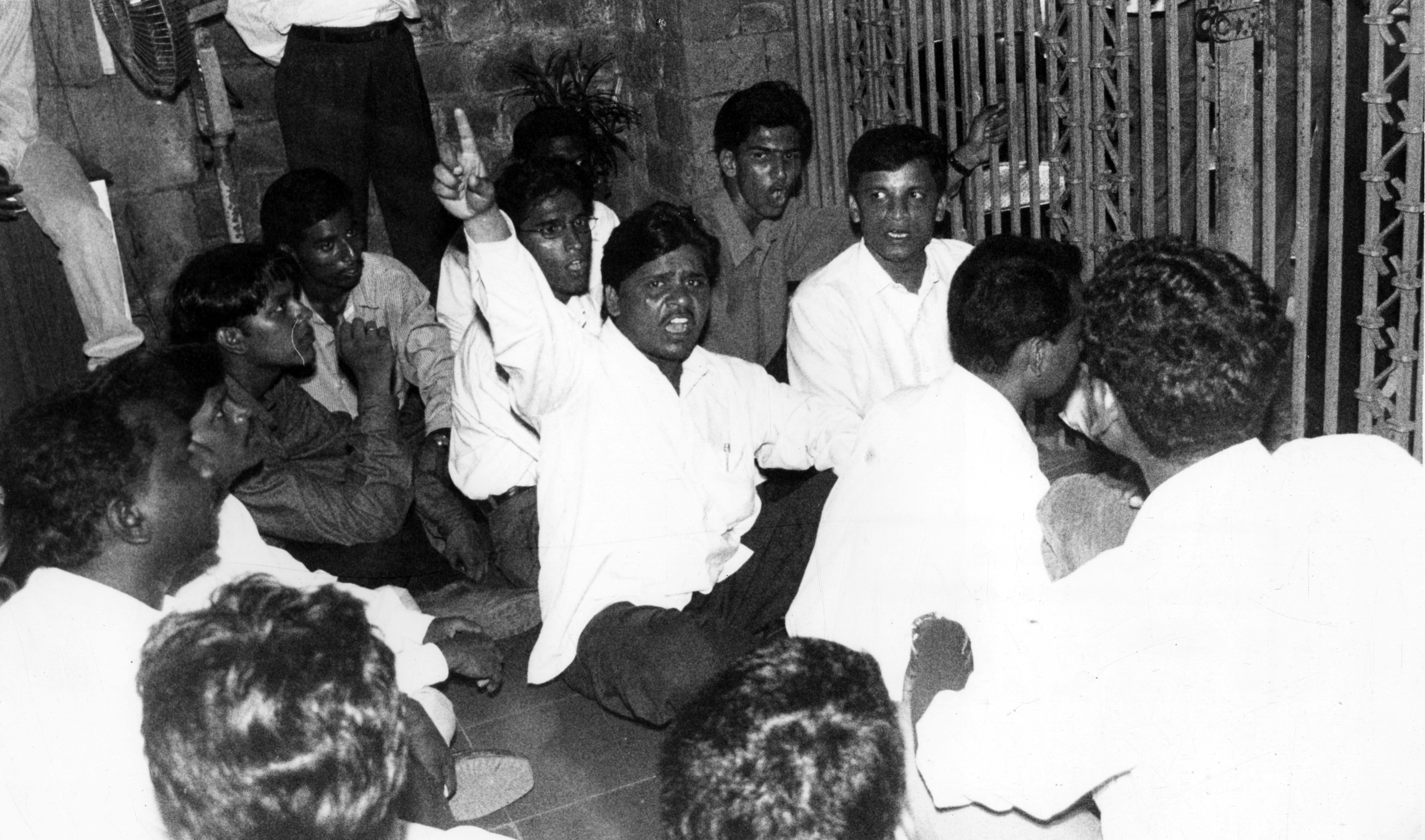 NSUI activists staged a demonstration at vice Chancellors office at Mumbai University. Express archive photo by A Srinivas 30.5.2000 *** Local Caption *** NSUI activists staged a demonstration at vice Chancellors office at Mumbai University.
“Like others, we too will take stock of the situation after the membership drive, to raise the point of student elections again with the government,” said Samya Korde of the Progressive Students Union.
Maharashtra’s colleges and universities have not held student union elections in more than three decades. The state legislated them back in 2016. Universities framed rules and announced schedules for 2019. Weeks before the schedule began, the cabinet deferred the polls. Seven years on, there is no new date and, by the government’s own account, no discussion under way.
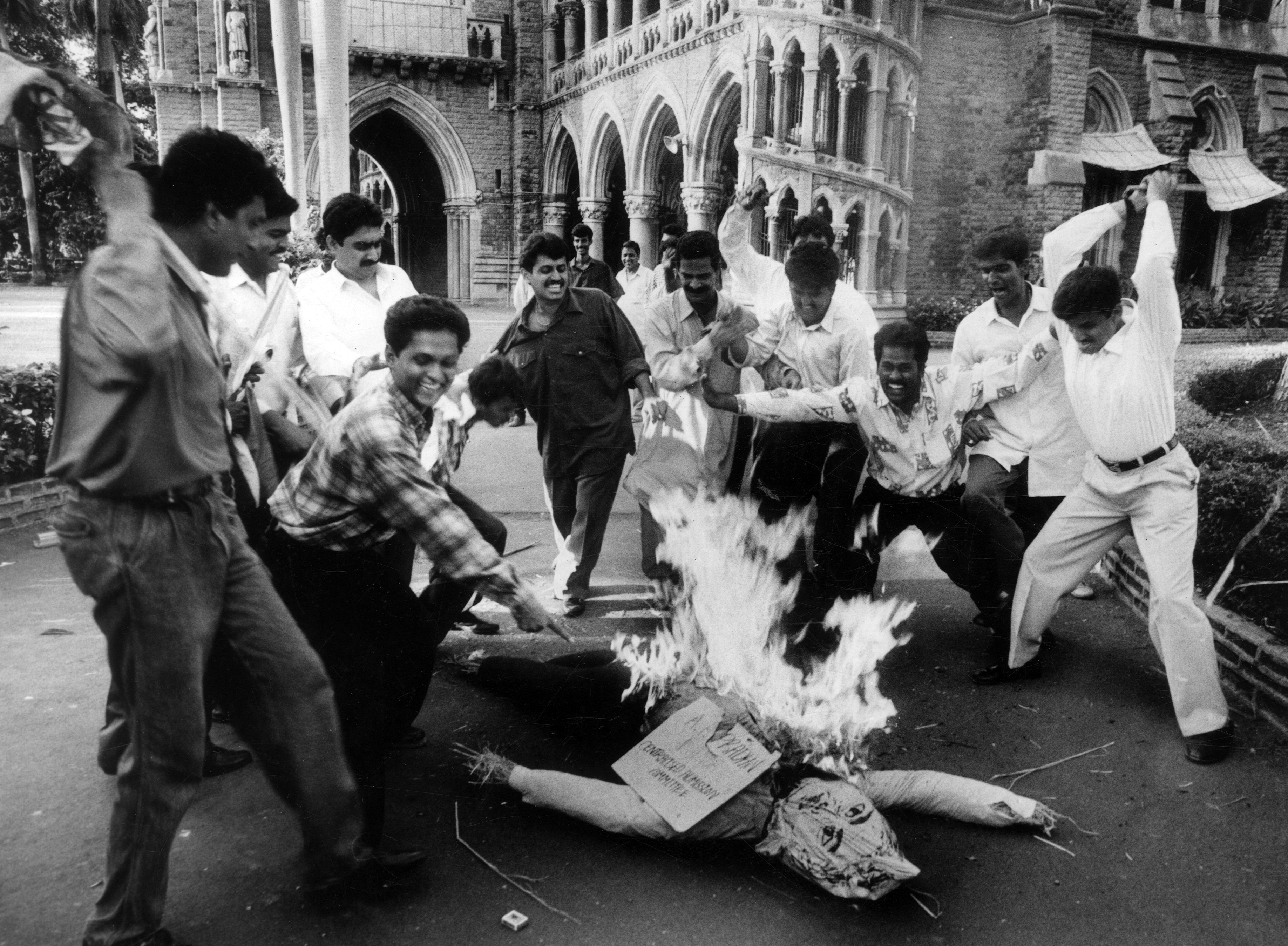 NSUI activists burnt the effigy of AP Pradhan, Pro VC of Mumbai University, in protest against centralisation of admission by government at University campus.
A schedule, then a cabinet decision
Korde remembers how close the state came. After the 2016 Act, several universities launched election plans in 2018-19. “I know because, as a second year law student then, I was planning to contest for the post of president. But with assembly elections approaching, these elections were put on hold and this discussion never restarted.”
Story continues below this ad
In August 2019, weeks before the schedule most universities had declared, the cabinet approved Section 99B of the Maharashtra Public Universities (Second Amendment) Ordinance, giving the government power to defer campus polls. The reason offered was that elections set for August-September clashed with the code of conduct for the assembly polls, and could raise law and order concerns.
Then came the pandemic, and years of political churn. No one pushed hard. “Nobody had raised the issue as the government was unstable for a long while,” said Korde, who argues the state’s own leadership is proof of what campuses once produced. “All the ministers, including state Higher and Technical Education Minister Chandrakant Patil, have come up through student movements on campuses during their times. But today’s young leaders are not given the platform.”
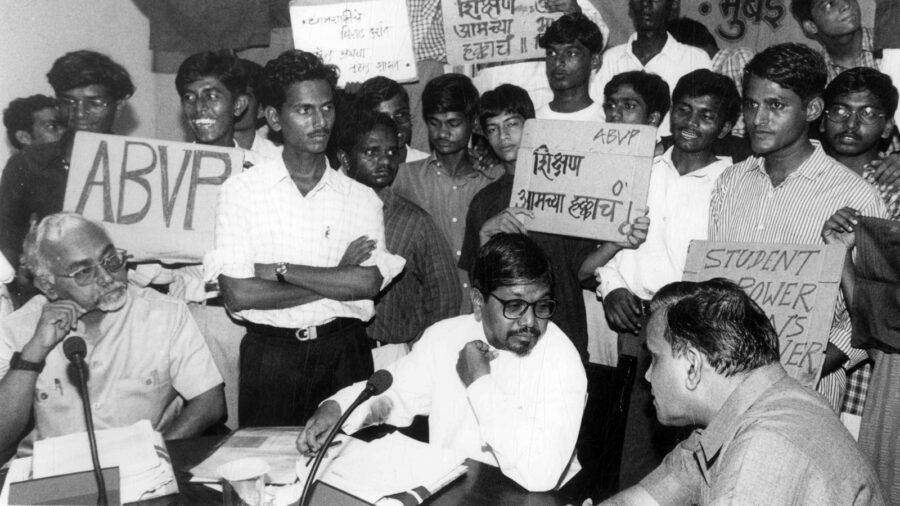
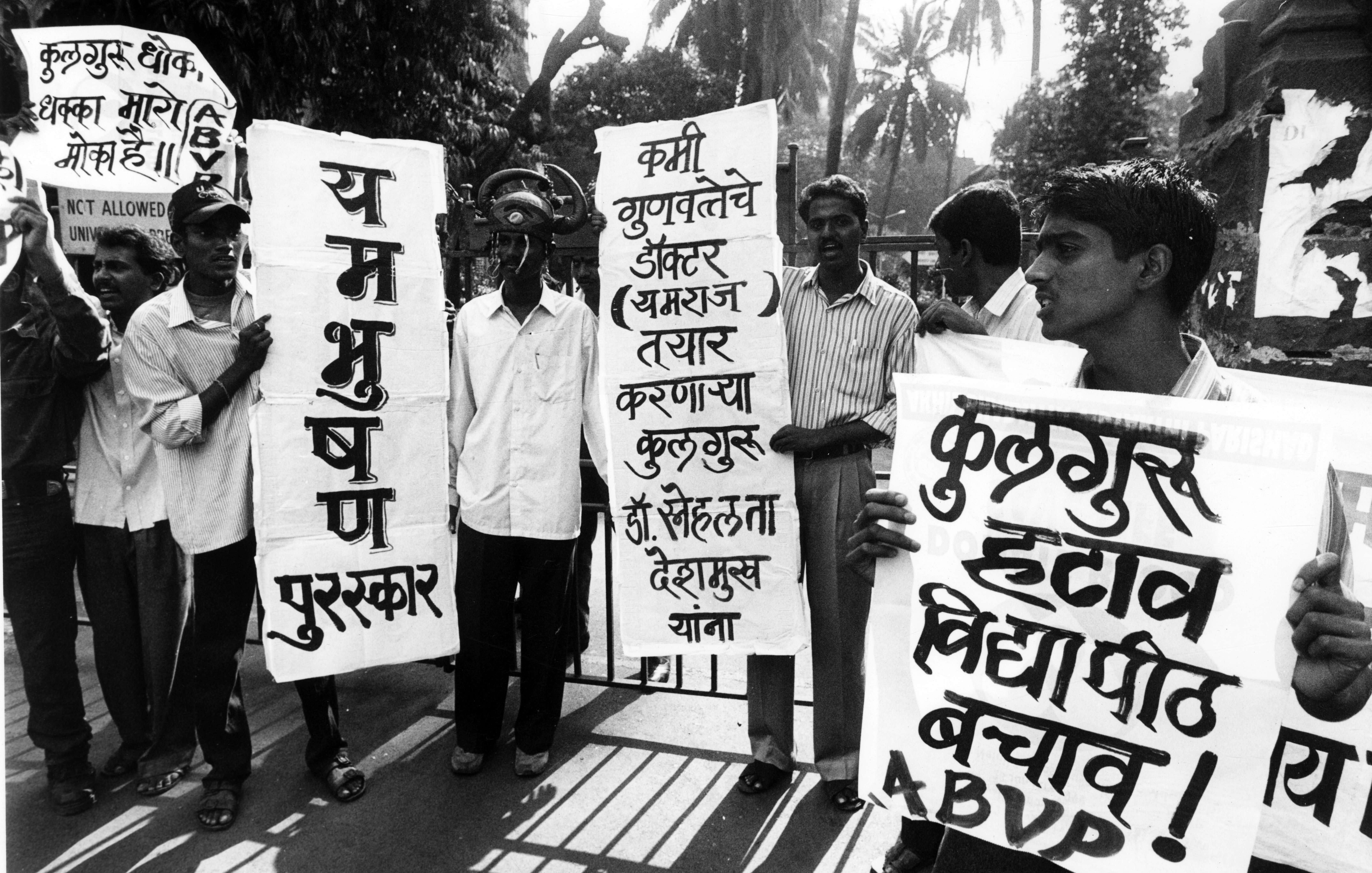 Members of ABVP demonstrating in front of Mumbai University demanding resignation of Vice Chancellor on 7.4.99.
Why the polls stopped
Maharashtra’s campuses have been without union elections since the 1990s, after a series of campus violence and one killing that drew public outrage. In October 1989, NSUI student leader Owen D’souza was murdered outside a Mumbai college during campaigning. The Maharashtra Universities Act 1994 banned direct, competitive student union elections.
Story continues below this ad
Since then, law and order has been the reason offered. Differing on it, Deepak Pawar, who teaches political science at Mumbai University and heads the Marathi Abhyas Kendra, says, “If law and order is the only concern, then by that logic no elections should be held in Maharashtra or even in the country.”
Adding that this is not to suggest violence during campus polls is acceptable, he said, “But the government should find ways to move beyond this and bring in better circumstances for campus elections.”
The question has been taken up before. NSUI leader Amol Matele recalls all-party meetings in 2013-14 that settled on reviving campus polls along the lines recommended by the Lyngdoh Committee.
The Maharashtra Public Universities Act 2016 reversed the ban. Section 99 requires affiliated colleges, institutions and university departments to constitute students’ councils through election, with each university framing its own rules. The safeguards came from Lyngdoh, the committee set up in 2005 on a Supreme Court order and reporting in 2006 to curb the money and muscle power that had made campus polls a law and order problem. Its rules are mandatory for any campus election in India: age limits by course level, a minimum 75 per cent attendance record for candidates, caps on campaign spending, a campaign code of conduct, a grievance redressal system, and a bar on direct political affiliation.
The minister who revived them
Story continues below this ad
Vinod Tawde was Maharashtra’s education minister when the 2016 Act was passed. Now the BJP’s national general secretary and a Rajya Sabha MP from the state, he has argued that the process should not stay banned over a handful of past incidents.
“Government should initiate student elections. It brings forward student leadership. And with the advent of technology, ways can be thought of how it can be used such as online or mobile voting etc. to ensure that there is no law and order concern arising,” Tawde told .
Asked whether he should press the state on the process he began, Tawde said, “The current state leadership is fair enough to think about all this.”
There is little to press on. A senior official in the higher and technical education department said campus elections are not under discussion, largely because no demand has reached the government.
Story continues below this ad
Universities are not asking either. “Campus elections is a decision of the state government, whether it was about banning those in the 90s or reviving them in the year 2016 and then postponing them in the year 2019. Universities will follow the state’s guidelines,” said a senior Mumbai University official who asked not to be named.
Who gains from the silence
Youth wing leaders across parties argue the vacuum explains why the government struggled to read the June protests. Campus polls produce young cadre who know what students are angry about and how to handle it. Without that layer, the state faced a form of protest its usual pressure tactics did not work on. Three groups have done well out of the arrangement.
The first is the ruling party. Santosh Gangurde, state general secretary of the MNS student wing, said: “But today’s government does not want people who question. Dealing with just one (CJP founder) Abhijeet Dipke asking questions has come at a high cost for them. Why would they want to have one Dipke in every campus? This is why most bodies in universities too are filled with nominated or selected members, because elected ones will ask questions.”
Matele puts it in similar terms. “But the current government seems to have gotten scared of the young generations who would be raising issues. The Gen-Z protest has only shown the level of dissent among the young generation,” he said.
Story continues below this ad
The second is political families. Youth wing members across parties say it is dynasty, not law and order, that keeps the polls away. “If actual student leaders come forward with a proven impact with the young generation’s support, there will be no room for children of political bigwigs,” said a member of one party’s youth wing. Pawar makes the same point. Without elections, students with real political ability wait to be noticed, while the children of political families are handed platforms regardless of performance.
The third is the universities. Most administrators and principals, the Mumbai University official said, do not believe campus polls can be held without political interference. “All that is likely to make the campus environment hostile and stressful. And varsity administration would end up spending a whole lot of time on managing those issues rather than focusing on varsity.”
Pawar reads that calm differently. “In the absence of student leaders who are going to identify issues, raise voices and demand accountability; there is a false notion of silence. Delayed student elections have worked in favour of varsity leaderships. With no voice of dissent, a false picture is created about how all is well on campus. This frustration is eventually going to burst out somewhere, which we saw in Gen-Z protests.”
What campuses lose
The case for student elections is usually made in terms of training future politicians. Experts say the everyday case is larger: resolving student grievances, keeping a channel open between students and authorities, and running campuses better. The Lyngdoh Committee held that student representation is essential to students’ overall development, and recommended that university statutes provide for it expressly.
Story continues below this ad
What exists instead is a nominated council. “In the current practice of nominated or selected members forming a student council, mostly those who have good grades are chosen by the authorities. They do not intend to devote time to council’s effective functioning because they are more focused on academics and also lack the much required student connect on campus,” said a member of a party’s youth wing.
The protests have settled one question, Pawar said. This generation is not apolitical. Whether that is enough to bring elections back to Maharashtra’s campuses is another matter, and still unknown.