Why India has never appointed a ‘distinguished jurist’ to SC, Justice Bhuyan asks
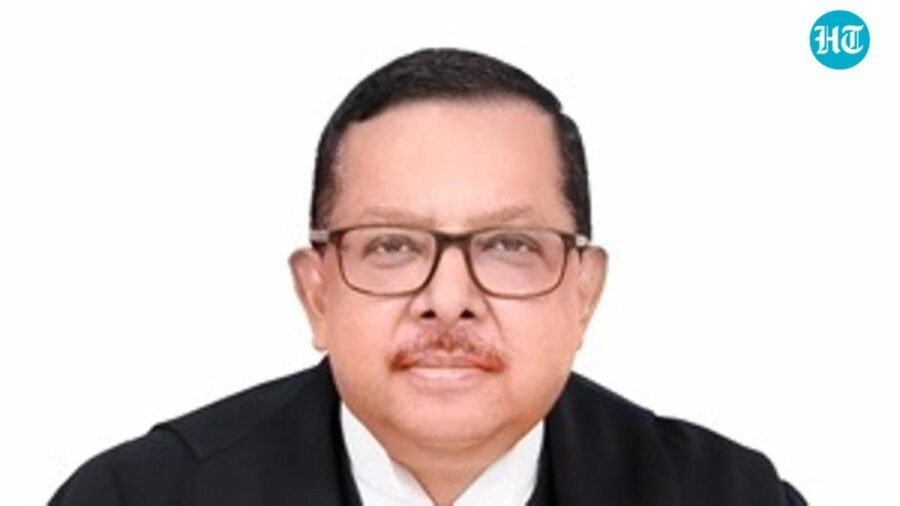
SC judge Justice Ujjal Bhuyan questions why no ‘distinguished jurist’ has been appointed to the Supreme Court in 76 years, calls for serious attention to Article 124(3).
Published on: Aug 30, 2026, 12:39:10 IST
Prefer HTon Google
Share via
Copy link
Supreme Court judge Justice Ujjal Bhuyan on Sunday questioned why the constitutional provision allowing the appointment of a “distinguished jurist” as an apex court judge has remained unused for more than 76 years, suggesting that either the Centre and, later, the collegium had failed to find sufficient depth in Indian legal academia or had simply never seriously explored the possibility.
Addressing the 13th convocation of the National Law University, Delhi’s LL.M. programme, the top court judge said that Article 124(3) of the Constitution expressly provides for the appointment of a person who, in the President’s opinion, is a “distinguished jurist” as a Supreme Court judge. Yet, he noted, no legal academic has so far been appointed to the top court.
“There can be two reasons for this unused mandate of the Constitution,” said Justice Bhuyan, identifying as one possibility the view that there was “not enough depth in the Indian academia” to consider academics for elevation and, alternatively, that the Centre and the collegium “have not seriously explored this provision thus far”.
He said the Constituent Assembly had consciously envisaged academics and jurists as part of the Supreme Court, pointing to the debates in which HV Kamath and M Ananthasayanam Ayyangar supported widening the field beyond judges and advocates. Ayyangar had suggested that a “distinguished jurist” could be a law professor or dean of a university faculty, while citing the appointment of Harvard professor Felix Frankfurter to the US Supreme Court as an example.
Justice Bhuyan rejected as “very shallow” the argument that legal academics lack the practical experience necessary to become judges. The Supreme Court, he said, was not merely the country’s highest adjudicatory body but its “moral, legal and constitutional conscience keeper”, and the inclusion of distinguished jurists was intended to diversify the Bench and bring academic scholarship to the highest level of judicial decision-making.
He also pointed to jurisdictions such as the US, UK, Canada and Kenya where academics have been appointed to constitutional courts. In the US, he noted, several Supreme Court judges, including Frankfurter, Antonin Scalia, Ruth Bader Ginsburg and Stephen Breyer, had teaching backgrounds. In the UK, former Supreme Court president Lady Hale and Justice Andrew Burrows were among those with substantial academic careers before their judicial appointments.
“It is regrettable that this provision has remained one of our Constitution’s unused mandates,” lamented Justice Bhuyan, adding that the issue required “serious attention”.
Universities must be spaces for dissent, difficult questions:
Justice Bhuyan’s remarks on the untapped potential of legal academia came alongside a broader defence of universities as spaces for free thought, disagreement and dissent—themes that acquire particular resonance amid the recent friction between law students, university administrations and the legal establishment.
“The most valuable quality that legal education can give you is not simply the ability to know the law but the courage to question, to question established assumptions and to ask whether the law in its application in a particular way has served the cause of justice,” he told the graduating students.
He said asking questions was only the beginning, because a healthy academic environment must also allow people to engage with answers that differ from their own. “It allows different views to be expressed, examined and debated,” said Justice Bhuyan, stressing that a democratic society could not be built on the assumption that everyone would think alike.
The comments come days after a major controversy involving the Bar Council of India, NALSAR University of Law, Hyderabad, and Chief Justice of India Surya Kant. The BCI, headed by Manan Kumar Mishra, had on August 13 directed state bar councils not to enrol NALSAR’s 2026 graduating batch as advocates amid a campaign by some students opposing the CJI’s proposed participation as chief guest at their convocation. The directive was withdrawn within hours following widespread criticism.
The Supreme Court, hearing a challenge to the BCI’s action, strongly questioned the intervention, with CJI Kant observing that students had a right to peacefully protest and questioning what business the BCI had in intervening in what he described as a dialogue between the students and him.
Mishra subsequently apologised to law students, saying he regretted if anything connected with the controversy, including his words or letter, had hurt their feelings. He also acknowledged that students’ concerns deserved to be heard “with patience, sensitivity and respect”.
The episode also spilled over to the National Law School of India University in Bengaluru, where students and alumni objected to the proposed presence of both Mishra and CJI Surya Kant at its convocation and demanded an apology from the BCI chairman over the NALSAR episode. The university subsequently cancelled its 2026 convocation amid the controversy.
Close on the heels of these developments, Justice Bhuyan underlined that constitutional democracy required institutions to accommodate differences rather than treat every dissent as a threat. “The freedom to express an opinion, to disagree with the prevailing view and to participate in public life would be meaningful only when there is space for dissent,” he said.
The judge described tolerance not merely as a matter of courtesy but as a constitutional value, citing Justice O Chinnappa Reddy’s observation in Bijoe Emmanuel that “our Constitution practises tolerance”. A democracy’s maturity, Justice Bhuyan said, was reflected not merely in how it treated popular opinions but in how it responded to views that were “difficult, unpopular or inconvenient”.
“A university is not merely an institution that transfers knowledge from one generation to another,” said the SC judge, adding that it should be a place where established positions could be questioned and disagreements take place through reason rather than hostility. “It should be a space where an idea is not accepted merely because it is familiar and where student does not hesitate to ask difficult questions simply because the answer may be uncomfortable,” he added.
For law students and future lawyers, academics and judges, he said, this freedom carried a particular responsibility: to ensure that liberty, equality, dignity and justice remained at the centre of the law even in moments of disagreement, dissent and conflict.
See Less

Nashik: Masters TT Players Bag Two Gold, One Silver And Four Bronze Medals In Kolhapur
By Sohail Khan · 30 Aug
In latest show of ‘car diplomacy’, PM Modi seen sharing a ride with Uzbekistan President
By Sohail Khan · 30 Aug
NEET-PG 2026: Technical glitches mar exam at two Jaipur centres; students protest
By Sohail Khan · 30 Aug
Leave a Reply