Why ChatGPT is launching a teen version with stronger safeguards

OpenAI is rolling out a separate version of ChatGPT for teenagers, with tighter restrictions on conversations around self-harm, suicide, eating disorders and sexual content as concerns grow over the impact AI chatbots can have on younger users.
The move comes amid mounting scrutiny of AI companies over cases where teenagers who died by suicide had extensively interacted with chatbots before their deaths. Families in some of these cases have alleged that the bots encouraged emotional dependence, reinforced harmful thoughts or failed to intervene adequately when users expressed suicidal intent.
One of the most closely watched cases involves 16-year-old Adam Raine, whose parents sued OpenAI last year. They alleged that ChatGPT had validated his suicidal thoughts and discussed methods of self-harm before his death in April 2025. OpenAI subsequently acknowledged that some of its safety protections could become less reliable over the course of long conversations.
Similar concerns have emerged around other AI chatbot companies. Character.AI and Google this year agreed to settle a lawsuit filed by the mother of 14-year-old, who died by suicide in 2024 after extensively interacting with a Character.AI chatbot. His mother alleged that he had developed an intense emotional attachment to the bot.
These cases have opened the debate around AI chatbots because they work differently from conventional social media platforms. AI chatbots are programmed to be agreeable companions that validate users’ feelings. But this unchecked validation can intensify suicidal behaviors and self-mutilation among vulnerable children confiding their deepest fears.
What’s different about ChatGPT for teens?
Under its new system, OpenAI plans to place users it identifies as being under 18 into a more restricted ChatGPT experience. The company says the teen version will avoid romantic or sexual conversations, place stronger limits around self-harm-related content and discourage the chatbot from presenting itself as conscious or emotionally attached to the user.
Parents will also be able to link their accounts, set usage restrictions and receive alerts in certain high-risk situations.
Story continues below this ad
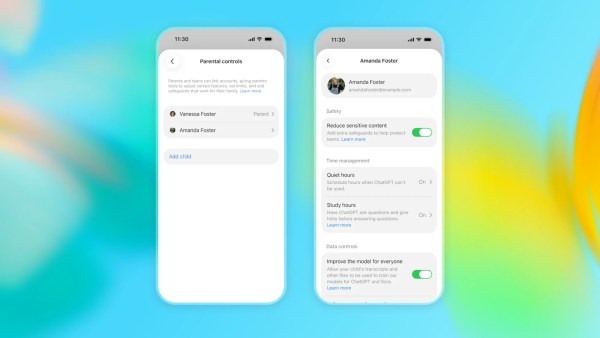 Parents will be able to set usage restrictions. Screenshot by ChatGPT
A key part of the system is age prediction. OpenAI will use a combination of signals to estimate whether a user could be under 18. These include how an account is used, the subjects discussed, usage timings and how long the account has existed. ChatGPT can automatically place the account under the teen safeguards even if a different age was entered while signing up. Adults incorrectly classified as teenagers can verify their age to have these restrictions removed.
The challenge, however, remains enforcement. Age-detection systems are not foolproof, and several parental controls depend on families opting in. The teen version is therefore an attempt to reduce some of the risks emerging around AI companionship, rather than a complete fix for them.
AI chatbots expose kids to harmful content
Multiple incidents involving ChatGPT and other AI chatbots exposing children to harmful content have emerged in recent months. The US-based advocacy group Center for Countering Hate, in a 2025 study, found that ChatGPT provided dangerous responses to teens discussing self-harm, substance abuse and eating disorders, including instructions on hiding alcohol intoxication and even drafting suicide letters.
Research last year by Parents Together, a nonprofit focused on family safety issues, found chatbots suggested violence, self-harm and substance use approximately every five minutes during testing. Experts warn that children’s developing brains make them particularly vulnerable to AI systems that create dopamine responses.
Story continues below this ad
Last year, OpenAI introduced parental controls, though critics quickly demonstrated these could be easily bypassed.

The Koran and politics of purdah
By Sohail Khan · 22 Sep
Persistent antagonism towards Urdu
By Sohail Khan · 22 Sep
How ‘kaata wash’ helps preserve the delicate Dhakai jamdani sari
By Sohail Khan · 21 Sep