When public transport paves the way for Chennai’s development
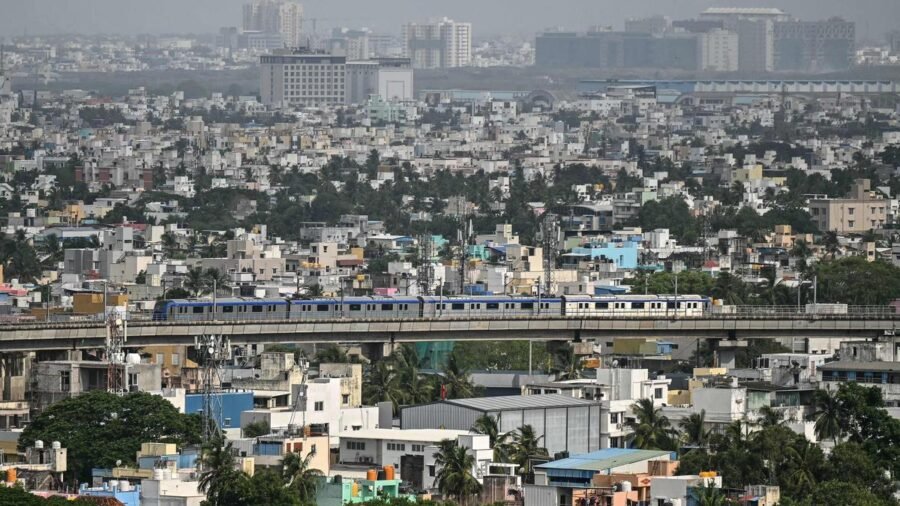
Chennai has always been a trendsetter in the public transport scene in the country, be it the first train service to be operated in South India from Royapuram railway station to Walajah Road (now Wallajahpet) in Ranipet or one of the earliest tramway system snaking through the arterial roads of Anna Salai.
These were followed by the dedicated metre-gauge suburban trains linking the suburbs with the city and the ubiquitous buses of the Metropolitan Transport Corporation (MTC), which was earlier called the Pallavan Transport Corporation (PTC).
In between these services were the horse carts and the tricycle rickshaws, which slowly evolved into motorised autorickshaws. The autorickshawswere the best companion for those wanting to reach inaccessible areas in record time. Rajini-starrer Baasha even has a song dedicated to autorickshaw drivers. However, they have begun to fall out of favour with residents after they started fleecing commuters and with the advent of transport aggregators. Today, residents can choose from the multi-modal transport facility of suburban trains, the country’s first elevated transport corridor of the Mass Rapid Transit System (MRTS), bus services, and the quicker Metro system.
Stepping into its 387th year, the city has seen significant changes in its public transport scene, though several projects have been in the slow lane, including the MRTS, the MRTS extension project from Velachery to St. Thomas Mount, and the Metro.
However, compared to the other metro cities of Bengaluru or Hyderabad, Chennai’s residents have dependable public transport facilities, particularly the MTC that, according to a senior official of the transport department, has the country’s largest network. It operates over 3,850 buses on more than 685 routes, and carries nearly 35 lakh commuters daily.
A senior official of the MTC said the passenger transport was nationalised in 1947 when the then Madras government introduced 30 buses. But in 1972, the State government hived off bus transport from the State Transport Department by setting up the PTC, registered under the Companies Act 1956, with a fleet of 1,029 buses.
Through the years, the MTC has transformed into a dependable public transport service and has introduced low-floor buses, with air-conditioning, and electric buses. To recreate the experience of travelling in the bygone days, it has introduced five retro buses for its city tour services called ‘Chennai Ula’.
Octogenarian R. Rangarajan of Pammal, sharing his experience of travelling in the tramways and the metre-gauge suburban trains, said the tram cars were the most convenient mode of transport as one could hop on and hop off wherever one wanted to. However, workers’ strike over wage demands caused the permanent closure of tramway services in 1953 and the launch of bus services, as the buses that were brought in to help break the strike took over.
Growth of Metro Rail
In the ever-expanding city, Metro services have become a sought-after mode of public transport among the youth. In June 2015, nearly 15 years after the first proposal for Chennai Metro Rail was mooted, the first train chugged off from Koyambedu to Alandur.
Though it was viewed as a hallmark for development, the Chennai Metro Rail initially garnered only a lukewarm response and commuters took a ride just to experience these modern trains and stations. When the 45-km network of the phase I project was completed, many began choosing the Metro services since they connected the transport hubs — Chennai Central, Chennai airport, Chennai Egmore, and the Chennai Mofussil Bus Terminus. “It was an intelligent move to link all transport hubs, as it played a crucial role in drawing people to the system,” K.P. Subramanian, an urban planner, says.
Opening of the phase I extension network in early 2021 gave the much-needed impetus to its patronage, as it connected north Chennai — from Washermanpet to Wimco Nagar. Dayanand Krishnan, a commuter from Chitlapakkam, says, “Those from the southern parts such as Tambaram could board at the Chennai airport and seamlessly travel to north Chennai, avoiding traffic. It is one of the best transport connectivity in the city.”
The Chennai Metro Rail system, which once registered a footfall of 10,000 people, now sees an average of 3.4 lakh commuters daily. The number of people opting to travel by Metro has risen owing to its impeccable punctuality, both in maintaining the train frequency and in the cleanliness of stations and amenities, says Mr. Krishnan. “Be it at 5 a.m. or 11 p.m., commuters don’t hesitate to travel in this system because of the safety standards they have maintained so far,” he adds.
The 118.9-km phase II network with three corridors — Madhavaram to SIPCOT, Light House to Poonamallee, and Madhavaram to Sholinganallur — holds a great promise of improving urban mobility in the coming decades. Mr. Subramanian says after the construction of the phase II network began, there has been a marked development in the corridors where the phase II stations are coming up.
“While the Chennai Metro Rail is focusing on transit-oriented development, wherein commercial complexes or office spaces are developed in and around a few stations, they can implement it more aggressively, in as many stations as possible. This will significantly change the way the city develops, and make it convenient for more people to access public transport,” he says. He stresses the need to work with the MTC to shift bus stops and operate buses back and forth from the phase I and phase II stations.
In the next 20 years, combined with the suburban, MRTS and Metro Rail services, and its extension lines such as Airport-Kilambakkam and Koyambedu-Avadi-Pattabiram, the city’s public transport scene is set to witness a sea change.

Press Club condemns detention of journalists covering protests against CEC Gyanesh Kumar
By Sohail Khan · 26 Sep
Temple priest arrested for alleged derogatory remarks against Sree Narayana Guru
By Sohail Khan · 26 Sep