What was the Communal Award that pitted Gandhi against Ambedkar
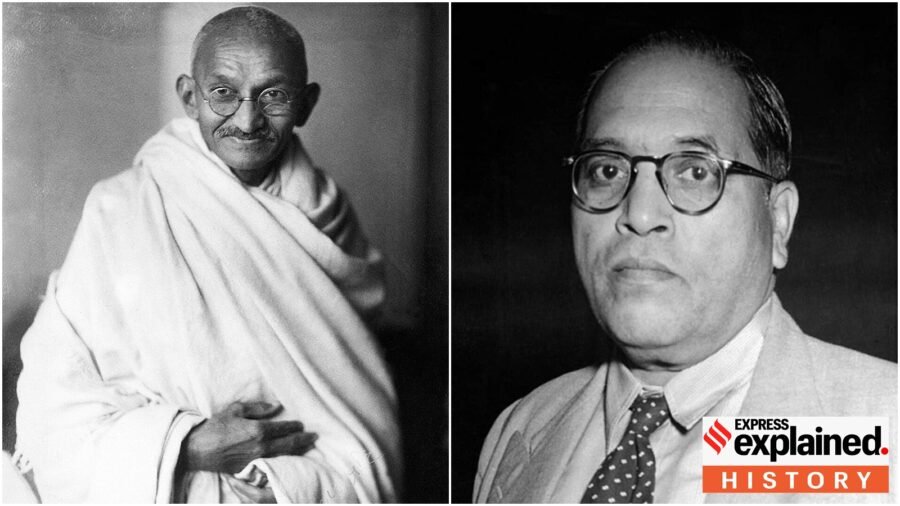
In September 1932, when Mahatma Gandhi was preparing to begin a fast unto death, Dr BR Ambedkar told an interviewer that he trusted Gandhi would not drive him “to the necessity of making a choice between his life and the rights of my people. For, I can never consent to deliver my people bound hand and foot to the caste Hindus for generations to come.”
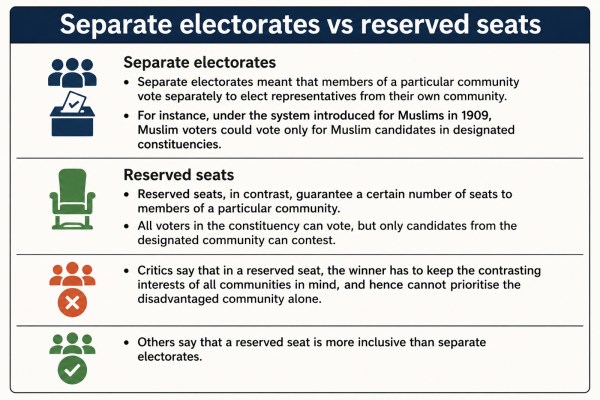
Gandhi’s fast was about the Communal Award, announced a month earlier, which provided for separate electorates for religious minorities and the depressed classes in India.
Why was Gandhi opposed to this, and why did it become a huge flashpoint between him and Ambedkar?
Separate Electorates for the Depressed Classes
On March 11, Gandhi read in the newspapers that the British government was preparing to announce a proposal for separate electorates for the Depressed Classes. He immediately wrote to Samuel Hoare, the secretary of state for India, reminding him of what he had said during the Round Table Conference: that he would resist such a move “with my life”. Gandhi now stressed that these words “were not said in the heat of the moment, nor by way of rhetoric”.
Gandhi argued that separate electorates would tear apart and disrupt Hindu society. According to historian Ramachandra Guha in Gandhi 1914-1948: The Years That Changed the World (2018), he also maintained that they were neither an act of penance nor a remedy to the problems facing the Depressed Classes.
He then warned Hoare that if the government proceeded with the proposal, he would fast unto death. This, Gandhi said, was a “call of conscience.” Hoare replied that the matter would not be decided for at least several weeks.
The Communal Award
On August 16, British Prime Minister Ramsay MacDonald formally announced the Communal Award. It recognised the Depressed Classes as a minority and granted them separate electorates for 20 years. The arrangement gave them 71 special seats in the provincial legislatures. The Award also provided separate electorates for Muslims, Sikhs, Indian Christians, Anglo-Indians and Europeans, along with communal allocations of seats in the provincial legislatures and other safeguards for minority representation.
Story continues below this ad
Gandhi immediately wrote to MacDonald, reminding him of his March letter to Hoare. Now that the decision had been made, he said, he would undertake a “perpetual fast unto death”, taking nothing but water. He would begin on September 20, but would call it off if the British government reversed its decision.
MacDonald replied with “surprise” and “regret”. He argued that separate electorates would allow representatives of the Depressed Classes to speak for themselves, whereas under a joint electorate they would, in most cases, be elected by higher-caste Hindu voters. At the same time, because members of the Depressed Classes would retain a vote in the general Hindu constituencies, MacDonald maintained that the arrangement would unite rather than separate them from other Hindus. He said he was unable to understand Gandhi’s decision to fast.
Once the correspondence between Gandhi, Hoare and MacDonald became public, it prompted a flurry of commentary in the press. MC Rajah, a prominent leader from South India, called separate electorates “dangerous and suicidal”, arguing that they would pit lower-caste Hindus against their fellow Hindus. BG Horniman, the pro-Indian British journalist, similarly accused the Communal Award of encouraging antagonism between the Depressed Classes and other Hindus and of making that separation a permanent feature of India’s political system.
Ambedkar and separate electorates
The most prominent advocate of separate electorates was BR Ambedkar. He had argued for them at both Round Table Conferences, and, Guha argues in his book, his arguments had helped persuade the British to grant them.
Story continues below this ad
Ambedkar believed that upper-caste reformers such as Gandhi could not adequately represent the Depressed Classes. They needed their own leaders and representatives in legislatures.
As Gandhi’s fast approached, Madan Mohan Malaviya convened a meeting of Hindu and Depressed Classes leaders in Delhi, hoping to negotiate a settlement that would allow Gandhi to call off the fast. Ambedkar initially declined, saying he would wait for a concrete proposal from Gandhi. He insisted that his priority was the interests of the Depressed Classes, rather than Gandhi’s personal decision to fast.
On September 16, however, Gandhi drafted a statement explaining the purpose of his fast and wrote to several close associates about what he described as a “momentous step” in his life. At noon on September 20, Gandhi began his fast unto death in Poona. He said he was prepared to live and die for the eradication of untouchability and called for a genuine social reconciliation between caste Hindus and the Depressed Classes.
Poona Pact
As Gandhi fasted in Poona, several leaders met in Bombay to find a way out of the deadlock. The conference included Malaviya, Tej Bahadur Sapru, MR Jayakar, C Rajagopalachari and Rajendra Prasad. Ambedkar was eventually persuaded to join them. A proposal for joint electorates was taken to Gandhi in Poona.
Story continues below this ad
The negotiations resulted in the Poona Pact, signed by Ambedkar and other leaders on September 24, 1932. It abandoned separate electorates for the Depressed Classes but significantly increased their reserved seats: from 71 to 148 in provincial legislatures and to 18 per cent of the total seats in the Central Legislature.
The British government accepted the Pact as an amendment to the Communal Award.
India retained the reserved seats system after Independence. In the current 543-member Lok Sabha, 84 seats are reserved for Scheduled Castes and 47 seats for the Scheduled Tribes.

Amid calls for ‘pacing,’ a new Nvidia safety tool to stop AI agents from going rogue
By Sohail Khan · 29 Sep

Why rare-disease drugs could become India’s next pharma frontier
By Sohail Khan · 29 Sep