What happened to Nawaz Sharif after Operation Safed Sagar? Exile from Pak, death penalty threat
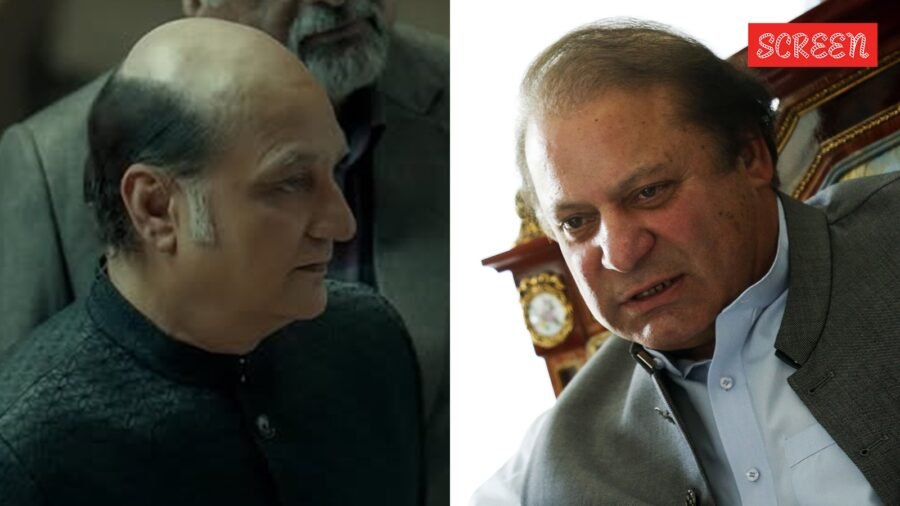
The Netflix series Operation Safed Sagar, which chronicles the efforts of the Indian Air Force during the Kargil War 1999, has received a lot of love from the audience, and generated a lot of curiousity around the events that took place between India and Pakistan during that period. In the show, Vinay Pathak plays Pakistan Prime Minister Nawaz Sharif, and the early episodes portray him as someone who was actually making efforts towards strengthening the peace between the two countries as he welcomed Indian Prime Minister Atal Bihari Vajpayee (played by Aanjjan Srivastav), and the members of his contingent, with open arms, at least on the surface.
However, as the show proceeds, it is shown that General Pervez Musharraf, who was the Chief of Army Staff of Pakistan, acted without his knowledge when he secretly ordered Pakistani troops to cross the Line of Control and capture posts of the Indian Army around the border area.
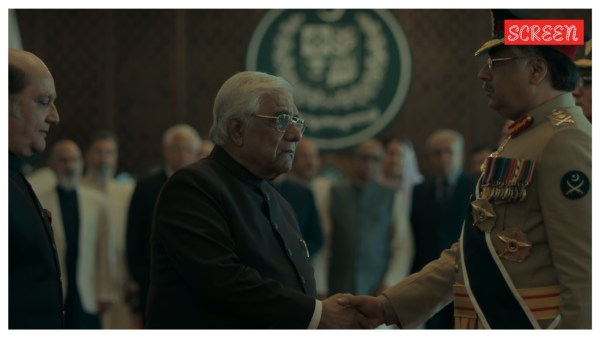 Vinay Pathak as Nawaz Sharif, Aanjjan Srivastav as Atal Bihari Vajpayee, and Manu Rishi Chadha as Pervez Musharraf in Operation Safed Sagar.
But, in real life, facts suggest otherwise. It has been reported that both Nawaz Sharif and Pervez Musharraf kept passing the buck on to each other as Sharif claimed that Musharraf acted without his knowledge, but Musharraf claimed that Sharif had been kept up to date about every activity.
Nawaz Sharif under house arrest after military coup
Nawaz Sharif was in the midst of his second term as Pakistan PM when the Kargil War started. His first term, which lasted from 1990-1993, ended in him being ousted from his post, and similar things happened the second time as well.
Soon after the Kargil War ended in July 1999, rumours of a possible military coup began circulating in Pakistan amid growing tensions between Prime Minister Nawaz Sharif and Army Chief General Pervez Musharraf. In an attempt to quell speculation about a possible fallout between the two, Sharif formally confirmed Musharraf’s remaining two-year term as army chief on September 30, 1999.
However, tensions continued to escalate. On October 12, 1999, while Musharraf was returning to Pakistan from an official visit to Sri Lanka, Sharif dismissed him as army chief and attempted to prevent the flight from landing in Karachi. In response, Musharraf’s allies in the army mobilised troops towards Islamabad, and held Sharif under house arrest.
Story continues below this ad
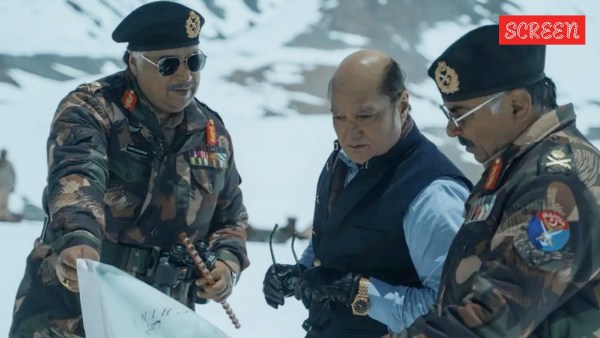 Vinay Pathak (center) as Nawaz Sharif in Operation Safed Sagar.
Days after that, Musharraf, acting as the country’s Chief Executive, suspended the Constitution of Pakistan. The military police took over the radio communications and the state broadcaster and announced Sharif’s dismissal. This was shortly after Pakistan had lost the war against India and the public was anyway not in Sharif’s favour, which also led to people burning his posters.
‘Show trial’ that could have ended in death penalty for Nawaz Sharif
What happened next was labelled as a ‘show trial’ as Sharif was held on trial for ‘kidnapping, attempted murder, hijacking and terrorism and corruption.’ Sharif was sentenced to life imprisonment and his defence lawyer was killed in Karachi. Sharif also faced trial for tax evasion but since he could not prove his innocence, he was ordered to pay a fine of $400,000 and 14 years in prison.
Exile in Jeddah
It was claimed that Nawaz Sharif avoided the death penalty because of US President Bill Clinton’s intervention. King Fahd of Saudi Arabia also intervened, as he shared a friendship with Sharif, and Sharif was then ordered into exile as per which he was not allowed to come back to Pakistan for a period of 10 years. He also agreed not to take part in Pakistan politics for 21 years. For the next few years, he lived in Jeddah, Saudi Arabia. During his time in Saudi Arabia, Sharif was given a state loan and was allowed to operate a steel mill.
Story continues below this ad
Nawaz Sharif’s return to Pakistan, third term as PM
Less than a year after Nawaz Sharif narrowly escaped the death penalty, Pervez Musharraf, who was soon to become the President of Pakistan, issued a pardon for Sharif. He also allowed his family to go to Saudi Arabia. But, in 2007, Musharraf went to court again to bar Sharif from entering the country after he ordered an Emergency in the country. Sharif ultimately came back to Pakistan in 2007. Musharraf’s term ended in 2008.
He was, once again, elected as Pakistan Prime Minister in 2013, for his third term, which ended with him being ousted in 2017.
Soorya Krishnamoorthy, who left ISRO to promote the arts, dies at 78
By Sohail Khan · 23 Sep
‘Had no idea there’s so much poverty in India’: Amitabh Bachchan said after election win
By Sohail Khan · 23 Sep