West Bengal SIR: Supreme Court demands data on appeals as municipal polls close in
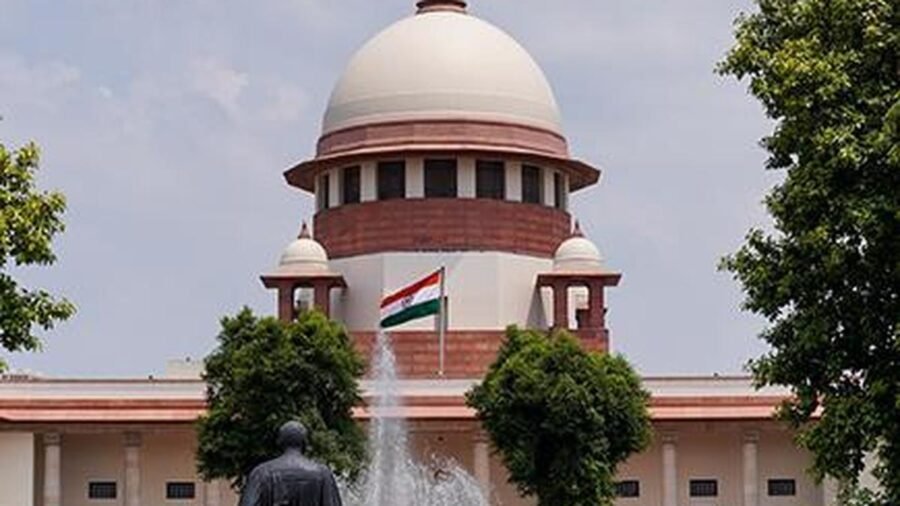
Five months after constituting 19 appellate tribunals to hear appeals arising from the special intensive revision (SIR) in West Bengal, the Supreme Court on Tuesday (August 25, 2026) found that public information regarding these proceedings remains sparse or speculative, even as upcoming municipal elections draw near in the State.
A three-judge Bench headed by Chief Justice of India Surya Kant directed the Election Commission of India (ECI) to file an affidavit segregating the exact number of appeals seeking inclusion in the West Bengal electoral rolls and those wanting more voters to be excluded from the rolls.
The court sought the precise number of appeals pending in the tribunals and those decided by them. The court said it would take a call on the need to constitute more tribunals after getting the statistics right.
The Bench asked the ECI to consider a mechanism for updating and streamlining the progress of pending appeals before the tribunals.
“Give us the data. Give us the breakup of the nature of appeals filed, whether inclusion or exclusion. Then, we will make a call as to whether appeals by disenfranchised voters seeking reinclusion should be prioritised… Their exclusion from the electoral rolls denudes them of their voting rights,” Justice Joymalya Bagchi, on the Bench, observed.
Senior advocate Gopal Sankaranarayanan and advocate Neha Rathi, appearing for Prasenjit Bose, chairperson of the SIR Committee, West Bengal Pradesh Congress Committee, submitted that 38-odd lakh appeals were filed in the 19 tribunals, of which only seven lakh were by disenfranchised voters.
He alleged that the remaining 31 lakh appeals were “shockingly” filed by either the Election Commission or other objectors with an aim to exclude more people from the West Bengal electoral rolls.
He said the figure of 38 lakh appeals was found in a Right to Information (RTI) response received by Lok Sabha MP Isha Khan Choudhury from the West Bengal Chief Electoral Officer’s side. The seven-lakh figure was part of a media report quoted in Mr. Bose’s application.
Mr. Sankaranarayanan said the disenfranchised voters should be given priority over the “lion’s share” of appeals filed by EC and other objectors. He said the Kolkata and Howrah municipal polls were expected to be as close as in December 2026.
‘Large chunk’
Justice Bagchi remarked that if the statistics reported were true, 31 lakh appeals to remove more people from the electoral rolls was a “very large chunk”.
Mr. Sankaranarayanan said the top court had assured the excluded voters of West Bengal that their appeals would be heard within a reasonable time. He said the RTI reply by the West Bengal CEO showed that out of 38 lakh appeals, approximately 82,000 had been decided so far, out of which over 75,000 were in favour of voters seeking inclusion.
Senior advocate Kalyan Banerjee, also arguing for the petitioners, said several elections were due in the State, culminating in the Lok Sabha elections in 2029. “People should be able to exercise their right to vote,” Mr. Banerjee submitted.
“We are with you on this point. Before the elections… atleast, atleast before the Parliament elections comes, and much before that, everything should be decided,” Chief Justice Kant agreed.

Trump mulls renaming Lake Ontario as ‘Lake America.’ Canadians balk at the idea
By Sohail Khan · 26 Aug
Kurdish-led group in Syria says it has dissolved after merging with the army
By Sohail Khan · 26 Aug
Leave a Reply