We know of Treesa Jolly’s smash – but the net game was what won India World’s bronze
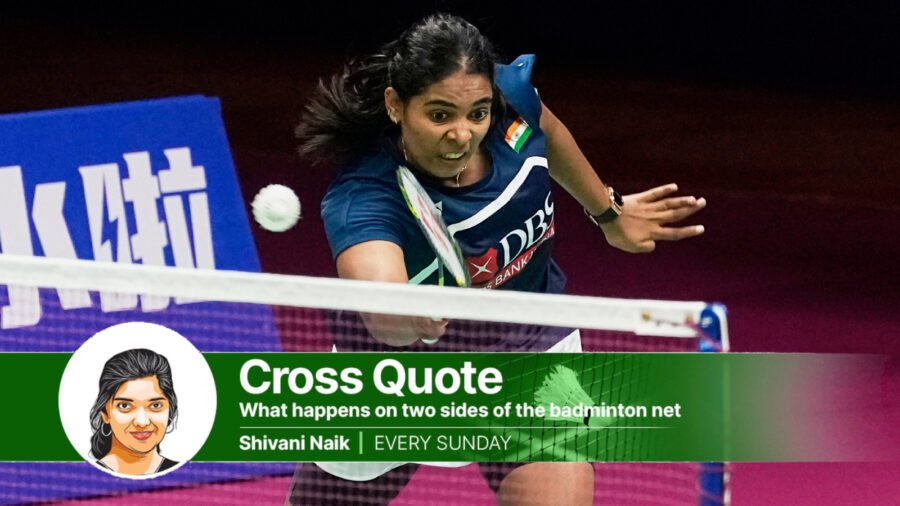
Another young shuttler had plonked herself on a box with the sole of her foot strapped way back in early 2016. Unlike PV Sindhu, who had nursed her foot the year preceding her Rio Olympics silver after a fall, Treesa Jolly had crashed into her mixed doubles partner and hurt her leg, gulping down the prognosis – it would take more than a month before she could return to playing on the court.
A couple of days after the doctor set the timeline, Treesa turned up on court, and plonked herself on a bench. Both had been smash machines. Both were known for their expansive power. Both learnt the meditative art of slowing down their breathing, using the racquet as a scalpel not a scythe, and discovering the “feel” on the shuttle in badminton’s unspoken battle-zone: the net. Treesa would turn up daily since April and only train for serves and dribbles. It was badminton pared back to absolute basics. It was badminton that led to Chinese doubles legend Jia Yifan, an Olympic champ, being counter-dribbled, nay, out-dribbled out of a World Championship medal.
Advertisement
Not in their wildest had the Chinese imagined that the “Jolly” woman would eschew lifting the shuttle to carry on with attack, and instead get into a dribbling eyeball confrontation with them. (For Treesa, Jia was her first idea of an Olympic world-beater). Neither did they account for the fact that “Jolly partner” – as they called Gayatri Gopichand – would track back and send down a mean forehand crosscourt smash. It was too boggling. It wasn’t just a rotation, but a RNA flip in the repertoire.
And it had sprouted from Treesa clumsily colliding with another player, and coach Pullela Gopichand promising her he would help her win a World’s medal if she immersed herself in practicing only the serves and dribbles. The duo had laughed at his insistence on basics, he had pursed his lips and ordered them the drill on loop with 50 days to go.
Advertisement
Leaping high and unleashing a gigantic whacking smash had been second nature to Treesa. It was an exhale almost. She inherited the spiker’s instinct in volleyball from her father. It will always remain a crowd-favourite pitching her into singular stardom, her second-happiest feeling after festivities of Onam. Something that brings glory and joy, a jump smash that defines her.
But when your game is so aligned with a shot, the top Chinese were bound to be one video-analysis session away from mapping up their counters. What they weren’t prepared for, was Treesa summoning absolute magic at the net – canny strokes, serve variations and that audacity to dribble and not shy away from close combat as net scenarios tend to be.
These were not make-do parries at the net. Proper keeps, precise taps, choosy pushes, subtly varying serves, none of the escape-lifts. Gayatri makes interceptions seem effortless, but it takes daring to catch fast drives at the net, like she does. The big smash is a mic drop stroke, it carries all the hype and halo and more and looks spectacular when it comes off. But women’s doubles defenses are equipped to deal with most. While the world was stuck on Gayatri’s surname and Treesa’s smash, the duo were readying to outrun the predictability of how they were looked at.
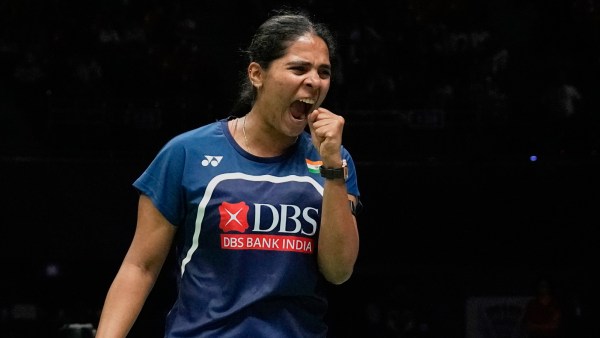 Leaping high and unleashing a gigantic whacking smash had been second nature to Treesa.
Former coach Arun Vishnu says the duo are ready to be in the Top 5 after the latest crossover skins they have each unlocked. And if they can maintain the intensity of the chameleon gig in back-to-back matches going deep, they are far too cerebral to not wed savage attack to subtle sniping. They = both.
“Treesa watched others play when she got injured and didn’t want to rest. When she couldn’t move, we got her to consciously work on the net,” recalls coach Sumeeth Reddy. Simultaneously Gayatri was powering up to take on back court burdens — it’s physicality deployed on rote to go with her innate setting up abilities where her sharpness was acknowledged even by Jia.
As for Treesa, developing the net feel was like chomping into cereal. “The Idea was to surprise opponents. Treesa put work into reflecting on the net game just like eating breakfast daily. Keep doing it. The net is not like a smash. It’s related to feeling and instinct,” Sumeeth explained.
Alongside she learnt to be calm. Including when she got carded for squishing a shuttle feather. Utterly random. “We just told her they were 5-6 points ahead. Stay calm. You don’t need to get into a dogfight. It’s a card. Small fine. No point messing up 3-4 points over it,” he recalls.
Treesa gets emotional. And aggressive. Trouble is she needs to get aggressive at most times. The plan was for only Gopichand to speak. So communication was clear. Though the duo had been in earshot when they said many fans had travelled from Bangalore, Hyderabad, Kannur even so it would be nice if they left them with happy memories. Not pressure, just an affirmation of the crowd being “their own people happy to see them win.”
The other bit was loudly spoken: “The pressure was wholly on the Chinese.” Delhi worked its charm as promised. They roared when Treesa unfurled her speed and power, best in the world. But they revelled in what she pulled off at the net: super-solid strokes uncaring about the opponent tapping. All of it and a bronze achieved by sitting on a bench befriending the net while the smash was dressed up in decoy colours.

A passage to India and other international stories
By Sohail Khan · 25 Sep