Unsteady tourism, cloudbursts, and hope: A year later, how Pahalgam is surviving
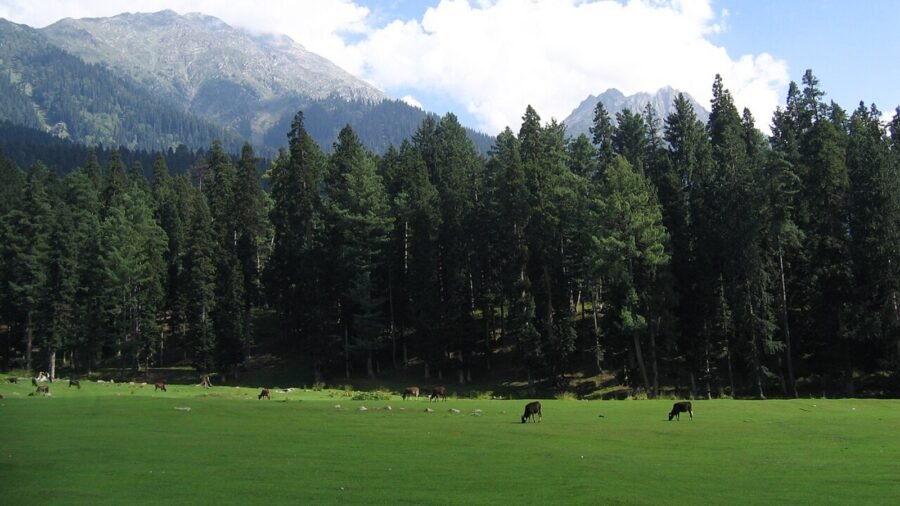
More than a year ago, violence gripped Jammu and Kashmir when terrorism cast a shadow near Pahalgam, known for its alpine meadows and picturesque landscapes. The April 22, 2025, terrorist attack in Baisaran Valley, which killed 26 civilians, shook the nation.
This April marked one year since the tragedy, yet its ripple effects are still lingering. Tourism is gradually picking up across the tourist town, particularly between April and June, but several key factors that drive the economy remain in limbo.
Hotels in and around Pahalgam have slashed their tariffs. “To ensure that tourist flow remains consistent, charges have been reduced by 30 per cent to 40 per cent, and this will continue for some more time,” Javed Burza, President of the Pahalgam Hoteliers Association, told indianexpress.com.
“Turmoil is not new here. But we have learnt to survive,” he added, urging visitors not to worry about their safety, saying: “Kashmir is as safe as any other place in the country.”
Tourist footfall up but weather plays spoilsport
Pahalgam recorded its highest tourist footfall in April 2025, with 2,04,289 visitors. Numbers dipped sharply in May, when only 15,302 tourists arrived following the April 22 attack. The situation has since improved.
This year, the state tourism board recorded 1,63,410 visitors, 20 per cent lower than April 2025. Notably, the number of domestic tourists remained largely stable this year, with 818 more tourists visiting Pahalgam compared to April 2025.
Bilal Mir, Deputy Director, Planning and Economics and Statistics, J&K Tourism, agreed. “Tourists are coming. Approximately 99 per cent of tourists are from different parts of the country, with a large chunk from South India,” he said.
Story continues below this ad
Compared to the South, Burza said, fewer visitors have arrived from Maharashtra and Gujarat. International tourists, he said, accounted for only 1 per cent of the overall footfall, with a small share of travellers coming from Bangladesh.
Burza pointed out that the surge in footfall between April and June has begun to taper off due to the weather, which has also impacted the Amarnath Yatra. July and August are considered crucial months for tourism in Kashmir, including Pahalgam. The beginning of the Amarnath Yatra opens up income avenues for the locals; however, the cloudburst along the Pahalgam and Baltal routes has led to the indefinite suspension of the 57-day pilgrimage. “The cloudburst has led to tighter restrictions in Kashmir, and consequently tourist activities have been temporarily put on hold,” Burza explained.
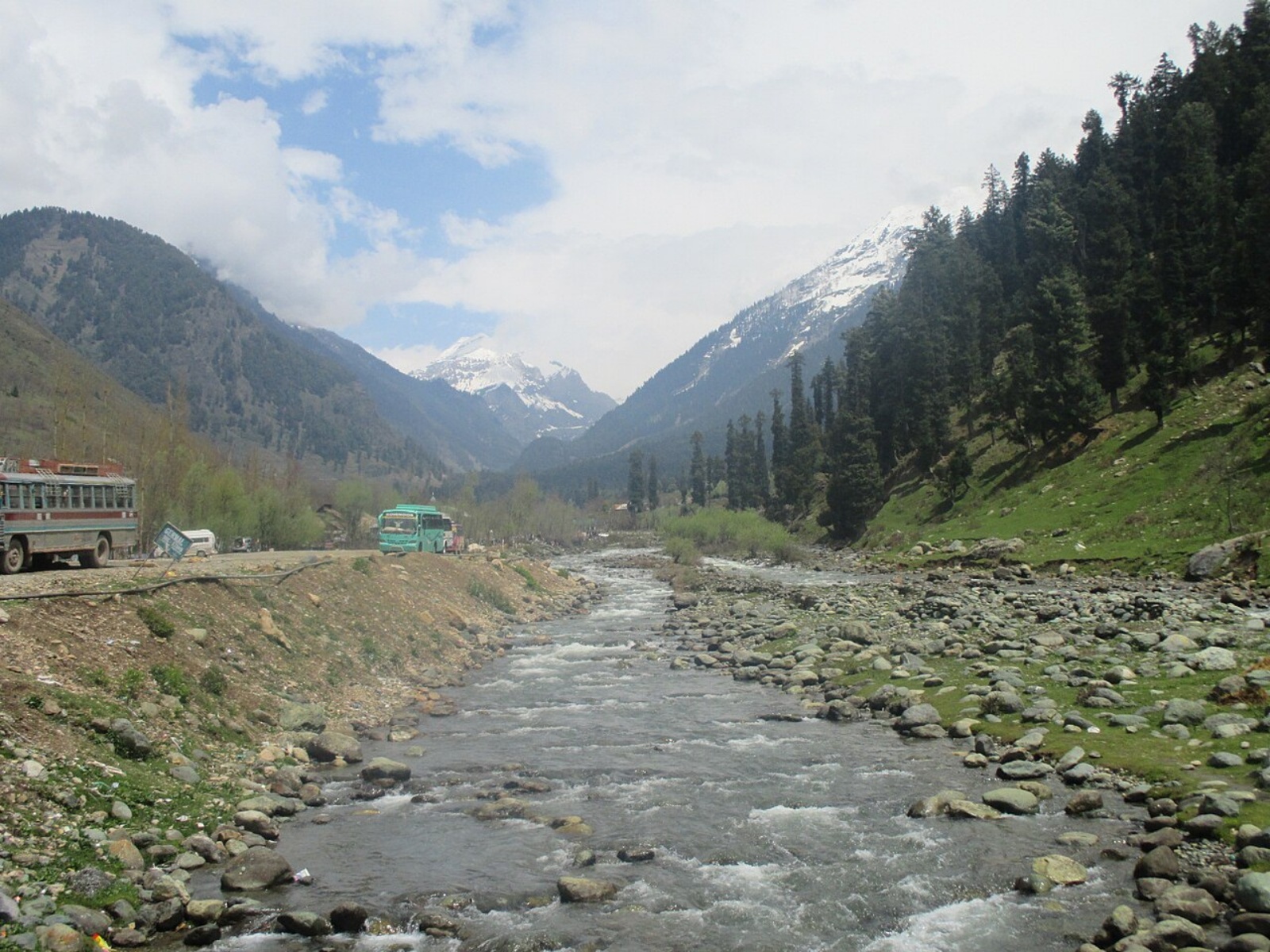 A view of Pahalgam valley
Tourism economy reels
“Last year’s attack has made tourists more wary,” said Syed Noushid Shah, brother of pony rider Adil Shah, one of the 26 victims of the tragedy. Hailing from Hapat Nar, 30 km from Pahalgam, Shah notes that nearly 90 per cent of locals in his village travel to the tourist town for work. “Tourism is our primary source of income; however, the uncertainty in our earnings since last year is making things difficult for us,” added Shah, who also runs a taxi business.
For locals, the deployment of additional security is routine. Yet with the Yatra season suspended, the situation is tense again. Pony rider Saquib Ahmad Lone points out that sightseeing spots remain closed. Under Jammu and Kashmir tourism rules, pony routes include Pahalgam, Baisaran, Dabyan, Tangmarg, Deno Valley, Old Shikargah, and Tulian Lake. “These are tourist hotspots, but they remain shut due to security concerns. Baisaran Valley, where the attack occurred nearly 6 km away, has yet to fully reopen,” he added.
Story continues below this ad
There is minimal business for pony riders, says Lone. “We are even ready to reduce the charges to Rs 200 to Rs 300 for mule services. Earlier, the same ponies would cost tourists between Rs 1,000 and Rs 1,500. Because of this, only 10 per cent of ponies are operational,” he explained.
Lone says that though business picked up between April and June 2026, the unpredictable weather “made things difficult”. “There is hardly any work for us now,” he added.
Pahalgam is heavily dependent on tourism. Lone says that the land is not suitable for agriculture. Due to its high altitude—around 7,200 feet—agricultural patterns rely heavily on horticulture and short-season summer crops. “That’s why tourism is the backbone of our economy,” he said.
Tourists grapple with a ‘tiny bit of fear’
For Aakriti Soni, who travelled with her three-month-old baby for the first time after the attack, it was a “stress-free” vacation. “It was my first time here; however, I had no apprehensions because I trust our military forces,” she said.
Story continues below this ad
But the experience was slightly overwhelming for Smridhi Lakra, also a first-time visitor to Jammu and Kashmir. “Deep down, a tiny bit of fear never quite left me. I could still sense the underlying tension,” she shared.
Lakra managed to explore Pahalgam for two days, and vividly remembers every detail of her visit: “Everything there was conducted normally and comfortably, as if nothing ever happened there,” she recalled.
For Vishakha Singh, the presence of security personnel was reassuring. “It was needed, not intrusive,” she said. She emphasised that tourism continues to bridge the gap between locals and tourists. “My interactions helped me understand how the tourism infrastructure has continued to improve over the years. Better roads, more accommodation options and a growing focus on hospitality have made travelling around Kashmir more convenient. At the same time, the region has retained its natural charm and cultural authenticity, which is what makes it so special,” she added.
Rishi Sunak, Ro Khanna, Dinesh D’Souza: united by colour; divided among white nationalists
By Sohail Khan · 28 Sep
From Nepal to India, how AI is improving disaster management
By Sohail Khan · 28 Sep
40 years ago September 28, 1986: Relief for Haryana farmers
By Sohail Khan · 28 Sep