To build AI for all, India must build it with all
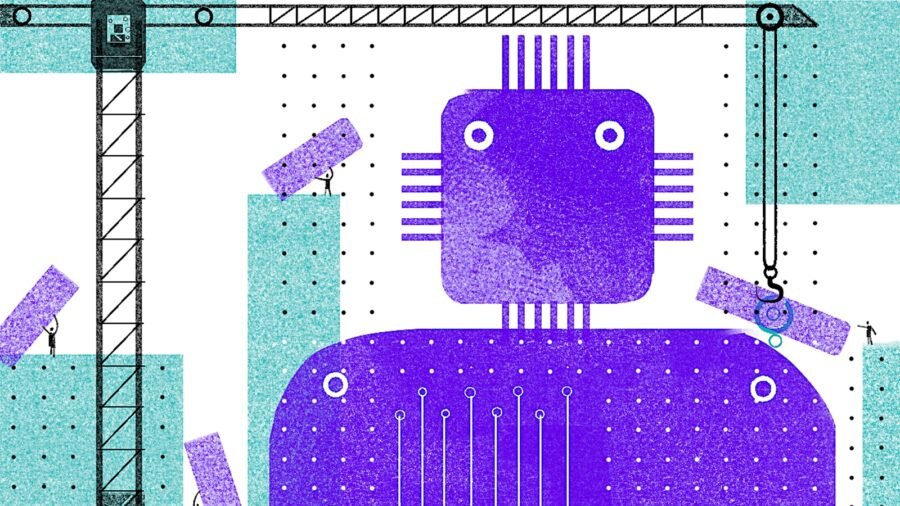
Every aI system begins with data, and every dataset begins with people. When people are absent from that data, AI inherits those gaps. The AI pipeline is not merely a technological conduct of code, silicon and compute power; it is fundamentally a human pipeline. It begins before the first line of code is written and shapes decisions affecting millions. India ranks among the world’s leading AI-ready nations, powered by Digital Public Infrastructure (DPI) and a thriving innovation ecosystem. Yet beneath this progress lies a structural contradiction. While India produces one of the world’s largest pools of women STEM graduates, women steadily disappear as the AI pipeline advances. At every stage, the pipeline leaks talent, lived experience, and innovation.
The challenge is evident in the numbers: In STEM foundation, women account for 43 per cent of India’s STEM graduates; in the tech workforce, representation falls to 26 per cent; in advanced AI roles, only 12 per cent of professionals are women; In senior AI leadership, women hold just 10 per cent of senior AI leadership positions.
Advertisement
The challenge extends beyond employment. Only 57 per cent of women have independent internet access, compared with 72 per cent of men. The root causes of this leakage are deeply social. These disparities arise from unequal nutrition, education, caregiving responsibilities, workplace discrimination, and language barriers. AI learns from society; if society is unequal, AI inevitably reflects those inequalities. Asha, a member of a self-help group in rural Bihar, applies for a micro-loan. If AI credit models rely mainly on historical male financial patterns, they may underestimate her creditworthiness. In Gujarat, Meera, a community health worker, depends on AI-enabled maternal health tools. If the training data fails to reflect local nutrition and health conditions, inaccurate recommendations may affect maternal care. The barriers emerge early. Kavya cannot pursue robotics because her school lacks adequate infrastructure. Pooja struggles with English-dominated AI education. Nisha, despite becoming an AI engineer, often finds herself the only woman in the room, with limited influence in product design. AI automates existing inequalities when trained on incomplete or biased data.
Yet AI can also expand opportunity. Across rural India, women’s self-help groups have built strong financial ecosystems through collective savings and entrepreneurship. When women occupy positions of influence, the technology shifts. India’s progress in AI-enabled inclusion reflects a deeper national principle. When India adopted its Constitution in 1950, it granted women and men universal adult franchise simultaneously. This commitment to inclusion continues today through DPI and provides a strong foundation for building inclusive AI much before other Western democracies.
India has already shown how technology can advance public welfare at scale. The India AI Mission now offers an opportunity to ensure AI follows the same inclusive path. True AI leadership cannot be measured only by models, investments, or patents. It must also be measured by whether AI reflects India’s diversity of languages, cultures, socio-economic realities, and lived experiences. Achieving that requires more than diverse datasets. Women and marginalised communities must participate as researchers, engineers, entrepreneurs, and policymakers.
Advertisement
The writer is a civil servant posted in the Ministry of Women and Child Development, Government of India. Views are personal

Sussanne Khan says she felt ‘more love’ for Hrithik Roshan’s mother after losing her own
By Sohail Khan · 28 Sep
COP31 hosts Australia and Türkiye face the fossil-fuel question
By Sohail Khan · 28 Sep