The NALSAR standoff and the BCI’s crisis of authority
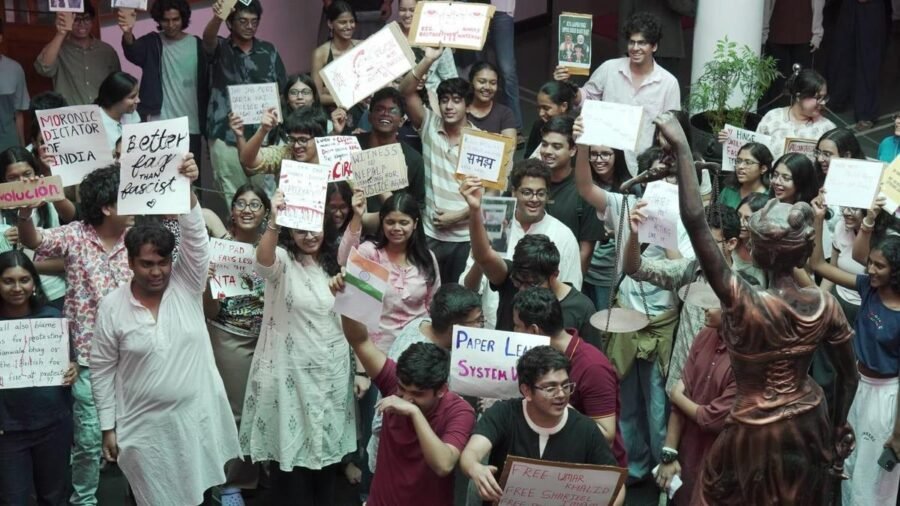
A university convocation is traditionally a rite of passage—a solemn initiation where the next generation of legal minds are welcomed into the fold of justice. However, this month, the halls of NALSAR University of Law became the site of a regulatory tantrum that threatened to undermine the very foundations of the legal profession. What began as a principled student protest against the presence of Chief Justice of India (CJI) Surya Kant escalated into an unprecedented jurisdictional coup when the Bar Council of India (BCI) attempted to hold the professional futures of an entire graduating batch hostage. Has our primary regulator evolved from a custodian of standards into a moral police force?
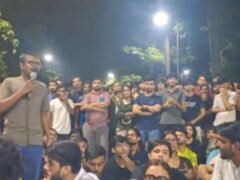
The friction began not with youthful petulance, but with a deep-seated disagreement over judicial rhetoric. A significant section of NALSAR graduates—recently joined by their peers at the NLSIU Bengaluru—opposed inviting the CJI due to his widely criticised “cockroach” remarks regarding fake degree holders and student protesters, which sparked widespread youth backlash and his perceived indifference toward the police crackdown on Jantar Mantar protesters. For these students, the protest was an exercise in the institutional values of dissent and accountability they had been taught to revere.
The question of jurisdiction
The BCI’s response was a masterclass in regulatory adventurism. Within six hours on the night of August 13, the Council moved from a total ban on enrolment to a complete retreat. After the CJI observed that the BCI had no business interfering, and after online backlash from a vexed public, Mr. Mishra announced the closure of all proceedings. A sharp rebuke from the SC, internal dissent, and public outcry triggered the collapse.
Law students and lawyers continue to question the legal basis for the notices. The standoff exposed a glaring lack of understanding of jurisdictional boundaries. As a creature of statute, the BCI’s powers are strictly confined to the Advocates Act, 1961. The landmark 1995 Supreme Court judgment of CJI Ahmadi in the case of Indian Council of Legal Aid & Advice v. Bar Council of India (1995) established that the BCI’s rule-making power cannot be expansively used to regulate individuals at the pre-enrolment stage. BCI cannot unilaterally block enrolment without specific statutory cause. More importantly, he cautioned against treating a general rule making power as an independent source of substantive authority. The court examined section 49 of the Advocates Act and held that the BCI’s power to prescribe the “class or category” of persons entitled to enrolment did not authorise it to create an additional category of persons who could be excluded from the profession. This reasoning offers an important vantage point through which a relevant question emerges- if the particular action taken against the students can be traced to a power conferred upon the Council by the Advocates Act?
Dissent under watch
The BCI justified its initial ban by arguing that students with “no regard for the highest Judicial Office” would be a “liability” to the profession. This is a dangerous subjectivity. While the BCI viewed the protest as “nasty politics,” it forgot that the judiciary is not a fragile institution. As Justice Sanjiv Khanna once noted, “Courts are not as fragile as flowers to wither and wilt.” The CJI himself eventually clarified the constitutional position, asserting that students have a right to protest even if they are wrong. When a regulator uses “public confidence” to silence peaceful dissent, it stops protecting the profession and starts policing thought. After such a imposition of values, one is forced to ask, whether a peaceful participation in a student campaign can lawfully be treated as a valid ground to obstruct enrolment when such conduct is not among the statutory disqualifications under section 24A, and if the BCI followed the procedure required to exercise the power it possesses or if this was a case of the sentiments of one official finding voice though an instrument of a statute?
The public lambasted the regulatory body for allowing its highest office holder, an elected Member of Parliament affiliated to the ruling party, to serve for an extended period. This blurring of roles between a political actor and a statutory regulator invites suspicion of partisan witch-hunts. The BCI’s demand to “separately identify” faculty members directly assaulted the university’s safe spaces. Law schools must be permitted to nurture contrarian thought. If faculty members are targeted for allowing students to exercise their conscience, academic freedom becomes a casualty of regulatory overreach.
The NLSIU student community stepped in and framed this dissent not as “dirty politics,” but as a requirement of the legal conscience. They wrote in their coherent letter, relying on the words ‘Where the Mind is Without Fear’ to reiterate that the ethos of all law universities reflects this sentiment, and that the administration must be encouraged to act according to their conscience without fear.
A warning for the bar
The NALSAR standoff escalated with a formal Supreme Court notice recording the withdrawal of the circulars, ensuring that no future punitive action can be taken against the graduates and ended with the BCI issuing an apology to the students, however not explicitly framing it as an unconditional one. This might be a victory for the students but is a sobering warning for the Bar. If our law schools are meant to produce lawyers who can speak truth to power, can we afford a regulator that punishes them the moment they do?
(Written by Ashish Bharadwaj (Pro Vice Chancellor, WPU Goa) and Batul Shafiq (student, BITS Law School). Views are strictly personal and not official)

Rahul Khanna, 54, gives a peek into his breakfasts
By Sohail Khan · 21 Sep
NIT-Srinagar to open campus observatory with 14-inch telescope
By Sohail Khan · 21 Sep
Expert Explains | How India could solve its summertime power cuts problem
By Sohail Khan · 21 Sep