The climate bill is coming due for India’s children
Benchmarks
Nifty24,175.6584.81
Precious Metal
Gold (MCX) (Rs/10g.)159,300.00304.0
Enter search text:
Business News›News›India›A hotter planet puts 145 mn Indian children under greater stress every year: Study
Read Today's Paper
A hotter planet puts 145 mn Indian children under greater stress every year: Study
Synopsis
India sees 61 percent of children facing extra heat stress annually. Global research shows climate change doubles dangerous heat exposure for young children. This humid heat poses severe health risks, impeding body cooling mechanisms. Future warming scenarios project even higher numbers of affected children in India. Developing nations and tropical regions bear the brunt of this climate impact.
 ANI
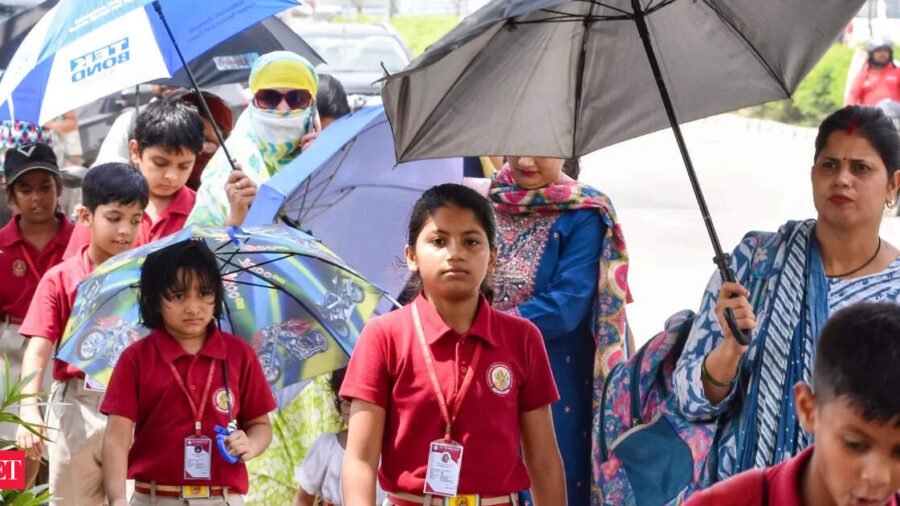
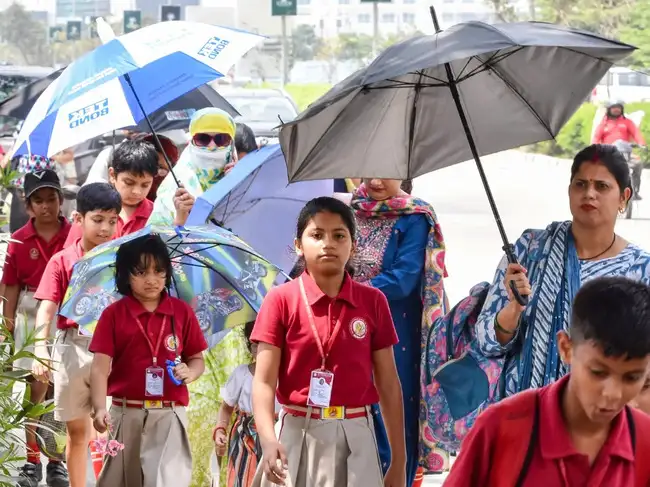
ANINew Delhi: In India, 61 per cent of children, or 145 million, are exposed to at least one additional month of heat stress due to climate change every year, new global research has estimated.
Findings published in the journal Science Advances show that climate change has doubled the number of children aged up to nine exposed to at least five total months of dangerous heat stress per year — from 59 million to 118 million (50 per cent of children).
An international team of researchers, led by those at Vrije Universiteit Brussel in Belgium, said the study is the first-ever analysis quantifying how heat exposure directly linked to climate change affects different age groups globally, both now and in the near future.
Excess heat disrupts the human body's normal functioning, aggravates underlying diseases, and can lead to serious complications such as heatstroke, dehydration, and organ failure.
The study focuses on humid heat, which is more dangerous than dry heat because it impedes the body's ability to sweat to cool back down, leading to dangerous levels of heat stress.
Globally, up to 560 million children aged 0-9 — 43 per cent of all children in this age group — are living through at least one additional month of heat stress per year due to human-induced climate change, the analysis found.
The exposure outpaces that for any other age group and is nearly triple the 190 million people (30 per cent) aged 60-69 experiencing the additional health threat, the researchers said.
They added climate change is increasing humid heat the most in tropical regions and poorer countries, where populations are younger, and more children are therefore affected.
South Asia, Southeast Asia, and West Africa are the regions with the highest number of children exposed to dangerous heat stress today, the team said.
"Climate change is already causing hundreds of millions of children to suffer from dangerous heat worldwide, posing severe risks to their health. Children in developing countries face (a) disproportionate exposure to climate extremes now and into the future, despite contributing the least to historical greenhouse gas emissions," lead author Rosa Pietroiusti, a PhD researcher at Vrije Universiteit Brussel, said.
"At the same time, poverty, inadequate housing, limited access to cooling, and overstretched health care systems leave many children with few ways to protect themselves from the heat," Pietroiusti said.
The number of children affected by an additional month of dangerous heat is expected to increase to 620 million (49 per cent of all children) and 650 million (59 per cent) children under projected climate change scenarios of 1.5 degrees Celsius and 2 degrees Celsius of global warming, respectively.
In India, 166 million children (74 per cent) are projected to experience at least one additional month of heat stress per year under a global warming of 1.5 degrees Celsius.
The figure could be 169 million children (96 per cent) under a global warming of 2 degrees Celsius.
Add 

(You can now subscribe to our WhatsApp channel)
(You can now subscribe to our WhatsApp channel)
Read More News on
climate change impact on childrenchildren health risks climate changechildren exposed to heat stressheat stress in children Indiafuture climate scenariosglobal warming effectsSouth Asia heat stressclimate change study


Enter search text:
Stories you might be interested in

Understanding Agrivoltaics, Aston Martin Valen and Lava’s new budget smartphone
By Sohail Khan · 28 Aug
Bihar on alert as rivers swell after Nepal deluge
By Sohail Khan · 28 Aug
India sees Canada export opening amid US tensions
By Sohail Khan · 28 Aug
Leave a Reply