SIR’s exclusion of citizens is made possible by the complicity of institutions
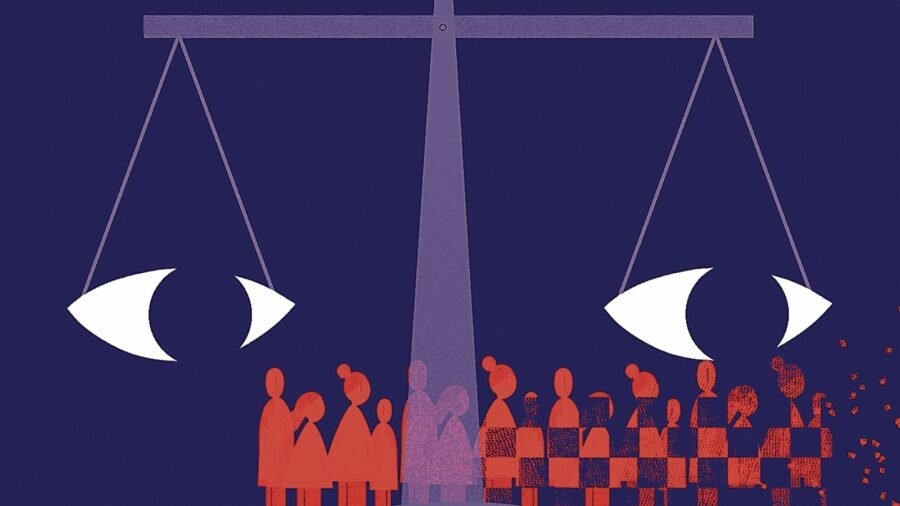
The ongoing special intensive revision (SIR) of electoral rolls is proving to be a textbook example of how the Indian state keeps destabilising citizens’ lives. Earlier this week, this newspaper reported that tribunals in West Bengal are struggling to tackle cases arising out of the SIR (‘No full stops in Bengal SIR, Those “excluded” now in dark about what next’, IE, 17 August). There are also reports of growing numbers of “absent,” “shifted,” “dead” and “duplicate” citizens from each state where the exercise is going on. While the ECI may face the brunt of criticism and media attention on this count, it is important to remember that the Supreme Court has produced this impasse.
The Court’s ruling in the SIR case in May 2026 is a reminder that the judiciary can, at times, become an enabler of state practices that harm citizens. ADR & Others vs ECI & Others offers a troubling roadmap for such an outcome: A refusal to position the judiciary as an effective arbiter between the power of the state and the rights of citizens. As we mourn the consequences for those affected by the SIR, we should not lose sight of the significance of the ruling itself. It may well prove to be a landmark judgment — not because it strengthened citizens’ rights, but because it demonstrated how the judiciary can enable the state at the expense of the citizen.
Advertisement
The ruling not only upholds the ECI’s power to conduct the SIR; it also records the Court’s satisfaction with the procedure adopted by the Commission, stating that the deletions are within the parameters of that procedure. In effect, the judgment places considerable trust in the poll body.
A magnanimous reading of the verdict could be that the Court was confronted with two competing approaches. One would have been to adopt a posture of healthy suspicion on behalf of citizens — a scepticism towards claims of authority by the ECI, coupled with a recognition that judicial vigilance is necessary to maintain a balance between the state’s asserted powers and reasonable fears about the protection of citizens’ rights. The alternative was to repose trust in another constitutional authority, such as the ECI, on the assumption that constitutional institutions are themselves sufficiently committed to protecting citizens’ rights, making intensive judicial scrutiny less necessary. The Court chose the latter approach.
In doing so, it overlooked a crucial possibility: An authority may undermine citizens’ rights not through any explicit intention to do so, but through unreasonable practices. This is where the error in the SIR ruling resonates with a broader contemporary judicial tendency — one that increasingly privileges “authority” vis-à-vis citizens.
Advertisement
The other error lies in the Court’s failure to anchor its judgment in the foundational principle underlying the controversy — representation. The logic of representation does not appear to have sufficiently informed the Court’s interpretation of the ECI’s authority. As democracy has evolved and the idea of citizenship has expanded, full inclusion has emerged as one of its central requirements. This not only means that citizenship should not be denied or diminished on grounds such as sex, religion, race, caste or class, but also that political representation is not meaningful if citizens are effectively disabled from participating in elections as voters.
Leaving eligible electors out of elections inevitably produces flawed representation. Having accepted that the ECI has the power to prepare electoral rolls, and, therefore, to examine whether a person is genuinely entitled to be included on them, the Court has failed to ensure that the Commission’s power of scrutiny does not result in the exclusion or harassment of eligible voters.
In a democratic election, the ECI’s first responsibility must be to include, not to exclude. How is that principle to be protected? While it is unfortunate that the ECI does not appear to have been seized of the question of inclusion, the Court’s failure to sufficiently engage with it is also troubling.
As a general rule, the state’s axe of exclusion operates randomly. However, both in the abstract and as an empirical reality, who are most likely to be adversely affected by the insistence on a documentation regime as evidence of citizenship? It has been repeatedly pointed out that certain social sections — vast numbers of women, the poor and the marginalised — are particularly vulnerable to being trapped by such regimes. The SIR, therefore, risks becoming a hatchet rather than a purifying procedure. The Court has neither engaged with the conceptual question of exclusion nor adequately considered the empirical possibility that the SIR may disproportionately affect vulnerable citizens and, in doing so, undermine democratic representation.
This approach leaves citizens vulnerable to consequences beyond the loss of their voting rights. The SIR verdict actually directs the ECI to report to the Home Ministry the names of persons whose names have been deleted, for further adjudication of their claims. Thus, the judgment not only permits exclusion from democratic representation; it also allows the ECI and the government to potentially weaponise the SIR exercise, pushing individuals into a zone of doubt, suspicion and harassment. It is striking that a judgment so cautious about the judiciary entering the ECI’s domain has, obliquely, enabled the Commission to transcend its own domain and become enmeshed with executive authority.
As the SIR leaves a growing number of voters in limbo, one cannot but rue the judiciary’s role.
When the exercise is complete, it may have created a multitude of SADs — Shifted, Absent, Duplicate — who are then pushed to the margins of formal existence, as their passports or claims to various welfare schemes may also be cast into doubt. From SIR to SAD is a slippery slope that the judiciary has facilitated, perhaps unintentionally.
The author, based in Pune, taught Political Science

Delhi’s infra-governance problem
By Sohail Khan · 24 Sep
On the draw: September 24, 2026
By Sohail Khan · 23 Sep
7 cities to explore on India’s Golden Quadrilateral road trip
By Sohail Khan · 23 Sep