School closures: Misfortune or a step towards holistic development?
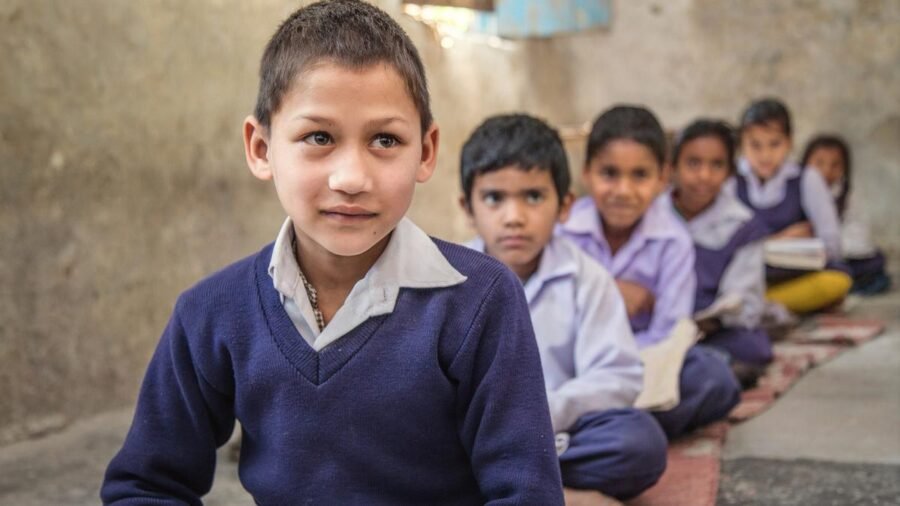
For decades, India’s school education policy pursued a simple objective: to bring a school within reach of every child. The neighborhood school became an instrument of social justice, particularly for poor and rural families. However, many such schools have limited infrastructure and serve very few students or operate with a single teacher.
With education in the Concurrent List, States have adopted varying approaches to low-enrolment schools. This presents a dilemma: for a village, losing its school can mean longer travel, weaker community participation, and reduced neighborhood access; yet a very small or single-teacher school may struggle to provide subject-specific teaching, peer learning, sports, laboratories, and co-curricular activities. Consolidation can potentially provide a richer, better-resourced learning environment.
The fundamental question is, therefore, not merely how many schools have disappeared, but whether the affected children now have access to better schooling. Is consolidation a misfortune for communities, or a necessary step towards quality and holistic development?
Beyond the classroom: What makes a school?
A school is much more than a place for classroom teaching. It fosters children’s intellectual, social, emotional, and physical development through interactions with teachers and peers, sports, co-curricular activities, group discussions, and shared experiences. Unlike individual tuition, effective schooling depends on age-appropriate classrooms, subject-specific teachers, peer learning, and collaborative activities. Single-teacher and very low-enrolment schools often struggle to provide this environment, with one teacher handling multiple classes and subjects alongside administrative responsibilities.
What has changed in 11 years?
The NITI Aayog’s 2026 report, drawing substantially on UDISE+ (Unified District Information System for Education Plus) data, reveals a significant restructuring of India’s school system between 2014–15 and 2024–25. India has four broad categories of schools—government, government-aided, private unaided, and other institutions. Between 2014–15 and 2024–25, the total number of schools declined from 15.16 lakh to 14.71 lakh, a net reduction of about 45,000. Government schools fell by nearly 94,000, from 11.07 lakh to 10.13 lakh, while the decline was partly offset by an increase in private schools. Student enrolment declined from 26.95 crore to 24.69 crore, while teachers increased from 89.84 lakh to over one crore.
The shift towards private schooling is significant. As disclosed in the Rajya Sabha in March 2026, between 2022–23 and 2024–25, government-school enrolment fell from 13.62 crore to 12.16 crore, while private-school enrolment rose from 8.42 crore to 9.59 crore. In 2024–25, government schools constituted 68.1% of all schools, but served 49.2% of students and 50.9% of teachers; private schools, only 23.1% of schools, served 38.8% of students and 39.1% of teachers.
Table 1: India‘s School Education System (2024-25): Source: UDISE+
The difference is reflected in school size: a government school averaged about 120 students and five teachers, compared with 282 students and nearly 12 teachers in a private school. The data thus point to fewer, smaller government schools and growing private-school enrolment with the same teacher-student ratio — raising the central issue of whether consolidation can improve learning without compromising neighborhood access.
Why is student enrolment falling?
India is producing fewer school-age children. Its Total Fertility Rate (TFR)—the average number of children born to a woman—has fallen from more than three in the early 1990s to about two, below the replacement level of 2.1. Rising female literacy, improved healthcare, wider access to family planning, delayed marriage, and changing family aspirations have contributed to this transition. The decline is uneven: several southern and western States are already below replacement fertility, while many northern States retain younger populations.
The impact is first visible in primary education, with fewer children entering Class I and smaller cohorts subsequently moving through the school system. Total enrolment has consequently fallen from about 27 crore a decade ago to 24.69 crore in 2024–25—a decline that does not necessarily indicate increased dropout, as demographic change is a major factor. Urbanisation, migration, and changing parental preferences are also reshaping where children study, leaving some rural schools under-enrolled while increasing pressure on schools in urban and peri-urban areas.
What can modern schools learn from the gurukul?
The Gurukul offers an important reminder that education is more than classroom instruction. Led by a Guru or Rishi who served as both the academic and administrative head, it often brought together students of different ages and abilities into a close-knit learning community. Education extended beyond formal subjects to character, discipline, physical development, values, skills, and leadership. The close, continuous interaction between teachers and students enabled personalised guidance, while learning among students of different ages encouraged cooperation, mentoring, and peer learning.
Modern mass education necessarily requires a different model, with universal access, professional teachers, structured curricula, defined school hours, and modern infrastructure. Yet the educational philosophy of the Gurukul remains relevant. A school should create a community in which children learn not only from teachers but also from one another, through interaction, activities, sports, and shared experiences.
This has particular relevance to single-teacher and very small schools. Although their close teacher-student relationship may resemble one aspect of the Gurukul, they lack the diversity of teachers and peers that made the traditional learning community richer. The challenge, therefore, is not to recreate the Gurukul, but to combine its personalised, holistic spirit with the scale, subject specialisation and resources of a modern school.
When does a small school become too small?
The challenge becomes particularly acute in single-teacher and very small schools. While a close teacher-student relationship echoes one strength of the Gurukul, a single teacher handling several grades, subjects, and administrative duties cannot easily provide the breadth of teaching, peer learning, sports, laboratories, and co-curricular activities expected of a modern school. Such schools remain important for neighborhood access and welfare programs such as the Mid-Day Meal Scheme, especially in remote communities.
UDISE+ data presented by the Union Education Minister in Dec 2025 in Lok Sabha show that government schools with fewer than 10 or zero students increased from about 52,300 in 2022–23 to over 65,000 in 2024–25. States such as West Bengal, Uttar Pradesh, Maharashtra, Andhra Pradesh, and Telangana account for large numbers. Meanwhile, teachers deployed in these schools increased from 1.26 lakh to 1.44 lakh.
The issue, therefore, is not whether small schools have value, but whether they can provide the complete educational environment children need. Where viable alternatives exist, consolidation may enable better use of teachers and resources; where they do not, closure may compromise access.
School consolidation: Can bigger schools offer better education?
Against declining enrolment and changing demographics, several States have adopted school consolidation through mergers or rationalisation. The aim is to bring students from under-enrolled schools into better-equipped composite schools with more teachers, stronger infrastructure, and richer peer learning. A school with only 15–20 students may still require teachers, classrooms, maintenance, and administrative support, while struggling to provide subject-specialist teaching, laboratories, sports, and co-curricular activities. Consolidation can pool these resources more effectively.
The NEP 2020 supports this approach through school complexes and clusters, enabling neighboring schools to share teachers, laboratories, libraries, sports facilities, and other resources. However, efficiency cannot come at the cost of equity. A neighborhood school reduces travel and enhances safety and community participation, particularly for young children, girls, children with disabilities, and those in remote or tribal areas.
Consolidation should therefore be judged by what happens after the merger: whether children reach a safe, accessible, and better-resourced school, whether learning improves, whether teachers are deployed more effectively, and whether dropout declines. Where a school is beyond reasonable walking distance, safe transport or travel assistance should be guaranteed. The objective should not be fewer schools, but better educational opportunities for every child.
The way ahead
India must balance access, equity, and quality rather than choose between neighborhood schools and consolidation. Demographic change and declining enrolment make some rationalisation inevitable. Still, decisions should be data-driven and locally sensitive, considering enrolment, geography, distance, and available alternatives—not administrative convenience or cost alone.
Neighbourhood schools remain vital for young children and disadvantaged, remote, and tribal communities. Where consolidation is justified, governments must ensure adequate teachers, infrastructure, and safe transport. Every child whose school is beyond a reasonable walking distance should receive safe transport or travel assistance, so distance never becomes a barrier to education.
Success should be measured not by the number of schools closed or retained, but by whether children learn better, remain in school, and experience safe, inclusive, and enriching education. The goal is simple: not more schools or fewer schools, but better schools for every child.
(Rajeev Kumar is a former Computer Science Professor at IIT Kharagpur, IIT Kanpur, BITS Pilani, and JNU, and a former scientist at DRDO and DST.)
Rishi Sunak, Ro Khanna, Dinesh D’Souza: united by colour; divided among white nationalists
By Sohail Khan · 28 Sep
From Nepal to India, how AI is improving disaster management
By Sohail Khan · 28 Sep
40 years ago September 28, 1986: Relief for Haryana farmers
By Sohail Khan · 28 Sep