Samsung’s Galaxy Watch Ultra2 and Watch9 show why it rules Android’s smartwatches
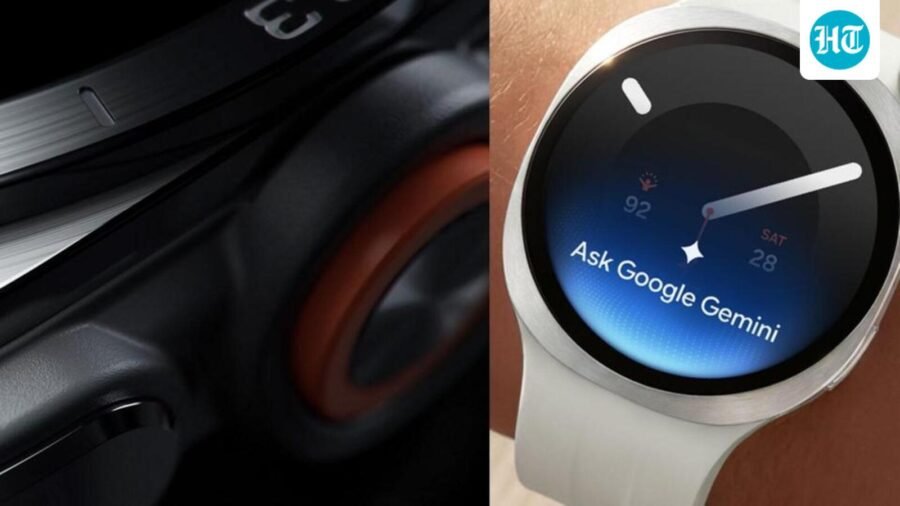
With a key Qualcomm chip change, Samsung’s refining the formula for experience and on-device AI, which intertwines with a broadened health and fitness suite
Updated on: Aug 31, 2026, 09:51:26 IST
Prefer HTon Google
Share via
Copy link
For Samsung’s latest smartwatches, the Galaxy Watch Ultra2 and Watch9, the generational step forward wasn’t solely reliant on their research labs. High time too, because for years, Samsung has pretty much held the fort for serious smartwatches for the Android smartphone ecosystem—matching their stature in the world of technology. There are efforts from other brands too, but to be blunt, none have had the persistence and longevity of Samsung’s Galaxy Watch generational progression. Like clockwork, every year marks a refinement in some form. They try to keep things fresh too. Last year it was the Galaxy Watch8 and Watch 8 Classic, while the year before that, the Galaxy Watch Ultra.
Qualcomm’s first true flagship chip for wearables, the Snapdragon SW6100 Wear Elite (3 nanometer) marks a progression that helps everything around it. Compared with the likes of the Snapdragon Wear W5+ and the Snapdragon Wear 4100 before that, this chip brings up to 5x faster single-core performance, up to 7x faster graphics, a dedicated Hexagon neural processing unit (NPU) for on-device AI and up to 30% better power efficiency with faster charging for good measure. If Samsung is confident that a switch from their in-house Exynos W1000 or a later chip to the Snapdragon Wear Elite makes sense, it certainly comes on the back of some heavy optimisation, as you’d notice with the passage of time.
There is a clear distinction in positioning for the Galaxy Watch Ultra2 and Watch9. The former is a mix of that extreme exploration (the kind that’s difficult to encounter in India; high humidity levels don’t mean the same thing!) intertwined with fitness and health tracking with a hint of the lifestyle quotient as well, which Samsung has locked in rather well. The price tag of ₹64,999 also points us in that direction. The Galaxy Watch9 prices start ₹37,999 while the LTE variants will cost ₹41,999 onwards.
There is a certain continuity in the Galaxy Watch Ultra2 design, except for a very welcome slimming down of the chassis—it’s a substantial enough reduction, from 12.1mm to 10.7mm, and this difference feels like enough of a refinement on the wrist. Credit to Samsung’s design and hardware teams for achieving this despite a greater than 30% increase in battery capacity (it is 800mAh now, as against 590mAh earlier). One could have perhaps argued for similarly minor but more visible tweaks to mark the Galaxy Watch9 apart from the Galaxy Watch8. But here, the only real change again is a higher capacity battery, which means an additional 2 grams of weight (if you’re keeping count).
Mind you, these are extremely well-built watches, something that’s particularly visible on the Galaxy Watch Ultra2 dressed in titanium and those very fine visual cues on the bezel and around the frame. There’s one Titanium Silver alongside a Titanium Grey watch colour for now. To be fair, Samsung is hoping that in the pursuit to add more colour, you’d glance at some accessories—the Marine Band in Orange and Blue, or the PeakForm band in Camel, being some that stand out.
The Galaxy Watch9 is a simpler design in comparison but no less refined. Slimness was a strong point of the predecessor, and that’s very much true even now. The choice between 40mm or 44mm watch sizes will define your base colour choices, and again, there is a wide range of Samsung’s band accessories for a dash of colour.
Samsung’s chip decision, and of course the silicon customisations they’d have undoubtedly asked for, stand vindicated every day you use the Galaxy Watch Ultra2 and Watch9. Apps are much more responsive, either when launching or during switching. The bigger responsiveness boost comes to Google Gemini, with the artificial intelligence (AI) layer able to process whatever it needs to on-device much quicker than before. That’s the additional NPU in the new Snapdragon chip making its mark.
Speaking of experience with apps, the Galaxy Watch Ultra2 has a brighter display than before—now up to 5,000 nits, significantly higher than the 3,000 nits that most smartwatches manage. It is even very useful as a flashlight, something I can confidently testify to. The higher battery capacity does mean this can get through almost 7 days on a single charge, and just short of 5 days if you also track sleep. The Galaxy Watch8 will get through 2 days with ease, and maybe a bit more if you use the raise-to-wake option to save standby power.
The new Health and activity suite adds trail runs (the Galaxy Watch9 doesn’t have this), daily cardio load, and fitness index matrix to underline a broader scope that the new smartwatches get. There is a key move towards not just tracking and collecting health as well as activity data, but also making sense of all of it collectively for the user. The baseline works according to you, and not some random perfect world metric, and you’ll get suggestions once the watch understands your body over a period of a week or so.
It is not clear whether the previous generation would get some of these new features via software updates at some stage, but if there is hardware dependency, they may not. Yet, Galaxy AI takes a step forward in a relevant way.
In India, there is no Android-primed equivalent for the Samsung Galaxy Watch Ultra2, and you’d have to instead look at the Apple Watch Ultra for that. In that context, Samsung has done a lot to optimise One UI Watch 9 for longevity (5 years worth of updates also promised) on the software side of things, with the new Qualcomm chip locking down performance as well as an increasing AI aspect rather nicely. You must pay a premium for this watch, but it will still start conversations at dinner parties.
The Galaxy Watch9 has a lot more competition to contend with, such as the Google Pixel Watch 5 (which is still very similar to the Pixel Watch 4; you see a trend here?). Two watch sizes too, but more than the chip in this case, the meaningful generational upgrade comes from the battery stamina. You could argue there’s little to compel Galaxy Watch8 owners to rush and splurge on the Galaxy Watch9, and that is something I cannot argue with. In both cases, health tracking accuracy will vary depending on a lot of factors, starting from how well (or badly) fitting your strap wearing style is.
See Less

India’s dead EV batteries could be a ₹1 lakh crore goldmine: Study
By Sohail Khan · 29 Sep
Gadkari announces new expressway for north-east
By Sohail Khan · 29 Sep
Sensex, Nifty fall further day after massive dip, near six-month lows
By Sohail Khan · 29 Sep