Revising the Indus Water Treaty
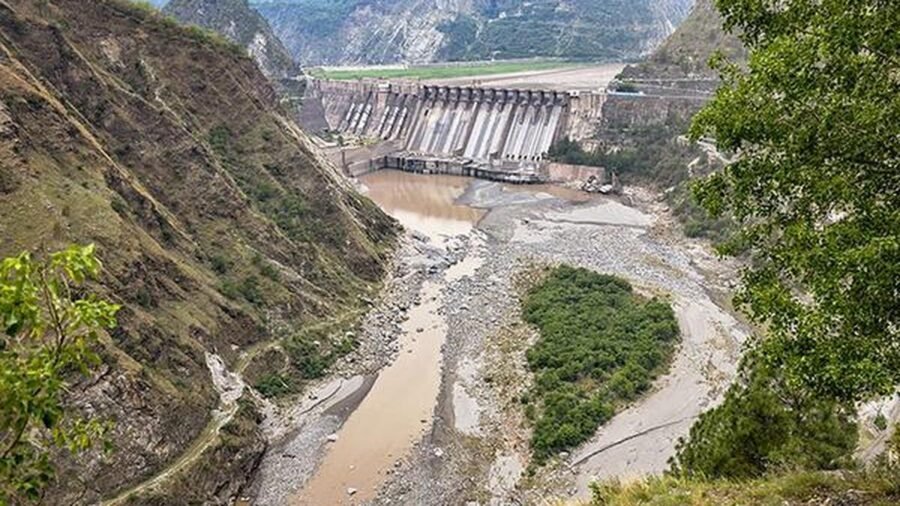
Though the Indus Water Treaty (IWT), 1960 is in abeyance, the writings on the theme relating to its past, present, and future have remained unabated. The two common elements noticeable in the writings are that the IWT needs to be revisited in the context of changing hydrological reality precipitated by climate change and justification of India’s stand of its suspension owing to Pakistan’s inimical behaviour despite the treaty’s apportioning a major portion of water to Pakistan from the western rivers flowing in Indian territory.
There is an absence of advocacy of equitable and reasonable utilisation (ERU) as the binding governing principle of shared waters as it has the flexibility and ability to account for all relevant circumstances beyond merely “who got to the river first”. Climate change affects the quality and quantity of water, which poses a challenge for the beneficial uses of water resources for the upper riparian also. The ability of states to realise beneficial uses of water (defined as appreciable gain or benefit to the user) depends on the quantity and quality of the water available.
The writings need to inform from examples employed by many countries relating to incorporation of climate change considerations in their water management practices. For example, the Cooperative Framework Agreement on the Nile mentions in Article 4(5) that “Nile Basin States” shall in their respective territories, according to their national laws and regulations, keep the status of their water utilisation under review in light of substantial changes in relevant sectors and circumstances. The Mekong River Commission’s Procedures for Data and Information Exchange and Sharing creates a formal framework for members to systematically share water, climate, and ecological data, supporting basin-wide decision-making. In addition, reference points from a number of basin states can be used to underline the importance of joint implementation of shared rivers for mutual benefits in their water-sharing agreements, which could offer valuable insights to amend the IWT.
Shared management for mutual benefits
The allocation of water in the IWT is essentially a partition rather than a shared management approach governed by ERU, which results in inequitable utilisation of waters. The approach based on data and knowledge rooted in the 1950s fails to meet core concerns of both the riparians: Pakistan’s need to secure reliable water supply from the western rivers, given its large dependence on agriculture (also extreme floods), and India’s desire to develop hydropower and meet water needs in Kashmir (also outside) where most of these rivers originate. These concerns can be reconciled if both of them move beyond a zero sum game and codify principles of ERU (as consistently mentioned in the Helsinki Rules 1966, the UN Watercourses Convention of 1997, and the Berlin Rules, 2004) which offer scope of mutual benefits along with the benefit of adding flexibility to incorporate changing conditions in the Indus basin related to climate change precipitated changes in water availability.
The writings need to use such reference points such as the U.S.-Canada Water Treaty, 1961 for navigating the future of Indus basin. Under the treaty, both the countries share downstream benefits equally. Canada received a lumpsum of 64.4 million dollars for estimated flood damages prevented in the U.S. across the first 60 years of the treaty and an ongoing share of extra downstream power generation in the U.S.
Similarly, the U.S.-Mexico Treaty of 1944 on the Colorado River provides another example of mutual benefits. The treaty provides the states with flexibility to respond to annual hydrological variability (Article III). The provision prohibits the upper division states (in the U.S.) from causing the Colorado River flow at Lee Ferry to be depleted below 75 million acre foot during any consecutive 10-year period.
Other international legal obligations
The writings should note there are lingering international obligations of both countries concerning water conservation, biological diversity conservation, and climate change that could be met with the updating of the IWT. India and Pakistan are both signatories to the Ramsar Convention on Wetlands (1971), which aims to conserve and use wetlands, especially those that are transboundary in nature or have migratory bird habitats, such as the Rann of Kutch. Both the riparians are also signatories to the Convention on Biological Diversity, 1992, which requires them to conserve biodiversity and assume responsibility for sustainable use of shared wetland ecosystems, especially in the Indus. The updating will result in maintenance of environmental water to maintain the health of the rivers, wetlands, and ecosystems which support large number of aquatic animals and species, including some endangered species.
There are indications that both the parties recognise implicitly the need for IWT’s climate alignment. The Indian Parliament Standing Committee on Water Resources has highlighted critical institutional and legal gaps in India’s transboundary water governance. The committee’s findings note the absence of a cohesive national framework for managing shared rivers, implicitly supporting the idea that emerging environmental risks demand renewed regional engagement and internal reforms. Similarly, the 2018 National Water Policy for Pakistan recognised climate change as a key stressor on water resources, noted the vulnerability of the Indus basin to glacial melt, erratic monsoons, and droughts, and called for strengthening the transboundary water cooperation to address these evolving challenges.
Despite these signals and the potential scope of mutual benefits to riparians, the cooperation in the given situation is highly political, which is often linked with national security. However, experience shows that the will to cooperate in transboundary basin seems to occur when the net benefits of cooperation are seen to be greater than the net benefits of non-cooperation.
The author is an Associate Professor in International Environmental Law at the Indian Society of International Law, New Delhi

Moon gardens are trending: 5 plants and easy tips to create one at home
By Sohail Khan · 28 Sep
Turmeric, honey, and yoghurt: Decoding Ananya Panday’s glow secret
By Sohail Khan · 28 Sep
SpaceX puts Starship megarocket in orbit for first time
By Sohail Khan · 28 Sep