Retrofitting: the missing link in India’s vehicle scrappage policy
India’s vehicle scrappage policy has been introduced to phase out ageing, polluting vehicles, but it has struggled to gain meaningful traction. The country scraps roughly 1 to 1.2 lakh vehicles a year, barely 4,000 a week, under a framework that only permits scrapping of vehicles older than 15 years. Yet the incentive structure remains weak: a road tax rebate of merely 4-6% of the ex-showroom price does little to persuade owners to part with vehicles that, despite their age, continue to hold utility value.
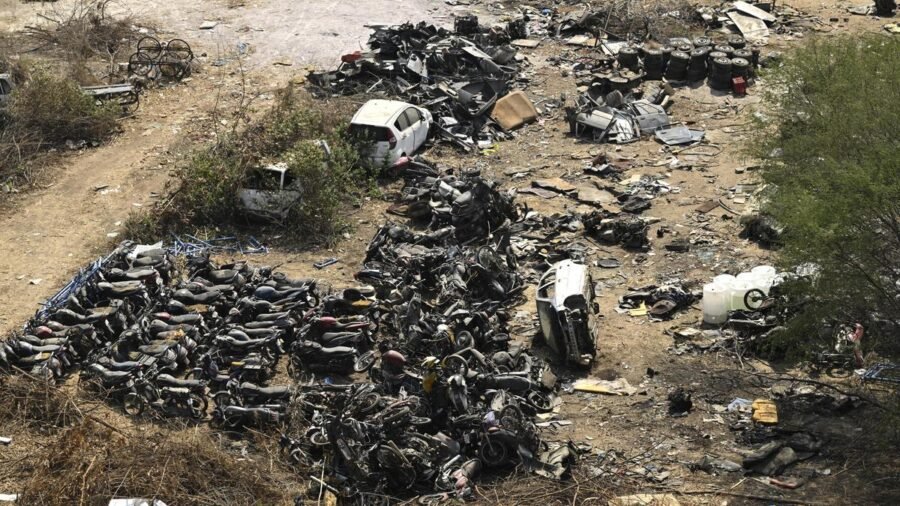
The consequences of this design flaw are stark. According to NITI Aayog, only 3% of end-of-life vehicles (ELVs) have been formally scrapped over the past three years, even as an estimated 12 million ELVs remain in circulation on Indian roads. Of these, only about 35,000 have passed through registered scrapping facilities, while the rest, predominantly two-wheelers, are absorbed into an unorganised network of local scrap dealers who dismantle them without regard for environmental safeguards.
This gap between policy intent and ground reality points to a structural shortcoming, since India’s scrappage framework offers owners only the path of destruction, when a second, more economically and environmentally sound option exists in retrofitting.
Retrofitting involves replacing a vehicle’s internal combustion engine (ICE) components with an electric power train, namely the motor, battery, and controller, while retaining the existing chassis, body, seats, tyres, and suspension. Rather than scrapping an old vehicle and purchasing a new electric one, an owner can convert the same vehicle into an electric vehicle at a fraction of the cost. The financial case is compelling: retrofitting a two-wheeler can save an owner ₹50,000 to ₹70,000 compared with purchasing a new EV, while retrofitting a four-wheeler can save ₹5 lakh to ₹10 lakh per vehicle. This is the capital that remains with the consumer rather than being absorbed into the cost structure of new vehicle manufacturing.
The environmental perspective is equally significant. Manufacturing a new EV is not an emissions-neutral process, as steel production, chassis casting, and vehicle assembly all carry a substantial industrial carbon footprint before the vehicle ever reaches the showroom. Retrofitting circumvents much of this by reusing an existing vehicle’s shell, tyres, and suspension, thereby avoiding the emissions associated with producing an entirely new vehicle body. There is also a less-discussed environmental cost embedded in the current system: millions of ELVs are abandoned or improperly disposed of in informal junkyards, where coolants, engine oils, and brake fluids leach into the soil and contaminate groundwater. A regulated retrofitting process, by contrast, addresses this hazard directly while also eliminating the tailpipe emissions, namely particulate matter (PM 2.5) and carbon dioxide, that ageing ICE vehicles continue to contribute to urban air pollution.
Regulatory hurdles
The principal obstacle to scale retrofitting in India is not technological but regulatory. At present, formal scrapping remains the only officially recognised route for ELVs, while retrofitting continues to operate in a legal grey zone across most States. Addressing this requires three coordinated interventions. First, ARAI approval and licensing for local retrofitters would establish certified standards for retrofit kits and workshops, lending the process legitimacy and ensuring vehicle safety. Second, original equipment manufacturers (OEMs) need to be drawn into this ecosystem, either by supplying approved retrofit kits directly or by partnering with certified retrofitting garages, to build a credible aftermarket rather than leaving the space entirely informal. Third, Regional Transport Offices (RTOs) and local authorities must establish clear frameworks for registering retrofitted vehicles, updating ownership documentation, and inspecting retrofit quality, so that the process is both transparent and trustworthy for vehicle owners.
If these measures were implemented, retrofitting could emerge as a mainstream, legally sanctioned alternative to scrapping, one that is cheaper for consumers, cleaner for the environment, and considerably more scalable than the current formal scrapping system, which processes only a fraction of India’s ELVs each year. The macroeconomic implications extend well beyond individual vehicle owners. Collectively, retrofitting could save over ₹1.2 lakh crore in combined manufacturing capital and consumer acquisition costs compared with a scenario in which all ELV owners purchase new EVs. It would also redistribute economic value away from a small number of centralised manufacturing hubs toward thousands of local certified mechanics and engineering garages across the country, generating skilled employment in EV kit installation, battery servicing, and vehicle inspection at the grassroots level.
On the environmental ledger, retrofitting at scale could prevent over 21 tonnes of industrial carbon dioxide from entering the atmosphere by eliminating the need to manufacture new vehicle bodies, while the reuse of metal frames would keep hazardous waste out of local soil and water systems.
Proven technology
Several countries have already demonstrated that regulated conversion of existing vehicles can complement, rather than compete with, new EV manufacturing. In countries such as the U.K., the government permits approved retrofit conversions through recognised engineering standards, while clean-air initiatives have encouraged electric conversion of taxis and heritage vehicles instead of outright replacement. Similarly, in the United States, several states allow certified EV conversions for passenger vehicles, school buses, delivery vans, and municipal fleets under federal and state vehicle safety regulations, creating a growing aftermarket industry.
These international practices reveal that India need not choose between an ageing fleet of polluting vehicles and the considerable expense of replacing it wholesale with new EVs. Retrofitting offers a credible middle path, one that is more affordable for consumers, more sustainable for the environment, and more equitable in its distribution of economic opportunity. What stands between India and this outcome is not a lack of technology or demand, but the absence of a clear legal and regulatory framework to let the industry develop safely and at scale.
Milind Kumar Sharma is Professor at MBM University, Jodhpur. Khushboo Shah and Lalit Jyani have research interests in non-conventional energy.

How a Naga film secured entry to the Oscars, alongside India’s official selection
By Sohail Khan · 21 Sep
When everything falls apart: What ‘lifequakes’ can teach us
By Sohail Khan · 21 Sep
Rahul Khanna, 54, gives a peek into his breakfasts
By Sohail Khan · 21 Sep