Rescued from ruins, weed and decay now devour 400-yr-old Portuguese bastion in Mumbai
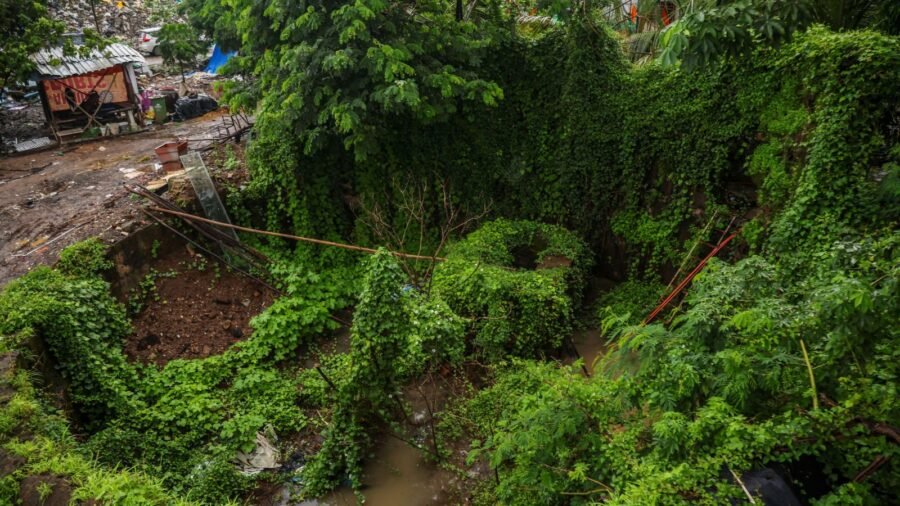
When residents in Wadala cleaned up an old structure, which was lying hidden for years amid vast dumps of debris and overgrown with weeds and trees, they did not know what it was.
However, with the help of a history enthusiast, they discovered that it had a long history to tell – it was a Portuguese bastion around 400 years old.
The structure along the Eastern Freeway, overlooking the Mahul creek, came to public attention in 2021.
“With the help of history buffs and some funds, we cleaned up the historical structure, without knowing what it was, and informed various authorities about it,” said Samadhan Jugdhar, a local and a Shiv Sena shaka pramukh.
The structure was something of a fort, an outpost consisting of a circular well-like structure and a semi-circular wall, with holes interspersed.
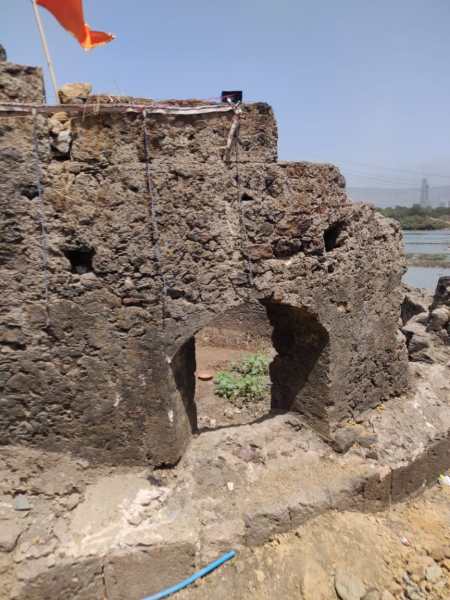 The structure along the Eastern Freeway, overlooking the Mahul creek, came to public attention in 2021
Jugdhar was in touch with a history enthusiast, Chandan Vichare, who tapped into his circle of heritage experts and architects, writing to the BMC and the Directorate of Archeology and Museums of the Maharashtra government.
“It was only when I sent photos of the structure to the archeology department that we knew it was a bastion,” said Vichare, referring to a fortification wall used to make attacks from.
Officials from the Directorate of Archeology were sceptical.
Story continues below this ad
“On inspection, we found out that this was a bastion from the Portuguese period, making it around 400 years old. It served as one of the important defense structures that guarded Mumbai. Unlike many similar structures, like the Mazgaon Fort, which were destroyed by the British, this one was probably used by the British after they took over too, and hence survives,” said Mayur Thakare from the Directorate who documented the structure.
Being a coastal city, fortification along the edges of Mumbai with the help of forts and bastions were common, giving the rulers an important vantage point to monitor ships coming from the horizon and any incoming attacks. To this, Mumbai owes the Bandra Fort, Worli Fort, Mahim Fort, Sion Fort, Madh Fort, and more.
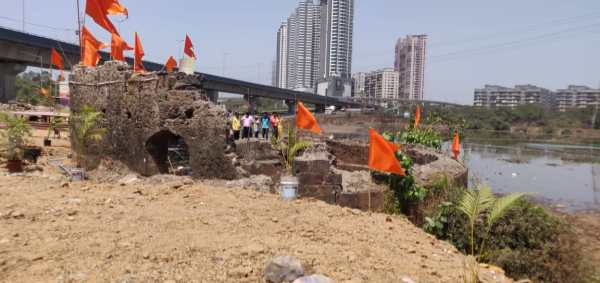 The structure was something of a fort, an outpost consisting of a circular well-like structure and a semi-circular wall, with holes interspersed.
Most of these large fortifications, said Thakare, are protected monuments notified by the state or central government.
The history of Wadala too is intertwined with the bastion, and why it was chosen to be constructed at the spot.
Story continues below this ad
“During the Portuguese rule from the 16th to 17th century, Wadala was called Varella, coming under the Mahim Kasba,” explained Thakare, who presented these findings in a paper to the Mumbai University.
Wadala was largely salt pans. The local Kunbis, called Kurumbees, farmed them, and thrived under the Portuguese. When the British and then the East India Company took over in 1661, the salt pans exchanged land ownership, but continued thriving.
Thakare concludes, “Under both Portuguese and British administrations, despite phenomenal changes in the patterns of urbanisation and land reclamation, the local geographical nomenclatures and divisions remained largely unaltered.”
The bastion is found marked in maps dated 1812, 1843 and 1885.
Describing the bastion, Thakare notes it is a circular bastion, with octagonal projections inside. It is constructed with random-rubble masonry with lime-sand mortar. At regular intervals, there are gun holes and gun slits. Unusual for such a bastion, there is also a rectangular water storage structure.
In further proof that the British also used the bastion, the inspection found two possible different phases of structural activity: the primary structure being from the Portuguese period, built between the 16th and 17 century, followed by a reworking by the British in the 17th and 18th century, strengthening it with stone veneers.
Story continues below this ad
With all this validation, there was a case to be argued for its notification as a monument.
Thakare said there is a willingness to give the bastion the status of a state-protected monument.
He said, “After the inspection, we had instructed the Ratnagiri Divisional Office to prepare a proposal to the head office to nominate it to be a state-protected monument. But that has not moved ahead.”
The process to get a monument notified takes approximately a year, he explained. Thakare said that he will follow it up.
Meanwhile, the bastion has almost faded out of the people’s memory. Even residents, like Jugdhar, have kept it in abeyance and are told not to clean it by the directorate so as not to disturb the historical evidence.
Story continues below this ad
But time and neglect have set to feast on it.

When Is Shardiya Navratri 2026? Know Date, Muhurat, Significance, Rituals And More
By Sohail Khan · 21 Sep