Ramayana designers say Lara Dutta’s Kaikeyi, Sai Pallavi’s Sita costumes ‘conscious decisions’
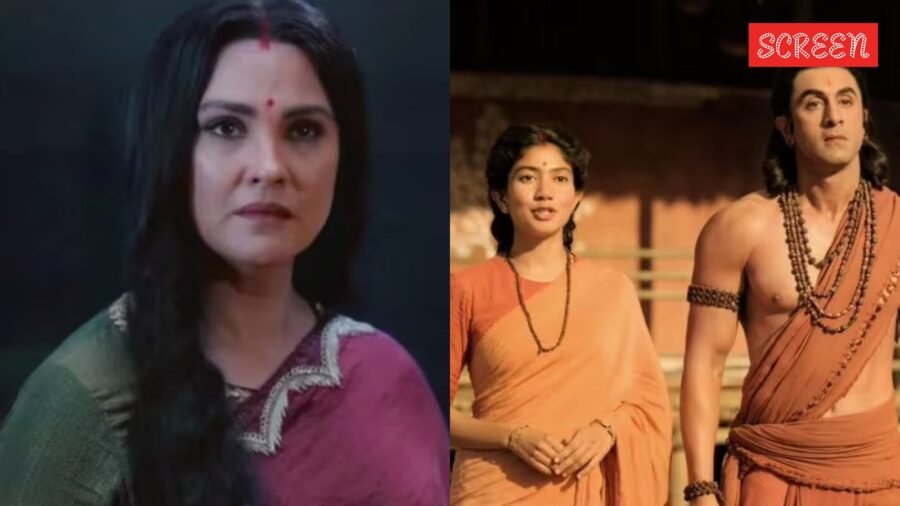
There has been a lot of chatter around Nitesh Tiwari’s upcoming mythological epic, Ramayana. Since the release of the film’s trailer, fans have been criticising the costumes of different characters, including, Ranbir Kapoor’s Lord Ram, Sai Pallavi’s Sita, and Lara Dutta’s Kaikeyi. In a recent interview, popular designer duo Rimple and Harpreet Narula, the official costume designers of Ramayana, opened up about their perspective behind working on the film’s costumes.
During a conversation with , Rimple admitted making a conscious decision of pairing a green and maroon blouse for Kaikeyi’s saree. “I know there’s a lot being talked about Lara Dutta’s scene, I’ve been reading on the internet. What people don’t understand is that, the scene where she is banishing Lord Ram, there is a perplexity in the whole situation. There is a complexity as a mother. She is trying to protect her own son but she is also going out of her way and banishing Lord Ram,” she said.
‘Chose faith over authenticity’
The designer continued, “I have given a green blouse, which reflects mother Earth. I deliberately gave her a dark kind of an ox blood saree, dark maroon colour, to reflect that complexity of the situation, which people are not able to understand. And, every colour you see is a vegetable dye, a natural dye.”
Harpreet further revealed that they aimed to choose faith over authenticity. “The main thing that we were following was faith. Growing up here, how do we pray to Lord Ram or Sita in our day to day lives? How have we grown up watching their images on calendars, mandirs, or pre-modern art. What do we usually see there? That was more important for us. It was a conscious decision for us to make blouses a certain way, and to do sarees a certain way. We wanted to go by faith over authenticity.”
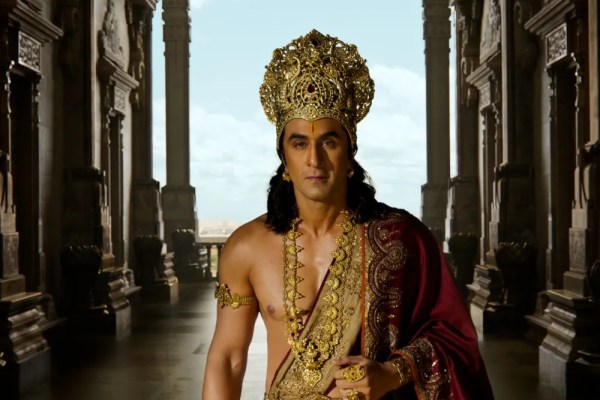 Ranbir Kapoor in Ramayana
‘Global audiences will identify it as an Indian epic’
He also emphasised on choosing a saree for the character of Sita. “There is a big difference in the way all the iconography has been interpreted in South or North. For us, there are so many interpretations already. We wanted to go for something which was more universal, and that’s why we chose this kind of a silhouette.”
To which, Rimple added, “Research can be an essence of making a project but designing and interpreting in our own way is a part of storytelling. This is visual storytelling. It’s our own adaptation and interpretation to show the world where the global audiences are going to identify it as an Indian epic. Today, what is the global audience looking at India for? Saree.”
Story continues below this ad
The designer duo wanted to focus on the film’s global reach and its Indian representation in various countries. “I had to go by what the global audience would identify instantly with it as an Indian epic saga, which belongs to Indians all over the world. We tried everything, there were multiple versions that we tried. It wasn’t designed in isolation, it was done cohesively with the director on board, and then we came to a conclusion about the look of Sita,” she stated.
‘Ramayana has lived in our collective consciousness’
When asked about their inspiration behind making the costumes in Ramayana, Harpreet replied, “We wanted the textiles to be authentic. We wanted the colours to be a certain way. But at the same time, we wanted it to confirm the faith that we have towards the subject. How we go to old temples.. so many temples in India. You start visiting them right when you are so small. It’s a very frequent thing. Then you see the idols of Ram, Sita, Hanuman, Laxman, and how they are dressed up. Sometimes, you pray to God and you keep God in your mind. That was probably the essence which we wanted to have in the characters.”
Rimple mentioned that everyone has their own interpretation in terms of the appearance of their Gods. “I feel Ramayana is not just a story, it’s lived in our collective consciousness. Not only Indians, but also in Thailand, Cambodia, Vietnam, and in so many other places. Everyone has their own relationship with their inner God, in terms of how they look and appear. This has been influenced by a lot of various adaptations, which as children, we have grown up seeing,” she said.
Story continues below this ad
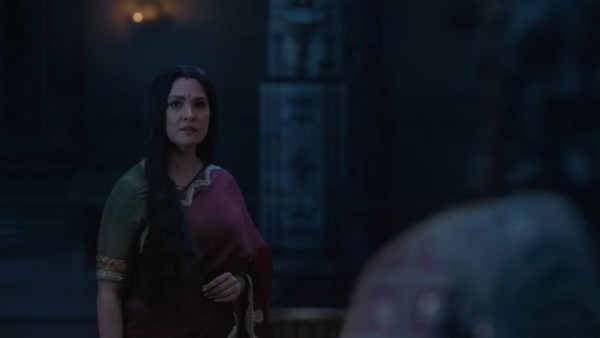 Kaikeyi in Ramayana
The designer further added, “In India, there has been several Ramleelas which I have personally attended. There have been dance interpretations which we have seen of Ramayana and Mahabharata, and so many other epics. All of that has been embedded in our hearts, souls, and minds for years. So, it wasn’t a day’s process, but probably what has been there with us for so many years, has been the base of designing these costumes.”
‘Shurpanakha was a wild child, Sita had grace’
Citing the example of Rakul Preet Singh’s Shurpanakha and Sai Pallavi’s Sita, Rimple revealed that designing the costumes of women was the best experience for her. “I really like what we have done with the two female main characters of the project – Maa Sita and Shurpanakha. The complexity of the characters, with each one representing their own beauty and character. Shurpanakha had free will, she was a wild child, she did not refrain from speaking her mind, she was a Lanka princess, and full of life. On the other hand, Goddess Sita had this resilience and grace. I loved designing for the various women who were represented in Ramayana,” she concluded.
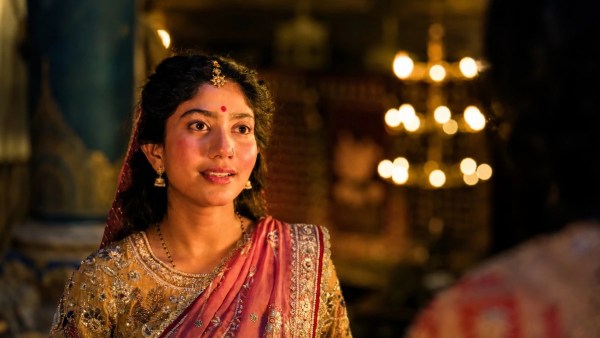 Sita in Ramayana
About Ramayana
Directed by Nitesh Tiwari and produced by Namit Malhotra, Ramayana: Part 1 is set to hit the theatres in Diwali 2026. the film also features Yash, Sunny Deol, Ravi Dubey, and others.

‘Kangana Ranaut is a joke now,’ says Rajeev Masand: ‘I miss her as the actor’
By Sohail Khan · 29 Sep