Rain-soaked memories
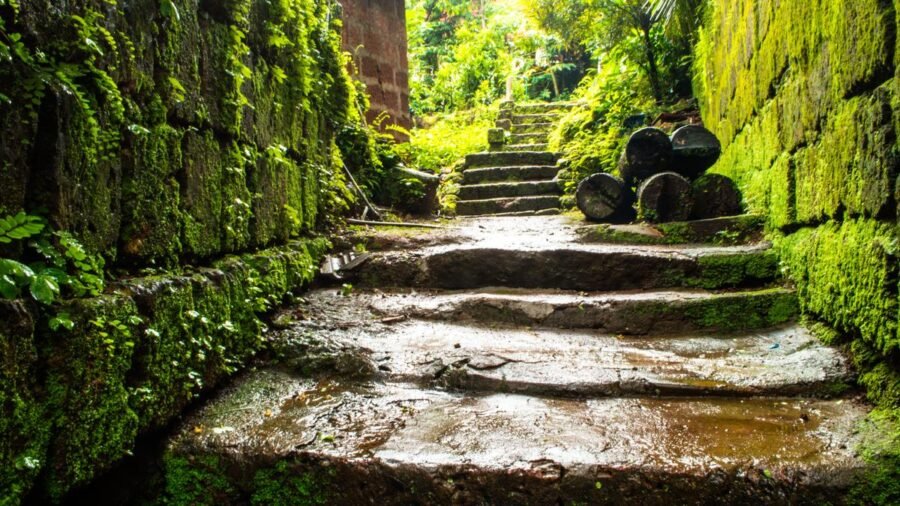
The heavy rain had stopped after days of destruction, killing some and wounding many. With clear skies, it appeared that the summer had come back. I was not sure whether it was the effect of El Niño, playing havoc with the climate in many parts of the world, as reported in the media.
While going to sleep, I had switched on the air-conditioner in my bedroom, keeping the temperature cool enough to sleep, and kept the ceiling fans rotating at maximum speed. The windows had been shut, preventing the airflow.
Electricity supply frequently disappears in the city where I reside. As often happens, the supply stopped at the dead of night, and the ceiling fan and air-conditioner stopped working. Soon I woke up, sweating profusely.
There was no telling when the supply would be restored, as it usually took much time even during the daytime.
That took me back to my childhood in my village. Our house, like most others in the village, was thatched with woven coconut leaves, seasoned in the flowing waters of the nearby river. Electricity was a new entrant, and the public roads had burning bulbs on wooden poles at night. Only the rich had their tiled houses electrified. They had bulbs in all rooms, in place of different types of kerosene lamps. Mine was one of the houses without an electricity connection.
My siblings and I slept on mats made of the seasoned plant leaves spread on the floor, which was periodically plastered with mud and cow dung. Air passed through the coconut leaves on the roof, making the rooms cool with all their open windows.
The thatch was renewed every year with the participation of all able-bodied neighbours. It was like a festival. The women gathered, preparing meals for all on makeshift hearths, and enjoyed exchanging gossip.
As the houses used hearths to cook food, the old coconut leaves that burned brightly, emitting little smoke, were welcomed by the women of the house. They were stored nearby, considering that the rainwater did not dampen them.
Every house had some trees like mango and cashew in its compound. Usually, their branches swayed in the gentle breeze during the day, the people sitting in their shadows not much affected by the high temperature. The trees were pruned every year, and their dry branches and leaves were used in the hearths. The children were experts at hanging swings from the branches, and they spent afternoons swinging and eating the fruits of those trees.
Most men had their upper bodies bare, with a white towel called “thorthu” tied on their heads to wipe away sweat. Everybody bathed in the nearby Pampa river in the morning and evening. Some people visited the local temple, binding dripping towels around their lower bodies and smearing their foreheads with the sandalwood paste handed out by the priest.
I think people were better placed to face the change in the weather then.
pillaikss@yahoo.in

Woman wears same T-shirt after 7 years, shows 65-kg weight-loss transformation: ‘Baby Nonu…’
By Sohail Khan · 28 Sep
In great powers’ AI race, New Delhi’s place will depend on capabilities built at home
By Sohail Khan · 28 Sep