‘Possessed’ girls, haunted hostel: How rumours drove 610 students out of Amravati school
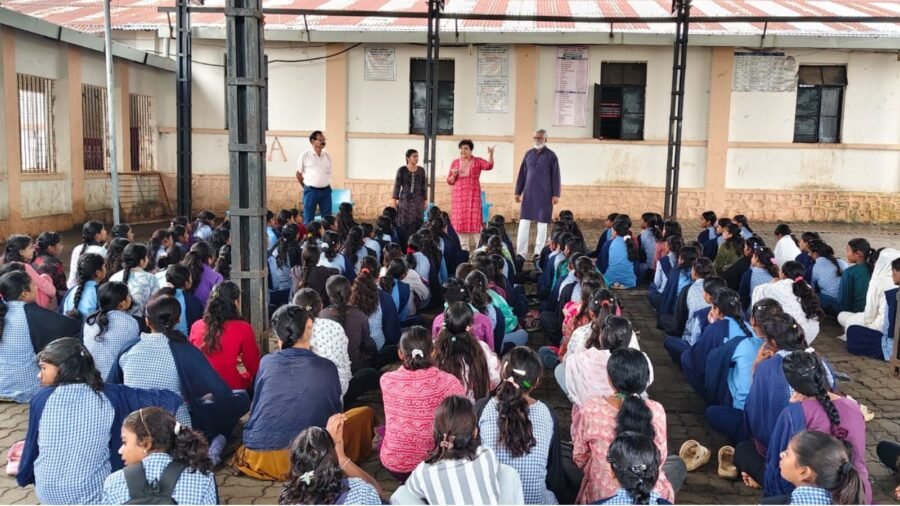
What began with a few girls crying, laughing and behaving unusually at a government tribal hostel in Amravati’s Melghat soon turned into rumours of possession and a haunted campus, prompting hundreds of parents to take their children home. But a state health team that examined the affected girls found no evidence of anything supernatural. It diagnosed them with dissociative or conversion symptoms and described the episode as a case of “mass hysteria”.
The incidents were reported from the Shaskiya Madhyamik Va Uchha Madhyamik Ashram Shala in Doma village of Chikhaldara taluka around July 29. A girl staying at the hostel began crying and laughing uncontrollably without any apparent reason. Similar symptoms were subsequently seen among other girls.
A report prepared by the District Mental Health Programme team after examining six girls recorded continuous crying spells, fearfulness, sadness of mood, somatic complaints, loss of appetite, forgetfulness and memory loss. The girls were diagnosed with Dissociative Symptoms.
“This is indeed a case of mass hysteria. Once hysterical symptoms emerge, others may also display similar behaviour after observing it. Counselling of parents is therefore essential, as patients may consciously or unconsciously reproduce such symptoms,” Dr Swati Sonone, psychiatrist and head of the District Mental Health Programme, told .
Additional Commissioner (Tribal Development) Sandip Golait said a team of health experts visited the school after the incidents were reported and found no evidence of supernatural activity.
“The symptoms have nothing to do with anything supernatural. It could be a selective hysteria-like condition related to mental stress,” Golait said.
The medical report described the wider episode as resembling “Selective Hysteria”, with unexplained crying, laughter and forgetfulness. Stress and unexplained fear were among the possible contributing factors identified in the report.
Story continues below this ad
How the haunted story took hold
Sonone said cultural beliefs may have contributed to the spread of the symptoms. The investigating team learnt that a woman in Ektai, a village around 50 km from Doma, believed she had seen a supernatural shadow and subsequently began behaving unusually.
One of the students who saw her began displaying similar symptoms, crying and laughing uncontrollably. This behaviour was soon exhibited by other girls at the school.
As more girls began displaying symptoms, the explanation around the school shifted from an unexplained illness to possession.
Rumours began circulating in the villages that the girls had been possessed and that the hostel was haunted. Several other theories were also added to the story. One rumour linked the incidents to the cutting of a moh tree, considered sacred by tribals, at the site where a new hostel was being constructed. Another claimed that a puja had not been performed after the tree was cut.
Story continues below this ad
There was also talk among students about a horror film they had watched and discussed.
The Maharashtra Andhashraddha Nirmoolan Samiti (ANIS), which later joined the counselling efforts, found that some families had taken the girls to bhumkas, or traditional tribal healers, after hearing that they had been affected by a supernatural force.
Nandini Jadhav, a state executive committee member of ANIS, said members of the organisation visited the school and stayed there overnight to understand what was happening.
The following day, they travelled to Ektai, from where most of the affected girls came.
Story continues below this ad
“We found that the girls were fine. Some were cooking while others had gone to the fields,” Jadhav said.
She said some families had been told by bhumkas that the girls had been affected by a “chakwa”, or supernatural phenomenon, following which rituals were performed.
‘I don’t remember anything’
Shivani Kalsekar, a Class XII student, was among those affected. Teachers said she had complained of dizziness. Shivani has been studying at the school for four years and staying in the hostel, but has not returned to residential accommodation since the incidents.
Story continues below this ad
“Mere sath kaun tha, kya hua kuch nahi yaad (I don’t remember what happened to me or even who was with me),” she said.
Shivani now attends school from home. Her parents, after being counselled by teachers, have told her to continue attending classes as she is in a crucial academic year.
Asked if she was still afraid, she said: “No, ab kya darna (what is there to fear now).”
Class XI student Janhavi Maraskolhe, who has stayed at the hostel for three years, witnessed the incidents involving other girls.
“Nothing like this happened ever before,” she said.
Story continues below this ad
Janhavi said the girls were crying and laughing without any apparent reason and some even fell unconscious. She recalled that when some of them were taken to hospital, they were given biscuits but simply stared at them instead of eating.
Unlike many others, Janhavi has returned to the hostel. She said around 50 girls are currently staying there.
 The school draws students from several villages, with a large number coming from Ektai
“Maybe seeing us stay here will bring back the others,” she said.
Nearly 610 students leave hostel
The school, which began in 1979, has around 852 students. Nearly 610 left the residential hostel after parents began taking their children home.
Story continues below this ad
Teachers said even they were initially frightened when they saw the girls behaving unusually.
Nitin Sawarkar, an English teacher who has worked at the school for five years, said the incident was unprecedented.
“The parents are ready to send their kids to school, but they are waiting to see who will send their child first. We asked them all to come together to the school,” he said.
The school draws students from several villages, with a large number coming from Ektai, more than 50 km away. Teachers said the institution is popular in the region and has a strong participation in sports.
Story continues below this ad
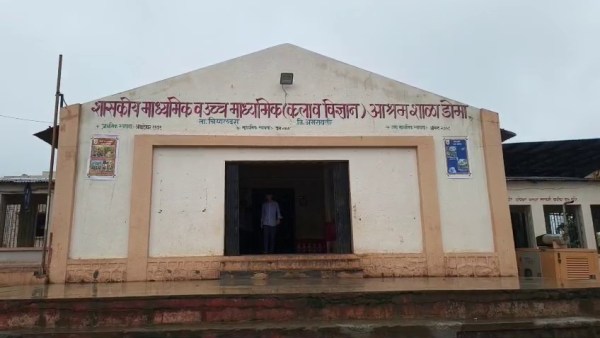 The episode began around July 29 at ‘Shaskiya Madhyamik Va Uchha Madhyamik (Kala va Vigyan) Ashram Shala Doma’
While many students left the hostel, some continued attending classes.
Headmaster Sanjay Chaudhari said more than 150 students were initially coming to school and the administration’s priority was to ensure that classes continued. The number has since crossed 200.
Authorities, activists reach out
With the rumours threatening to disrupt the education of hundreds of children, teachers, health officials and anti-superstition activists began reaching out to families.
“Every day, some teachers go to different villages to counsel the students and their parents,” Chaudhari said.
ANIS members visited families in Ektai, Chunkjhadi, Khadimal, Pachdongri and Butida. Jadhav said the organisation’s immediate concern was that the behaviour of around 16 girls had brought the education of nearly 600 students to a halt.
“We counselled the parents and told them that education was important and that there was nothing like ghosts or possession that they needed to fear,” she said.
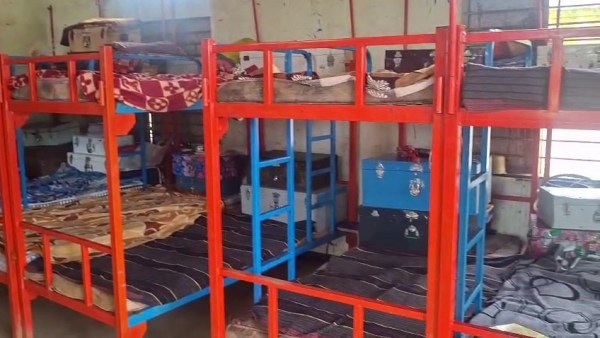
The team also found that hostel rooms had poor ventilation and were overcrowded, which it said could contribute to psychological problems.
The school administration is now trying to address the accommodation issue as well. Chaudhari said around 70 girls currently stay in each of the larger halls, with bunk beds being used. A new hostel is under construction on the school premises and is expected to be ready within a month.
For several families, however, seeing their daughters suddenly behave in ways they could not understand was frightening enough to make them seek explanations outside the medical system.
Chanchunana Bethekar said his daughter was frightened and shaking after the incident. The family took her to a hospital and later to a bhumka.
“He gave her water and performed a ritual, after which she became fine. I will send my daughter to school now,” he said.


IOC Clears ₹2,448.70 Crore Gas Pipeline, 424.65-Km Route To Link Kochi And Thoothukudi
By Sohail Khan · 21 Sep