People’s Plan 2.0: an ambitious dream
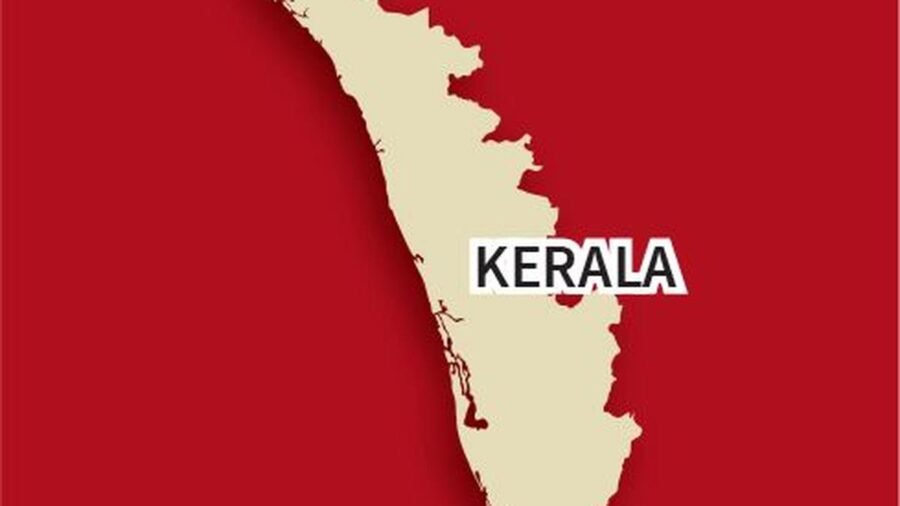
On August 16, many of the best-known names linked to an ‘experiment’ that changed the way Keralam thought about democratic decentralisation came together in Thiruvananthapuram to celebrate a birthday. The People’s Plan Campaign (PPC) was turning 30 years old the next day. The conclave, a non-governmental initiative, saw participation from elected representatives, former Ministers and bureaucrats and hundreds of activists who had lovingly nurtured the PPC and gave it direction through the intervening years. But more than a nostalgic anniversary reunion, it was meant to discuss and plan the ‘People’s Plan Campaign 2.0’.
The plan, as explained by Communist Party of India (Marxist) veteran and former Finance Minister T.M. Thomas Isaac, who had been in charge of the PPC when he was a member of the Kerala State Planning Board, included student internships with local bodies and a tech-driven campaign coordinated through an online portal. Opening the August 16 event, K.M. Shaji, Minister for local self-government in the ruling Congress-led United Democratic Front (UDF) government, recalled how successive governments in Keralam had supported the PPC as a process of deepening democracy.
A rich history
The PPC as an idea traces its roots to the ‘Gram Swaraj’ concept of Mahatma Gandhi. It draws strength from the 73rd and 74th Constitutional Amendments, and the enactment of the Kerala Panchayati Raj Act and the Kerala Municipality Act which institutionalised local governance structures. Keralam officially launched the People’s Plan Campaign on August 17, 1996. At the time, it was run on campaign mode as the concept of participatory planning was new to the people. Grama sabhas and urban ward assemblies were organised across the State in the months that followed. The Left Democratic Front (LDF) government also took the big step of devolving 35%-40% of the Plan outlay to local governments.
The State Planning Board’s Economic Review had noted how the programme marked a major shift by placing local self-governments at the centre of development planning. With its rich history of social reformation through the late 19th and early 20th centuries, the land reforms that transformed the agrarian system, and its high social indicators in literacy and health, Keralam was ideally suited for such an experiment.
Looking back, the programme may not have been a 100% success, but it was also far from a failure. It made participatory democracy deeper and local governments stronger. The ‘Kudumbashree’ scheme in particular grabbed the spotlight on national and international stages. As noted by Mr. Isaac and Richard W. Franke, Professor Emeritus at the Montclair State University, in their book People’s Planning — Kerala, Local Democracy and Development, “from a mere government-led administrative reform, the PPC has made the process of decentralisation an object of mass action and a part of the popular politics.”
Modern challenges
Yet, as an updated 2.0 version is being ambitiously discussed, the challenges are many, such as waning public enthusiasm and low participation in the grama sabhas, especially in urban areas. When compared to the 1990s, attracting the younger generation to such an endeavour in a fast-paced, rapidly urbanising Keralam would prove a ponderous task, but also the most vital one. Government estimates show that 96.43% of Keralam’s population could be living in urban areas by 2036. The People’s Planning 2.0 would then have to factor in many things: centralisation trends in the government, changing aspirations of the people, and the increasing fiscal stress faced by Keralam.
Yet, the spirit of co-operation fostered through programmes such as the PPC remains all the more relevant today. Many of the hurdles faced by local governments in the last 30 years — unemployment, waste disposal, gender justice and issues faced by marginalised sections — persist. Moreover, more demanding problems have emerged: limited income sources, climate change, and an ageing society. In these changed times, local bodies would need to evolve a new political and fiscal culture with stronger public involvement, and elected members with impeccable credentials.

TQWL on your train ticket: What it means, confirmation chances and boarding rules
By Sohail Khan · 29 Sep