Patna High Court sets 45-day deadline for disposing of second appeals under RTI
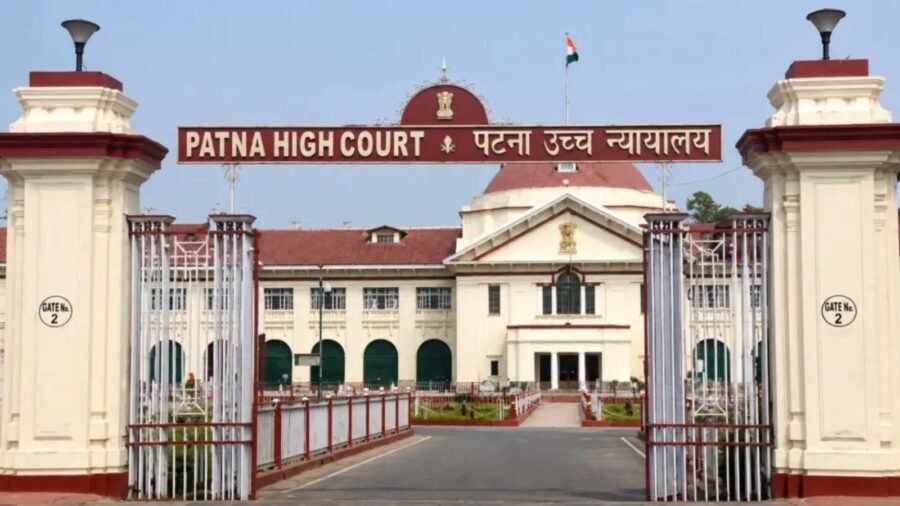
Stating that a person seeking information should not be left “remediless”, the Patna High Court has ruled that second appeals filed under the RTI law must be decided within 30 days, extendable to a maximum of 45 days.
The order is significant because while the Right to Information (RTI) Act, 2005, has a 45-day deadline for disposing of the first appeal, there is no such timeline for the second appeal.
The court also held that state authorities cannot refuse information by citing missing, untraceable, or damaged public records.
Story continues below this ad
Justice Raj Kumar delivered the verdict on August 11 — the order was uploaded two days ago — in a 17-year-old Civil Writ Jurisdiction Case.
Petitioner Md Rizwan had filed an RTI application in 2009, seeking certified copies of barwarda (yearly rent payment document) and Register-II records from the Circle Office, Siwan Sadar, for a pending title suit.
The Public Information Officer (PIO)-cum-Circle Officer turned down the request, citing contradictory reasons: claiming, on the one hand, that the original documents were not available, and stating, on the other, that they were in an unreadable, torn condition.
After the petitioner filed a second appeal before the Bihar State Information Commission on May 18, 2010, the matter languished for over a year before being disposed of on January 6, 2012. The proceedings were dropped without addressing the petitioner’s detailed objections, prompting him to move the High Court.
Story continues below this ad
While hearing the case, Justice Kumar addressed the absence of an explicit timeline for second appeals under Section 19(3) of the RTI Act. He relied on precedents from the Karnataka and Calcutta High Courts (Jayaprakash Reddy v. CIC and Akhil Kumar Roy v. WBIC, respectively) to hold that appellate authorities must decide second appeals within 30 to 45 days.
The court said: “This Court is of the view that a second appeal must be decided within a period of 30 days or within such period not exceeding 45 days as decided through various judgments… so that the person seeking information is not left remediless.”
‘Cannot take advantage of own failure’
The court also rejected the “Missing File” defence by emphasising that public authorities have a statutory duty to maintain and preserve public records under Section 4(1) of the RTI Act and the Bihar Records Manual, 1960. “The document being torn or not being legible or untraceable cannot be a ground to deny the furnishing of information which is a public record. The State cannot take advantage of its own failure to preserve records,” said the court.
The court also cited the Central Information Commission’s precedent in Anil Kumar Shukla v. CPIO, MHRD, that had said: “Prima facie, any public authority cannot deny the right of the appellant to get the information by putting forward an excuse of the file going missing.”
Story continues below this ad
Nirbhay Prashant, the petitioner’s advocate, told : “Quashing the State Information Commission’s 2012 order and the Circle Officer’s refusal letter, the High Court directed the District Magistrate, Siwan, and the Circle Officer, Siwan Sadar, to complete the following exercise within eight weeks”. The court further instructed: “If documents are found torn or illegible, get them enlarged, digitised, or typed by experts (attested by the Circle Officer) and provide them to the petitioner.”
Expressing concern over the 17-year delay since the original 2009 application, Justice Kumar said that the matter must finally be set to rest with full compliance from the respondents.

Delhi court allows foreign nationals held in NIA terror case to leave India for one month
By Sohail Khan · 25 Sep