Pakistan factor: Why West Asia war hurt Indian airlines more than foreign ones
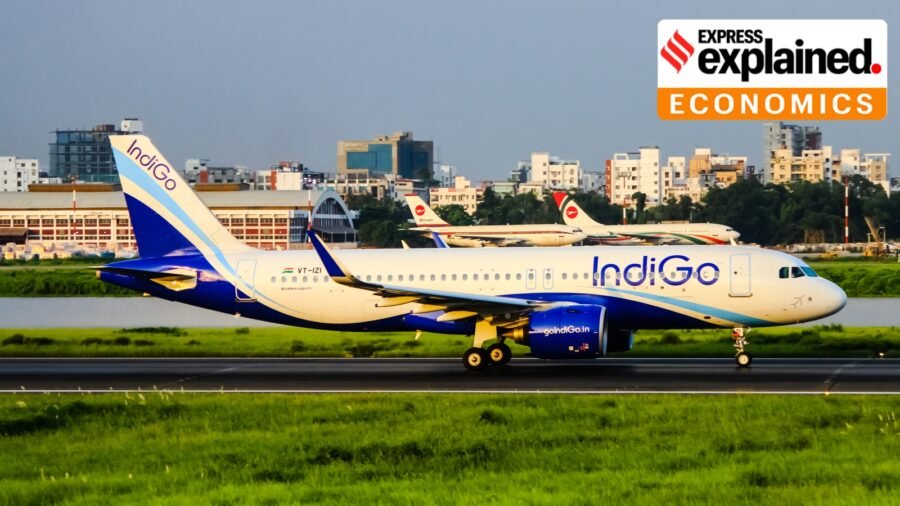
The West Asia conflict, which resulted in major airspace disruptions in the Gulf region, led to a 9% year-on-year (y-o-y) decline in international air passenger traffic to and from India in the first quarter of the current financial year. While the fall in overall volumes was expected, notably, it was entirely driven by Indian airlines as they collectively lost a significant share of international passenger traffic. Overseas carriers, on the other hand, cumulatively made large market share gains, with their combined passenger numbers even higher than the year-ago period.
The odds were stacked against Indian airlines owing to a combination of factors. These include the heavy curtailment of flights to the United Arab Emirates and other West Asian markets — the biggest destinations for Indian airlines — and Indian carriers being forced to cut flights to destinations even beyond West Asia owing to the the war-related financial headwinds and the ban on them from flying over Pakistan since late April of 2025. While the West Asia conflict-related challenges, like surging jet fuel prices, were also faced by overseas carriers, many of them had one key competitive advantage — availability of the Pakistani airspace. We explain.
Data on international air passengers
As per an analysis of the latest international passenger traffic data released by the Directorate General of Civil Aviation (DGCA), total international air passenger volume (to and from India) fell by 9.1% y-o-y in April-June to 1.72 crore. Indian carriers’ combined international passenger numbers declined by 26.6% to 64.2 lakh, while foreign airlines expanded their cumulative passenger base by 6% to 1.08 crore from 1.02 crore a year ago. Consequently, foreign operators expanded their market share to 62.7% from 53.8%, while domestic carriers dropped to 37.3% from 46.2%.
Story continues below this ad
With the West Asia war leading to airspace closures in the region, Air India and IndiGo were forced to curtail their west-bound network as the unavailability of Pakistani airspace made it financially and operationally unviable to maintain some flight services. Even before the West Asia war began late February, the two leading Indian carriers were reeling under pressure as the Pakistani airspace closure forced them to take longer routes, and even introduce refuelling halts, on some of their West-bound routes from their major hub Delhi. Some routes also had to be suspended.
This provided an opportunity to overseas airlines, which became sweeter with the West Asia conflict. Once the war started, some carriers from Europe and other regions to the West of India increased flight operations to and from the country by deploying aircraft capacity that became spare owing to the curtailment in flights to West Asia.
Indian airlines’ loss is foreign carriers’ gain
IndiGo remained the largest Indian carrier for international routes but saw a 15.4% decline to 33.4 lakh international flyers in April-June. Its international market share slipped to 19.4% from 20.9%. Air India saw a 27.2% drop, falling to 19.3 lakh passengers, with the airline’s international market share contracting to 11.2% from 14% a year ago. Air India Express, whose network is highly concentrated in West Asia, saw its international passenger footfall halve to 8.34 lakh. Its market share in the June quarter was 4.8%, sharply down from 8.9% a year ago.
In all, the Air India group’s international passenger traffic in the first quarter declined by 36.3% y-o-y to 27.61 lakh. SpiceJet, which has been struggling financially as well, saw the sharpest percentage decline at 56%, falling to 1.38 lakh flyers on its international flights, the analysis shows. The embattled carrier’s international market share contracted to 0.8% from 1.7%.
Story continues below this ad
The only Indian airline that registered higher international passenger numbers was Akasa Air, which has been growing its international network on a low base through its expanding fleet. The carrier increased its international passenger traffic by 26% y-o-y to 1.72 lakh, with most of the gains coming from non-West Asia market expansion.
A bulk of overseas carriers ended up with higher passenger numbers on flights to and from India. Of the 81 foreign airlines listed in the DGCA data, 51 registered higher passenger numbers. These include 10 airlines that had no passenger traffic to and from India in the June quarter of 2025, which means that they are either new entrants into the Indian market or have restarted operations.
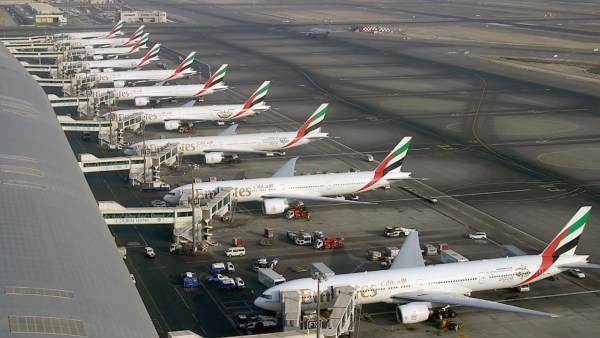 Emirates was able to expand passenger footfalls despite Dubai being impacted owing to the war, as the emirate placed strict curbs on operations by airlines from other countries. Photo: Wikimedia Commons
Saudi Arabian Airlines, or Saudia, added 50% more flyers on flights to and from India in the June quarter, taking the number to 3.38 lakh passengers. Emirates, the largest overseas airline operating to India, saw its passenger numbers on flights between India and Dubai rise 7.3% to 14.8 lakh.
Emirates was able to expand passenger footfalls despite Dubai being impacted owing to the war, as the emirate placed strict curbs on operations by airlines from other countries. This allowed Emirates to cater to the united demand.
Story continues below this ad
Other major airlines from west-of-India regions that gained passenger traffic on flights to and from India included the likes of Ethiopian Airlines, Lufthansa, KLM, Swiss Air, Finn Air, LOT Polish, Flynas, Azerbaijan Airlines, Uzbekistan Airways, and Air Astana. A number of airlines from regions to the east of India also clocked higher passenger numbers in April-June. These included Vietnam Airlines, Cathay Pacific, Singapore Airlines Japan Airlines, All Nippon Airways, and VietJet Air group, among others.
Impact of Pakistani airspace closure
With the relations between New Delhi and Islamabad worsening after the Pahalgam terror attack last April, Pakistan closed its airspace on April 24, 2025. Initially for one month, the closure banned Indian aircraft and airlines from flying over Pakistan. India responded a week later by closing its airspace to Pakistani aircraft and airlines. Since then, both countries have been extending airspace closures for each other’s airlines and aircraft on a monthly basis.
Around 800 weekly flights — departures and arrivals — operated by Indian airlines were adversely impacted owing to the closure of Pakistani airspace. These flights, mostly between North India and destinations in regions like West Asia, the Caucasus, Europe, the UK, and eastern North America, are being forced to take longer routes as they cannot use Pakistani airspace.
This was anyway resulting in several operational challenges such as increased flight durations with journeys extended by anywhere from 15 minutes to several hours, in addition to higher fuel consumption and increased complexity in crew and flight scheduling. In some cases, flights are forced to take refuelling stops overseas; flights on some routes had to be suspended. Ultimately, the operational challenges have inflated Indian airlines’ costs by thousands of crores of rupees per year.
Story continues below this ad
The war in West Asia and the consequent airspace restrictions there compounded the woes of Indian airlines. Apart from disrupting the high-demand West Asia operations of all major Indian airlines and burdening them with higher fuel costs due to the surge in jet fuel prices globally, the war further stretched the routes for west-bound long-haul flights of Air India and IndiGo. Some of that impact would have been blunted had the Pakistani airspace been available to Indian carriers as it would have provided a more direct and unimpeded corridor to Europe and beyond. Foreign carriers are not constrained on this count, and can freely use the Pakistani airspace.
The impact of India’s airspace closure has been rather insignificant on Pakistan as Pakistan International Airlines (PIA), the country’s flag carrier, has a limited international presence, unlike major Indian carriers that have been expanding their international network steadily. According to data from aviation analytics company Cirium, only about six PIA flights per week — those traveling between Kuala Lumpur and Lahore or Islamabad — routinely flew over India before these airspace closures took effect. In contrast, all major Indian carriers operate international flights to countries west of India, and many of these previously flew over Pakistan.


Minimum 3 years, but not at Bar: How SC changed rules to become a judge
By Sohail Khan · 21 Aug

Leave a Reply