OBC creamy-layer criteria: Supreme Court to set up special Bench to hear Centre’s plea
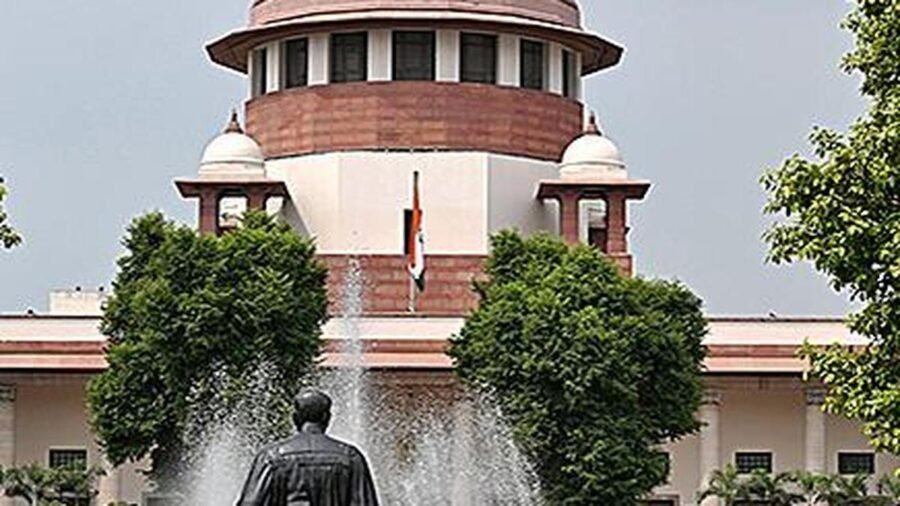
The Supreme Court on Tuesday (August 25, 2026) agreed to consider setting up a special Bench to hear Centre’s plea seeking clarification on the applicability of its March 11 judgment on OBC creamy-layer criteria to candidates of the Civil Services Examination (CSE) 2025.
The Department of Personnel and Training (DoPT) seeks directions allowing the government to proceed with service allocation of the 958 candidates recommended by the Union Public Service Commission (UPSC) for CSE-2025 on the basis of the OBC creamy-layer determination applied before the March 11 verdict.
Retrospectively implementing the Supreme Court’s March 11 judgment in Union of India v. Rohith Nathan on the income/wealth test for determining OBC Creamy Layer status would be “extremely difficult” and will cause a “cascading effect” on settled service matters from 2012 onwards, which will extend its impact to “all categories, including the Unreserved category,” the Union government has informed the Supreme Court of India in a batch of applications.
The Department of Personnel and Training (DoPT) has argued that retrospective implementation of the judgment could trigger a barrage of claims or contestations from candidates who were denied OBC Non-Creamy Layer status, as well as from those who did not seek such certification at the time of recruitments, examinations, admissions and other selection processes, but may now seek to rely on the judgment.
The “cascading effect” of implementing the decision, the Centre argued, would “drastically” alter the seniority landscape, potentially “begetting resentment” among officers who have gained seniority through experience and performance.
The Supreme Court’s March 11 judgment laid down the law on how to interpret the component of income/wealth test, under the government’s creamy layer exclusion framework for Other Backward Classes (OBCs), for the purposes of reservations in public education and employment. The Court specifically considered how the income test should be understood in the case of candidates whose parents are employed in posts for which no equivalence with posts in government service has been established.
The court noted that the income test was being applied in a way that was creating “hostile discrimination” between the children of those in government service and those in PSUs or private employment. In the absence of an established equivalence between the relevant posts, the income test,including salary income, was being applied to rule out OBC candidates of parents employed outside government service, while OBC candidates of parents employed in government service were being subjected to a test that did not include parental salary component. The court found that this differential treatment could amount to “hostile discrimination”.
The Court directed the Centre to give effect to its interpretation of the income test by creating supernumerary posts for the petitioners, that is the OBC candidates in the Civil Services Examination who had been excluded from the reservation benefits on the ground that they fell within the creamy layer solely because of their parents’ salaries. The parents were employed in public sector undertakings or the private sector, where no equivalence had been established between their posts and posts in government service.
The Centre’s applications come even as OBC candidates who would have been impacted by the Supreme Court’s ruling have argued that the Centre had never before made these points, was contradicting itself by backing out of implementing the decision suddenly, and was citing complications and fallout impact on other recruitments, exams, and admissions that purportedly do not exist.
In the applications, the Centre has asked to proceed with the CSE 2025 based on the erstwhile interpretation, since the foundation course for this batch is set to start at the end of this month, and it would be unfair to all the applicants who applied with the erstwhile understanding of the income test. It has made a similar argument to say that CSE 2026 should also continue based on the older interpretation, given that the notice and rules and regulations had already been notified.
Implementation of the Supreme Court’s decision “may adversely affect the spirit and intention of the reservation policy”, the Centre has argued, further saying that the income test becomes the “sole intelligible differentia of economic status and access to resources” when it comes to comparing OBC candidates with “limited access to resources” and OBC candidates with “economically well-off parents earning higher salary income in private sector”.
Now, protesters at Jantar Mantar seek overhaul of reservation system
This may end up in scenarios where even OBC candidates whose parents are earning over Rs 1 crore annually would be considered part of the Non-Creamy Layer, the government has argued, adding that it “might affect the claims and rights of the resource-deprived candidates, going against the principles of natural justice and fairness”.
“The direction to create supernumerary posts addresses only the numerical problem of accommodation; it does not resolve these collateral consequences for seniority, promotion and cadre placement,” the Union government has argued.
This comes even as Additional Solicitor General Chetan Sharma is on record as having told the Principal Bench of the Central Administrative Tribunal just days ago, on August 19, that the government was implementing the SC’s March 11 decision.
The government has gone on to argue that retrospectively implementing the judgement, even for the 56 litigant candidates, would require consideration of whether they will have the “experience and knowledge gained from situational exposure” for the seniority and service that they would get if they were to be considered for OBC quotas.
The DoPT has said that of these candidates, only three would continue in the service with State cadre changed and 38 candidates may be allocated new services for the first time with seniority spanning 2 to 13 years, “technically making them entitled to hold the same posts which are being held by officers having rendered continuous service and after gaining experience”.
“Their induction would obviously drastically change the seniority landscape of the respective services, placing these candidates higher in the order, as per their rank in CSE. This may beget great deal of resentment amongst the officers who have gained seniority through experience and performance,” the Centre has said.
The Centre, through the Department of Personnel and Training, has argued before the Supreme Court that the judgement’s application retrospectively would end up impacting lakhs of OBC recruitments and admissions already conducted as per the previous interpretation of the creamy layer criteria across Central government ministries, State government departments, and higher educational institutions across the country.
In applications to the Supreme Court, the Centre has argued that if the Rohith Nathan judgement is applied retrospectively “without suitable policy intervention”, it would have a “far-reaching consequence” on the over 3.7 lakh OBC recruitments in Central government posts since 2016, along with recruitments and examinations either conducted or ongoing in 18 States and Union Territories.
“Major examination bodies/exployers i.e. Railways, Banks, Department of Posts, and paramilitary, would be flooded with hundreds of thousands of representations and litigations warranting consideration in several situations,” the government has argued, further suggesting that this may also result in adverse impact in the higher education sector, where candidates not accepted would be able to ask for fresh consideration under OBC Non-Creamy Layer in light of the judgement.
(With inputs from PTI)

DMK wouldn’t be in Opposition without its allies: Tamil Nadu Minister Aadhav Arjuna
By Sohail Khan · 25 Aug
Leave a Reply