Nick Kyrgios threw stones at Sinner, Swiatek over doping cases. Now a cocaine test has put his own words on trial
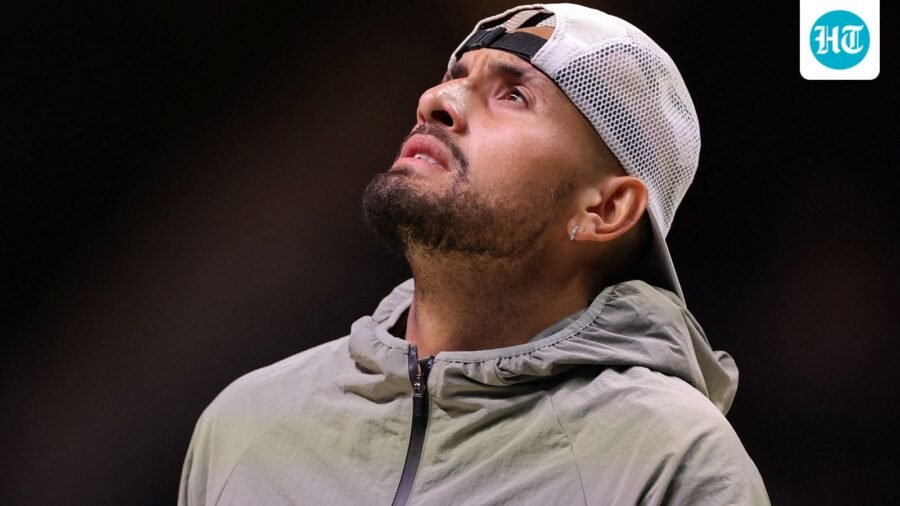
On Wednesday, Nick Kyrgios' old remarks about Sinner-Swiatek case came back to haunt him after he was provisionally suspended for testing positive for cocaine
Updated on: Aug 20, 2026, 12:05:08 IST
Prefer HTon Google
Share via
Copy link
Nick Kyrgios has always been the outspoken rebel of tennis, at times even crossing the line between right and wrong. He once refused to apologise to Rafael Nadal after hitting the Spaniard with a dangerous shot during their 2019 Wimbledon match, and questioned why he should have to when asked about it at the post-match press conference. At other times, however, Kyrgios has addressed issues more forcefully than many players on the circuit might, particularly when tennis was rocked by not one but two doping cases two years ago. He questioned how those cases had been handled and made it clear where he stood.
On Wednesday, his old remarks about those cases came back to haunt him after he was provisionally suspended for testing positive for cocaine, following a sample collected at an event in Mallorca in June this year, according to the International Tennis Integrity Agency (ITIA).
The ITIA said the former world No. 13 could appeal against the provisional suspension, “but has not done so to date”. Within minutes of the news spreading across social media, Kyrgios released a statement on Instagram apologising for his actions and explaining how his injury-riddled career — he has played at just eight tournaments since 2023 — had taken a huge toll on him, both physically and mentally, and contributed to his mistake.
“I made a huge mistake and I take full responsibility for it,” he wrote. “I’m not going to make excuses, but I do want to give some context about where I’ve been. The last couple of years of injuries have taken a huge toll on me both physically and mentally. My body hasn’t been able to do what my mind expects it to, and coming to terms with being near the end of my career has been harder than I ever imagined.”
Kyrgios will be hoping the tennis world can put the episode behind him, show some understanding of his situation and allow him to move forward. But for the self-styled bad boy of tennis, who has rarely missed an opportunity to criticise others caught up in doping cases, he should expect the scrutiny to be intense.
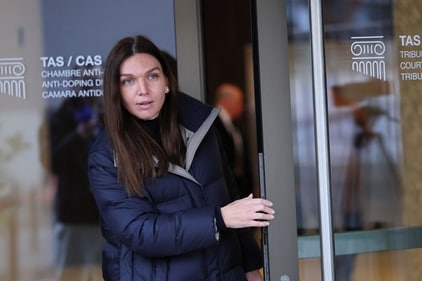
The first to hit back was former Wimbledon champion Simona Halep. When the Romanian faced her own doping violation in 2023, Kyrgios was among her loudest critics. “I’d imagine if I was taking similar things to be banned for four years, I’d have about five Slams. Potato,” Kyrgios wrote on X.
On Thursday, hours after Kyrgios’ suspension became public, Halep responded on her Instagram Story.
“Never kick someone when they’re down. Life has a strange way of changing positions,” she wrote.
“And an even stranger way of revealing the difference between an accident and a choice.”
But perhaps Kyrgios’ sharpest criticism was reserved for Jannik Sinner, who twice tested positive for clostebol, an anabolic steroid. The amount detected in the two tests was tiny. An independent tribunal, however, ruled that Sinner bore “no fault or negligence”, accepting that the substance had entered his system through accidental contamination involving a member of his support team.

The handling of the case did not sit well with many, including Kyrgios. In December 2024, ahead of his comeback at the season-opening Brisbane International, he was asked about Sinner and made his position clear.
“I would never even in my entire life ever try and dope in this sport,” he said, pointing out that he too had spent years dealing with injuries and could have used prohibited substances to accelerate his recovery. He went further, arguing that anyone who had “tried to cheat the process” was disrespecting the sport.
The following year, WADA appealed the tribunal’s decision to the Court of Arbitration for Sport, and Sinner accepted a three-month suspension as part of a settlement. WADA maintained that he had not deliberately cheated.
“Sad day for tennis. Fairness in tennis does not exist,” Kyrgios wrote after Sinner accepted the ban.
“Ridiculous — whether it was accidental or planned. You get tested twice with a banned (steroid) substance… you should be gone for two years. Your performance was enhanced. Massage cream… Yeah nice,” he added in another social media post.
The former Wimbledon finalist was equally critical of Iga Swiatek, who accepted a one-month suspension after testing positive for trimetazidine. The ITIA concluded that the substance had entered her system through contaminated melatonin and classified her degree of fault at the lowest level.
Kyrgios’ verdict was blunt: “Two world No.1s both getting done for doping is disgusting for our sport. It’s a horrible look.” He also described the sport’s integrity as “awful” and questioned what he saw as inconsistency in the way cases were handled.
That is not where the story ends. In the wake of his own suspension, one of Kyrgios’ posts from January 2025 resurfaced in which he wrote: “Hypocrite? I’ve never failed drug tests.” Another was a screenshot of an Instagram Story in which a fan asked, “Double with Sinner pls,” to which Kyrgios replied: “I only play with CLEAN players.”
This is where the story becomes uncomfortable for Kyrgios. The circumstances of the various cases were different, and his own matter has yet to reach a final conclusion. But the player who left little room for nuance when discussing others is now being forced to confront the same questions himself.
The larger reality is that Kyrgios has never been a player who consistently maintained the level of professionalism expected of him, either on or off the court. His career has been punctuated by incidents that have repeatedly raised questions about his behaviour, from the 2015 suspension for his lewd remarks about Stan Wawrinka’s girlfriend during a match in Montreal to his 16-week ban in 2019 for a “pattern of behaviour related to his verbal abuse of officials and/or spectators”.
That year was the nadir. In Netflix’s *Break Point*, Kyrgios described 2019 as the “lowest point of my career”.
“I was drinking, abusing drugs. I lost my relationship with my family, pushed all my close friends away,” he said. “Being bullied at a young age for being short and fat and brown scarred me for sure.”
He also revealed that he wore a compression sleeve to cover self-harm scars on his arm and spent time in a psychiatric hospital in London to “figure out my problems”.
Four years later, Kyrgios admitted assaulting his former girlfriend Chiara Passari by pushing her onto the pavement during an argument in Canberra. The magistrate described it as “a single act of stupidity or frustration” and discharged him without a criminal conviction.
Kyrgios will now hope to return at the Australian Open next year. But if he wants to prolong his career into his 30s, what happens next may matter more than what has already happened. The coming months will demand something that has rarely come naturally to him: a period of genuine self-reflection, followed by a decision about what kind of player — and person — he wants to be when he returns.
See Less

India Women win cricket gold, country’s first at Asian Games 2026
By Sohail Khan · 22 Sep

Tennis: Former world No.1 doubles star has a message for all South Asian players
By Sohail Khan · 22 Sep